
Why Is My Dog’s Poop Yellow? 7 Important Causes
 The Pets Passion Medical Team
Medical disclaimer: Educational only from The Pets Passion — not a diagnosis. Yellow stool can be harmless after a rich snack or a clue to liver, pancreas, parasite, or infectious disease. If your dog is a puppy, incomplete on vaccines, vomiting, lethargic, bloody, or dehydrated, call a veterinarian or emergency clinic before you experiment at home.
Yellow dog poop usually means bile pigment did not finish changing as food raced through the gut, or fat digestion and bile flow got disrupted. A one-off mustard soft stool after scavenging is common; persistent yellow diarrhea, greasy stools, pale clay color, or yellow paired with vomiting and low energy needs a vet visit—not a wait-and-see thread.
If stools keep drifting soft after diet cleanup, talk with your vet before guessing at whether dogs need probiotics.
Quick answer
Most common mild pattern: Faster intestinal transit (diet change, garbage gut, stress, mild gastroenteritis) leaves stool mustard-yellow because bile hasn’t been fully processed into the usual brown. VCA lists diet change, dietary indiscretion, stress, parasites, and infections among everyday diarrhea triggers.
Bigger differentials: Parasites (including Giardia), pancreatitis, food intolerance, liver/gallbladder/bile-duct problems, and other organ disease can also shift stool color. VCA’s pancreatitis overview notes diarrhea among classic signs alongside vomiting, abdominal pain, and lethargy.
Yellow diarrhea dog when to worry: Call same day (or ER) for puppies, incomplete vaccines, repeated vomiting, blood/black stool, collapse, refusal to drink, painful belly, jaundice (yellow gums/eyes), or yellow stool lasting beyond about 24–48 hours in a puppy / ~48–72 hours in an otherwise bright adult. Cornell’s Riney Canine Health Center advises seeking care when diarrhea doesn’t resolve in 48–72 hours, or sooner with lethargy, black/tarry stool, or vomiting (Cornell diarrhea).
Tool: Use our Pet Symptom Urgency Checklist after you’ve already decided whether to call, never instead of calling.
What does normal dog poop look like, color-wise?
Healthy dog stool is usually chocolate to medium brown, formed enough to pick up cleanly, and passed one to a few times a day depending on diet and routine. Color swings with dye in treats, lots of pumpkin, beet pulp, or a sudden protein swap. One weird stool after a BBQ plate isn’t a disease by itself.
Yellow sits on a spectrum:
| Color / look | Rough owner translation | Typical next step |
|---|---|---|
| Soft mustard yellow, dog otherwise fine | Often fast transit / diet change | Monitor closely; water available; skip rich treats |
| Yellow with lots of mucus | Suggests large-bowel irritation | Note frequency; call if persists or dog seems off |
| Bright yellow + greasy / oily sheen | Fat maldigestion on the differential | Vet sooner; don't guess with high-fat "comfort" food |
| Pale yellow / clay / gray | Possible reduced bile reaching the gut | Veterinary workup; not a DIY wait |
| Yellow + blood streaks | Inflammation / colitis / other disease | Same-day care if more than a fleck, or any puppy |
| Yellow diarrhea + vomiting / lethargy | Systemic illness possible | Urgent / ER triage |
For scoring firmness (1–7), keep our dog fecal score chart open on your phone when you bag the sample.
Why is my dog’s poop yellow after a food change?
Bile starts yellowish-green. As it travels the intestine and bacteria work on it, stool browns up. Speed that trip up and you get mustard yellow dog poop, soft, sometimes smelly, sometimes coated in mucus.
Common speed-up triggers lined up with VCA’s diarrhea page:
- New kibble or canned food swapped too fast
- Table scraps, grease, milk, bone fragments
- “Dietary indiscretion” (the polite term for trash, compost, dead squirrel)
- Boarding, travel, fireworks, houseguests
- Mild viral or bacterial gut upset
VCA’s gastroenteritis handout describes large volumes of soft-serve-consistency diarrhea several times a day, sometimes with yellowish bilious vomit when the stomach is empty. That pattern is common. It is also a pattern shared with nastier diseases, so context matters: age, vaccines, appetite, energy.
If the only change was a slow food transition and your adult dog is bright, drinking, and producing formed-ish yellow stool once, many vets start with rest-the-gut advice. If you’re mid-transition and stools keep softening, pause the new food and call your clinic for a plan.
Internal read: Dog Diarrhea: Top Causes, Quick Fixes, and What You Must Know.
Yellow dog stool causes: the list vets actually run
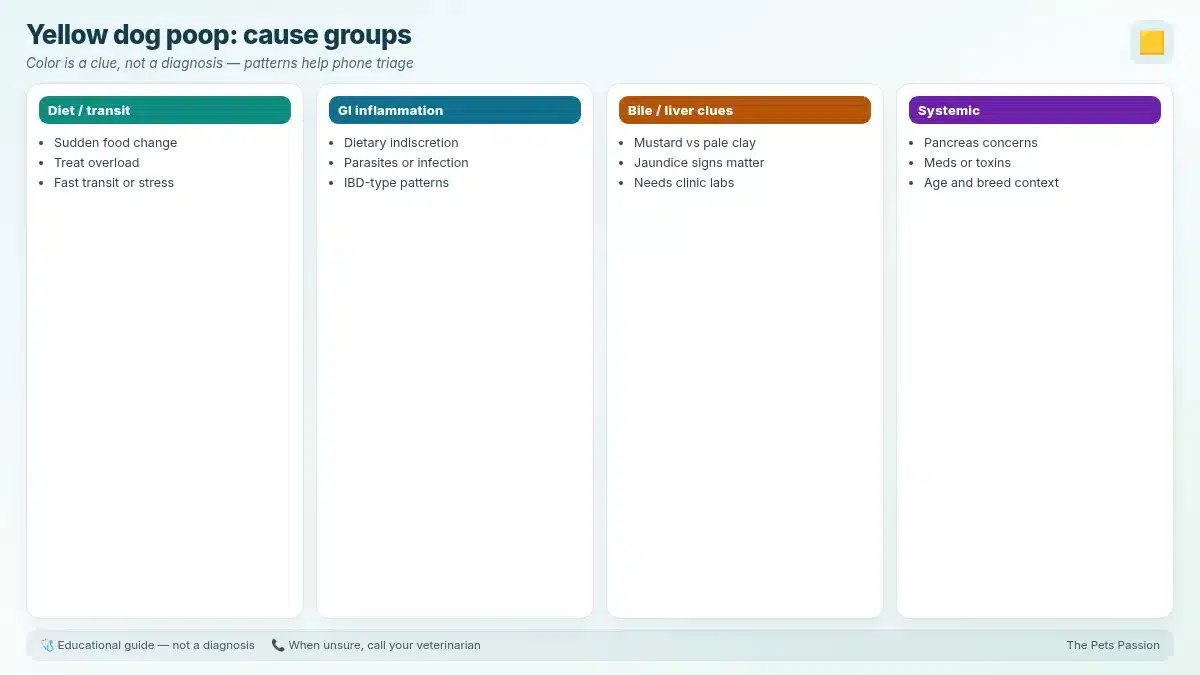
Here’s a practical differential owners can discuss with a clinician, not a self-diagnosis checklist.
1) Fast transit and “garbage gut”
Still the everyday winner. Soft yellow stools after scavenging fit decreased transit time and incomplete bile pigment processing. Supportive care only after red flags are ruled out.
2) Parasites and protozoa
Hookworms, roundworms, whipworms, and Giardia can loosen stools and tint them odd colors. Fresh fecal flotation, antigen tests, or PCR panels beat guessing. Bring a sample in a clean bag or container, your clinic will tell you how fresh they want it.
3) Pancreatitis
Inflamed pancreas. VCA lists nausea, vomiting, fever, lethargy, abdominal pain, diarrhea, and decreased appetite. Some dogs adopt a “praying” posture (front end down, rear up). Yellow or oily stools can show up when fat digestion falters. High-fat leftovers are a classic history, but pancreatitis also happens spontaneously.
4) Liver, gallbladder, and bile-duct disease
If bile isn’t produced or delivered normally, stools can go pale yellow, gray, or clay-colored. Watch for reduced appetite, vomiting, weight loss, abdominal pain, and yellow gums/eyes/skin (icterus). That is not a “monitor overnight” situation.
5) Food intolerance / chronic enteropathy
Repeated yellow soft stools after certain proteins or fats may point toward intolerance or inflammatory bowel disease–type problems. Diagnosis is gradual: diet trials, parasite exclusion, bloodwork, sometimes imaging or scope. Don’t stack five new supplements while excluding food.
6) Infections beyond “simple” gastroenteritis
Parvovirus, other viruses, and bacterial enteritis can present with diarrhea that looks yellow or bloody. Young, shelter, or under-vaccinated dogs get a lower threshold for testing. See How Do Dogs Get Parvo? and our draft puppy diarrhea when to worry.
7) Mucus, worms, and “yellow flecks”
Yellow mucus often means large-bowel irritation. Rice-grain flecks may be tapeworm segments; corn-looking bits can be undigested food. Photograph them. Don’t assume “just corn” if your dog never eats corn.
Mustard yellow dog poop vs pale clay stool: why the difference matters
Owners mash these together. They aren’t the same clinical hint.
- Mustard / bright yellow soft stool: Often bile is present, but transit is quick or the gut is irritated.
- Pale yellow, gray, or clay: Suggests less bile pigment reaching the intestine. That raises concern for biliary obstruction, severe liver disease, or related problems.
If stool looks chalky or grease-slick and your dog seems painful after fatty meals, say that clearly at triage. “Yellow” alone is vague; “pale clay, greasy, dog won’t jump on the couch” is useful.
Yellow diarrhea dog when to worry: red flags
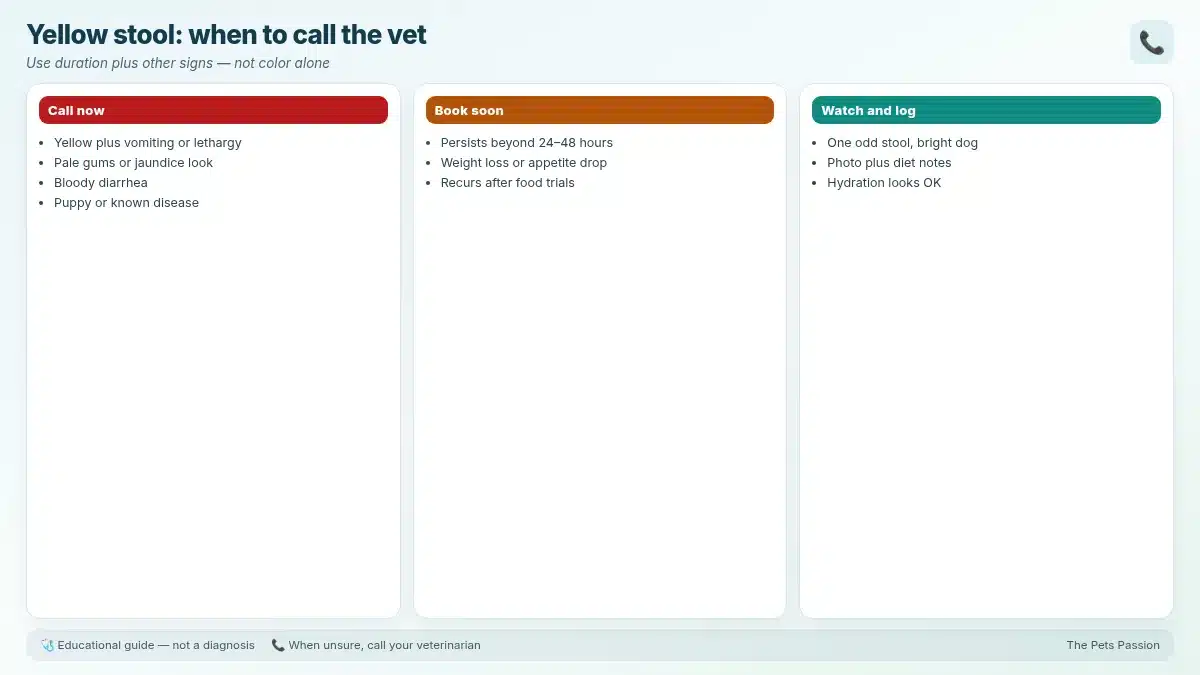
Use this as a phone-side filter.
Go now (ER / urgent care):
- Puppy or incomplete core vaccines with acute diarrhea ± vomiting
- Bloody or black/tarry stool
- Repeated vomiting, can’t keep water down
- Collapse, extreme lethargy, pale or brick-red gums
- Hard, bloated, or very painful abdomen
- Known toxin (chocolate, xylitol, grapes, etc.), see chocolate toxicity
- Yellow gums, eyes, or skin
- Suspected foreign body (string, sock, bone)
Call the clinic today:
- Adult dog, yellow diarrhea lasting toward 48 hours while still “sort of okay”
- Recurring mustard stools over days/weeks
- Weight loss, picky appetite, or greasy stools
- Household with other pets getting soft stools (contagion angle)
Cornell timing reminder: Seek care if the pet stops eating, is lethargic, stool is black/tarry, vomiting accompanies diarrhea, or diarrhea does not resolve in 48–72 hours (Cornell). Compress that window for puppies, our puppy diarrhea triage walks through why.
Cross-check urgency with the Pet Symptom Urgency Checklist.
What will the vet ask and test?
Expect questions that sound nosy because they are diagnostic:
- Exact color, firmness (fecal score), mucus, blood
- Frequency and volume (small blobs vs hose)
- Diet changes, treats, raw diets, scavenging
- Deworming and vaccine history
- Travel, boarding, new dogs, park habits
- Medications (NSAIDs, antibiotics, etc.)
VCA notes that mild cases may start with history, exam, and fecal testing, then escalate to bloodwork, imaging, or more advanced GI workups if the dog doesn’t improve. Bring a fresh sample. Photos of the stool help when you can’t bag it in time.
What can I do at home while I wait for an appointment?
Only if your dog is an otherwise healthy adult, bright, drinking, not vomiting repeatedly, and your vet is okay with a short watch period:
- Water first. Diarrhea dehydrates fast. Offer fresh water; ask before using electrolyte products.
- Pause rich treats and chewables. No bacon, no “just a little” gravy.
- Ask about a short bland or veterinary GI diet. Cornell discusses bland feeding for mild cases; homemade chicken-and-rice is temporary and incomplete long-term (Cornell diarrhea). Details: bland diet for dogs with diarrhea.
- Don’t start leftover human antibiotics. That includes leftover metronidazole from last year. Stewardship guidelines have shifted; your vet decides.
- Probiotics? Some clinics use them; quality varies. Compare options like FortiFlora vs Proviable with your veterinarian, not as a substitute for exam.
Skip fasting tricks in toy breeds and puppies without veterinary advice, hypoglycemia is real.
Q&A: yellow dog stool questions people actually type
Is mustard yellow dog poop always an emergency?
No. A single soft yellow stool after dietary indiscretion in a vaccinated adult who’s still playful often settles. Emergencies attach to age, vaccines, systemic signs, pale/clay color, greasy chronic stools, or failure to improve on the Cornell-style timeline.
Can stress alone turn stool yellow?
Stress is on VCA’s diarrhea cause list, boarding, travel, household chaos. Stress doesn’t exclude parasites or infection. If boarding diarrhea lasts, test rather than blame the kennel forever.
Why is my dog’s poop yellow and mushy but not full diarrhea?
That’s still abnormal stool quality, often fecal score 4–5 on a 1–7 chart. Track frequency. Mush that stays for days deserves a fecal check.
Does yellow mean liver failure?
Not automatically. Fast transit is more common. Pale clay stools plus jaundice or severe lethargy raise liver/biliary concern and need bloodwork and imaging decisions from a clinician.
Should I give pumpkin, Pepto, or leftover Flagyl?
Pumpkin is a folk fix with uneven evidence and calorie load. Human Pepto products can contain salicylates unsafe for dogs. Leftover metronidazole is a prescription decision, see our metronidazole for dogs diarrhea explainer and current ENOVAT/WSAVA antimicrobial guidance for why “diarrhea ≠ automatic antibiotic.”
How to talk to your vet so you get a faster plan
Owners who show up with data leave with better plans.
- Photo series of stool (color + texture) with timestamps
- 48-hour food diary including treats and stolen items
- Vaccine and deworming dates
- List of supplements already tried
- Note if other pets or people in the home have GI signs
If your clinic uses fecal scoring, learn scores 1–7 before the appointment so “score 5, mustard, four times yesterday” beats “it was weird.”
Related guides and tools from The Pets Passion
- Dog Diarrhea: Top Causes, Quick Fixes…
- Puppy Diarrhea When to Worry
- Bland Diet for Dogs with Diarrhea
- Dog Fecal Score Chart
- Pet Symptom Urgency Checklist
- Puppy Vaccination Schedule · Pet Vaccine Schedule tool
Yellow stool is a color, not a diagnosis. Use the color as a clue, stack it with energy/appetite/age, and get a professional exam when the worry flags light up. Your dog’s gut will thank you for skipping the three-day internet experiment.
Color timeline: what to watch over 72 hours
Owners panic at hour one or shrug until day five. A middle path works better for stable adult dogs your vet has okayed for home monitoring.
Hour 0–6: Note the first odd stool. Photograph it. Remove rich leftovers. Offer water.
Hour 6–24: Count trips outside. Recheck energy and appetite. One mustard soft stool with a normal evening zoomie session is different from five puddles and a dog who won’t greet you.
Hour 24–48: Puppies and seniors get less leash. Adults who are still bright may continue a bland or GI diet plan your clinic approved. Any vomiting cluster, blood, or behavior crash ends the home experiment.
Hour 48–72: Cornell’s general diarrhea guidance pushes veterinary contact when diarrhea persists in this window, or sooner with systemic signs. Soft yellow stool that is slowly firming (score 5 → 3) with a happy dog is a different story than score 7 still raging.
Keep a shared note on your phone if multiple family members walk the dog. Mixed messages (“I thought you saw blood”) delay care.
Breed, age, and lifestyle twists
Puppies: Immature immunity plus scavenger hobbies. Yellow diarrhea plus lethargy is a parvo-test conversation until proven otherwise. See vaccine timing with the Pet Vaccine Schedule tool.
Seniors: Organ disease climbs the differential. Don’t write off pale stools as “just old.”
Grease-loving breeds / pantry bandits: Pancreatitis risk climbs after fatty holidays. Pain + yellow soft stool after turkey skin is a classic ER story.
Multi-dog homes: If two dogs turn yellow the same week, think shared diet change, shared trash, or shared parasites, not coincidence.
Raw-fed dogs: Higher risk conversations around pathogens and diet shifts; tell the vet what you feed without editing the truth.
Sample questions to ask at the appointment
- Do we need a fecal float, antigen panel, or both?
- Are we worried about pancreas or liver values today?
- Is a veterinary GI diet smarter than homemade bland food for this dog?
- When should I recheck if stools are still mustard-colored?
- Which symptoms mean I go to the ER at 2 a.m. instead of waiting for morning?
Write answers down. Stress deletes short-term memory.
Myths about yellow dog poop
Myth: “Yellow always means liver failure.”
Reality: Fast transit is common; pale clay plus jaundice is the louder liver/biliary clue.
Myth: “If there’s no blood, it can wait a week.”
Reality: Parvo and dehydration don’t always print in red ink first.
Myth: “Pumpkin fixes every color.”
Reality: Fiber can help some soft stools and worsen others; it doesn’t treat infection.
Myth: “I can clear Giardia with random internet drops.”
Reality: Need testing and veterinary protocols.
Stick to sources like VCA, Cornell, and your clinician, not a screenshot from a neighborhood group chat.
Veterinary Review & Editorial Standard
This clinical guide was prepared using peer-reviewed veterinary literature and guidelines from leading veterinary associations. If your pet exhibits acute symptoms or distress, please seek immediate in-person veterinary emergency care.
💬 3 Community Responses