Puppy Diarrhea When to Worry: 24-Hour Triage Guide
 The Pets Passion Medical Team

Puppy Diarrhea When to Worry: Triage Guide, Parvo Clues & ER Red Flags
Medical disclaimer: Educational only from The Pets Passion. Not veterinary diagnosis or emergency triage. Puppies dehydrate faster than adult dogs. If your puppy has bloody diarrhea, repeated vomiting, extreme lethargy, a swollen/painful belly, known toxin exposure, or you’re unsure — contact a veterinarian or emergency clinic now.
Puppy diarrhea when to worry, bluntly: Call today (or go to ER now) for blood or black/tarry stool, repeated vomiting, lethargy, refusal to eat or drink, dehydration signs, incomplete vaccines, toxin ingestion, or loose stool lasting more than 24–48 hours in a puppy. Cornell gives pets a general 48–72 hour window — compress that timeline for puppies. Any young, unvaccinated, or incompletely vaccinated dog with vomiting ± diarrhea should be tested for parvovirus promptly (Cornell parvo; Merck).
How do I triage puppy diarrhea at home?
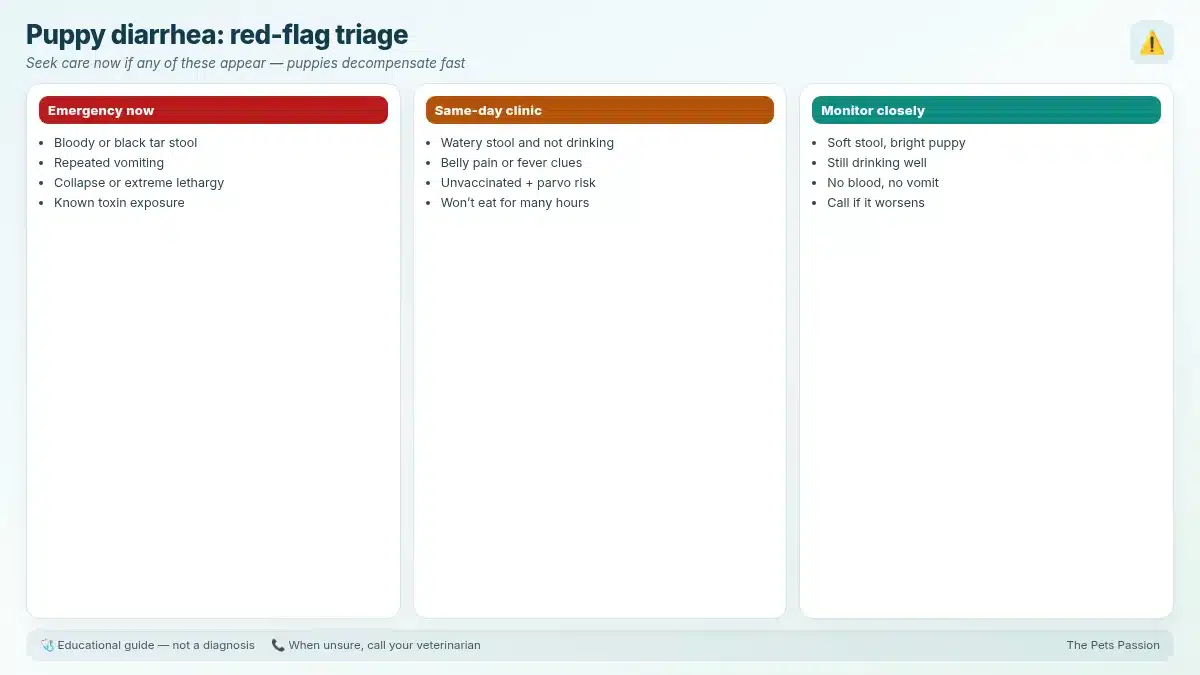
Triage is how you apply puppy diarrhea when to worry before you open a recipe blog.
Odd color matters too—see why is my dog’s poop yellow if mustard stools show up with the loose ones.
Log stool quality with a shared scale—our dog fecal score chart makes “worse overnight” concrete for the vet call.
Use this as a phone-side flowchart. It doesnt replace a veterinary exam.
START: Puppy has loose / watery stool
│
├─→ RED FLAGS present?
│     • Blood in stool OR black/tarry stool
│     • Repeated vomiting
│     • Very low energy / collapse / pale gums
│     • Won’t drink OR dehydration signs
│     • Painful, hard, or bloated abdomen
│     • Seizure, tremors, or known toxin
│     • Incomplete vaccines + acute GI signs
│        YES → ER / urgent vet NOW (isolate if parvo possible)
│
├─→ Puppy age & vaccine status?
│     Unweaned / under ~8–12 weeks OR missing core vaccines
│        → Lower threshold: call vet same day even if “only” soft stool
│
├─→ Otherwise bright, eating, drinking, no blood, one soft stool after rich treat?
│        → Monitor closely; water available; skip rich treats
│        → If still loose next day OR any red flag appears → call
│
└─→ Diarrhea continues 24–48 hours in a puppy (even if “acting okay”)
         → Schedule veterinary visit; bring fresh stool sample
Cross-check adult-dog context in Dog Diarrhea: Top Causes, Quick Fixes, and What You Must Know.
Run the Pet Symptom Urgency Checklist after you’ve already decided whether to call — never instead of calling.
Why are puppies different from adult dogs with loose stool?
Age and vaccine status change puppy diarrhea when to worry more than stool color alone.
Puppies have:
- Smaller fluid reserves dehydration accelerates
- Immature immune systems and waning maternal antibodies
- Higher odds of parasites and dietary indiscretion
- Higher stakes for parvovirus, distemper, and bacterial enteritis
Merck notes young (6 weeks–6 months), unvaccinated, or incompletely vaccinated dogs are most susceptible to clinical parvovirus. Breeds described at increased risk include Rottweilers, Dobermans, English Springer Spaniels, German Shepherds, and pit bull–type dogs — risk doesn’t exclude other breeds.
Bottom line for “when is dog diarrhea an emergency” in puppies: treat time and energy level as vital signs. A quiet 10-week-old with watery stool is already a clinical case, not a “wait and see” meme.
Keep the puppy vaccination schedule current — prevention beats ICU bills.
How do I think about puppy diarrhea vs parvo?
You cant diagnose parvo from color alone — but you can recognize when testing is mandatory.
Classic parvo pattern (not exclusive)
Per Cornell and Merck:
- 1. Often starts with lethargy and decreased appetite
- 2. Progresses to vomiting
- 3. Then diarrhea — often foul, sometimes with blood or mucus (Merck notes ~25% may have non-hemorrhagic diarrhea)
- 4. Rapid dehydration; fever or, in shock, hypothermia
Incubation is commonly about 5–7 days after infection (range roughly 2–14 days per Merck). Dogs shed virus in feces before signs appear and for about 10 days after recovery — so isolation matters.
Mild dietary upset pattern
- Still playful and interested in food
- Single episode after new treat, diet change, or scavenging
- No repeated vomiting
- Formed edges returning within a day
If you’re debating “parvo vs upset stomach,” test. Cornell is blunt: any puppy or unvaccinated dog with vomiting and diarrhea should be tested. False negatives can occur early or late; false positives can follow recent modified-live vaccination — your vet interprets the kit.
Deeper reading: How Do Dogs Get Parvo? The Facts That Could Save Your Dog.
What does bloody diarrhea in a puppy mean?
Bloody diarrhea puppy searches spike for good reason. Fresh red blood (hematochezia) often points to lower GI irritation or colitis; digested black tarry stool (melena) can signal upper GI bleeding. Cornell lists foreign body, infection, inflammation, trauma, tumors, or ulcers among sources in dogs generally.
In puppies, bloody stool raises urgency for:
- Parvovirus or other infectious enteritis
- Parasites (hookworms can cause significant blood loss — see hookworms in dogs)
- Dietary indiscretion / toxin
- Foreign body / intussusception (Merck flags abdominal pain as a reason to rule out intussusception in parvo patients)
- Hemorrhagic gastroenteritis–type presentations (vet diagnosis)
Don’t give human antidiarrheals. Cornell warns against Pepto-Bismol (bismuth subsalicylate) or Imodium (loperamide) unless a veterinarian directs you — some dogs (MDR1 mutation breeds especially for certain drugs) and some disease states make DIY meds dangerous. Merck advises against antidiarrheals in parvovirus because retaining toxins/bacteria in a damaged gut raises systemic risk.
What causes puppy loose stool (mild to serious)?
| Category | Examples | Worry level |
|---|---|---|
| Diet | New food switched too fast; rich treats; milk; garbage | Often mild if puppy remains bright — still monitor |
| Parasites | Roundworms, hookworms, Giardia, Coccidia | Common; needs fecal testing (Giardia guide) |
| Stress | Boarding, travel, new home | Usually mild but can unmask pathogens |
| Viral | Parvo, distemper-associated GI signs | Emergency potential |
| Bacterial | Salmonella, Campylobacter, others | Variable; vet diagnostics |
| Foreign body | Toys, socks, bones | Can become surgical emergency |
| Toxins | Chocolate, xylitol, plants, cleaners | Hotline + ER (chocolate toxicity) |
| Other | Intussusception, Addison’s, antibiotic disruption | Vet workup |
For a broader adult-focused list, see The Pets Passion dog diarrhea causes guide.
What home monitoring is okay if there are no red flags?
Home watching only fits after you’ve already run the puppy diarrhea when to worry red-flag filter.
If your veterinarian agrees the puppy is a mild, bright case:
- 1. Fresh water always available; track drinking and urination.
- 2. Frequent potty breaks — puppies can’t “hold” diarrhea.
- 3. Pause rich treats, chews, table scraps, and cow milk.
- 4. Ask your vet before fasting. Cornell mentions a possible 12–24 hour food withhold in some mild adult cases before a bland diet — but growing puppies, toy breeds, and hypoglycemic-risk patients are different. Many clinicians prefer small frequent meals sooner rather than a long fast.
- 5. Collect a fresh stool sample (double-bagged) for the appointment.
- 6. Note vaccine dates, deworming history, and any scavenging.
If you trial a bland diet under veterinary guidance, read Bland Diet for Dogs With Diarrhea.
What will the vet likely do?
Expect history plus exam, then tailored diagnostics:
- Fecal flotation / antigen tests for parasites
- Parvo fecal ELISA (and sometimes PCR)
- Bloodwork (electrolytes, glucose, albumin, white cell patterns — Merck links marked leukopenia with parvo)
- Imaging if foreign body or intussusception is possible
- Fluids (SQ or IV), antiemetics, antimicrobials when indicated, nutritional support
Hospital survival for parvo with aggressive care is often cited above 90% in Merck’s review; outpatient protocols report roughly ~80% success in selected cases — numbers that argue for early care, not home heroics.
How do I check for dehydration while phoning the clinic?
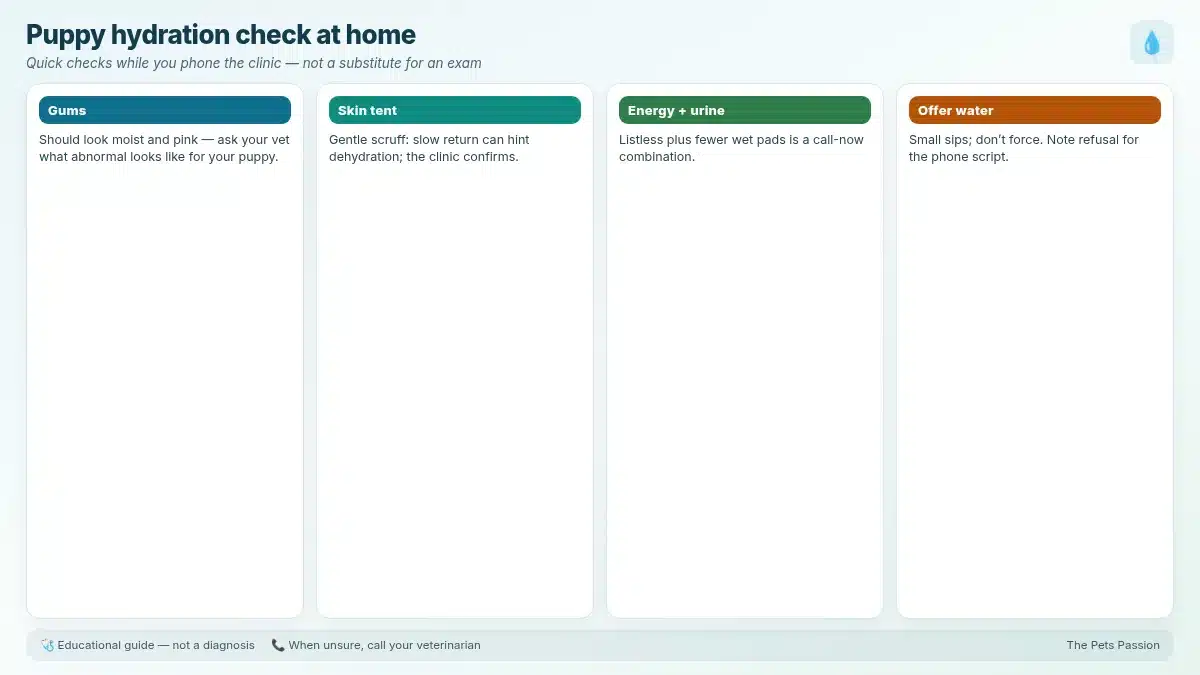
Diarrhea kills via fluid and electrolyte loss more often than via “the germ alone.” While you wait on hold, note:
- Gums: Should be moist and pink. Sticky/tacky gums suggest dehydration.
- Skin tent: Gently lift skin over the shoulder; slow return can indicate fluid loss.
- Eyes: Sunken appearance is a late, serious sign.
- Energy + pulses: A floppy puppy with rapid breathing needs ER transport.
- Urine output: No urine for many hours is a red flag.
Cornell emphasizes that vomiting plus diarrhea accelerates dehydration and can progress toward organ strain. That’s why The Pets Passion frames puppy diarrhea when to worry around systemic signs — not stool texture alone.
Pair this with the Pet Symptom Urgency Checklist so you can read a structured list to the triage nurse.
What phone script should I use?
Say clearly:
- 1. Puppy’s age, weight, breed, and vaccine dates (or “none / unknown”).
- 2. When diarrhea started; frequency; color; blood yes/no; black/tarry yes/no.
- 3. Vomiting frequency; last time the puppy kept water down.
- 4. Appetite and energy compared with yesterday.
- 5. Any scavenging, new food, dewormer, medication, or boarding.
- 6. Whether other pets are sick.
Ask: “Do you recommend an ER visit tonight or a same-day appointment? Should we isolate from other dogs?”
Aftercare and contagious caution
If parvo is confirmed or strongly suspected:
- Isolate from other dogs; minimize tracking feces through the house.
- Discuss disinfection with your clinic — Merck notes parvovirus is environmentally tough; bleach-type protocols and removal of organic matter matter more than fragrance cleaners.
- Delay introducing new puppies into a contaminated home until your veterinarian advises — and only fully vaccinated dogs when possible.
If the cause was dietary, restart food transitions slowly (Cornell suggests a week or two, not 48 hours) and keep a simple ingredient log for two weeks.
Prevention that actually lowers diarrhea risk
- Finish the puppy vaccination schedule on time; use the vaccine planner
- Keep puppies off high-traffic dog-park grass until your vet clears public exposure
- Deworm on a veterinary schedule; monthly preventives as recommended
- Puppy-proof trash, toxins, and chewable foreign bodies — use the pet toxic foods checker
What stool details should I photograph before the appointment?
Color, texture, and frequency tell a story your memory will smear by the time you reach the waiting room. Take clear photos (or a short video of the stool in good light) and note:
- Clock time of each bowel movement for the last 24 hours
- Watery vs soft-serve vs pudding texture
- Fresh red streaks vs mixed blood vs black tarry appearance
- Mucus, grease sheen, or unusually foul odor (Giardia conversations often start here)
- Whether vomiting happened in the same hour
Bring a fresh sample in a sealed bag. Many clinics prefer stool less than a few hours old for parasite exams.
If other pets share a yard, note whether any adult dog is also soft-stooled. Shared parasites and shared garbage raids look different from a solo parvo case — but isolation is still smart until you know.
Don’t rinse the sample “to make it nicer.” Diagnostics need what actually came out.
FAQ: puppy diarrhea when to worry
When should I worry about puppy diarrhea?
Worry immediately with blood, black stool, vomiting, lethargy, anorexia, dehydration signs, incomplete vaccines, or diarrhea lasting more than a day in a young puppy. Cornell’s 48–72 hour window is a general pet guideline — shorten it for puppies.
How do I tell puppy diarrhea vs parvo?
You don’t guess — you test when risk exists. Parvo often brings lethargy, anorexia, vomiting, then foul diarrhea (bloody or not). Incomplete vaccines + acute GI signs = same-day veterinary assessment.
Is bloody diarrhea in a puppy always parvo?
No — but it is always urgent. Parasites, diet, toxins, foreign bodies, and other infections also bleed. Get a professional exam.
When is dog diarrhea an emergency?
Emergency now: collapse, repeated vomiting, bloody/black stool, severe abdominal pain, known toxin, nonstop watery diarrhea in a tiny puppy, or inability to keep water down.
What causes puppy loose stool?
Diet changes, treats, stress, parasites, viruses (including parvo), bacteria, foreign bodies, and toxins are leading categories. A fecal exam answers more than guesswork.
Can I give Imodium or Pepto to a puppy?
Not unless your veterinarian specifically instructs dose and product. Cornell states these human meds can harm some dogs.
Should I use a bland diet first?
Only after red-flag triage and preferably with vet approval — especially in puppies. See The Pets Passion bland-diet guide and dog calorie calculator for portion context.
What tool should I use while calling the clinic?
The Pets Passion Pet Symptom Urgency Checklist helps you organize signs for the phone nurse — it doesn’t diagnose.
Sources
- 1. Cornell. Diarrhea. https://www.vet.cornell.edu/departments-centers-and-institutes/riney-canine-health-center/canine-health-topics/diarrhea
- 2. Cornell. Parvovirus: Transmission to treatment. https://www.vet.cornell.edu/departments-centers-and-institutes/riney-canine-health-center/canine-health-topics/parvovirus-transmission-treatment
- 3. Merck Veterinary Manual. Canine Parvovirus Infection. https://www.merckvetmanual.com/digestive-system/infectious-diseases-of-the-gastrointestinal-tract-in-small-animals/canine-parvovirus-infection-parvoviral-enteritis-in-dogs
- 4. AVMA. Vaccinating your pet. https://www.avma.org/resources-tools/pet-owners/petcare/vaccinations
- 5. The Pets Passion. Dog Diarrhea. https://thepetspassion.com/dog-diarrhea-top-causes-quick-fixes-and-what-you-must-know/
- 6. The Pets Passion. How Do Dogs Get Parvo? https://thepetspassion.com/how-do-dogs-get-parvo-the-facts-that-could/
About The Pets Passion: Evidence-framed dog and cat health explainers plus free tools — built to support conversations with your veterinarian, not replace emergency care.
Veterinary Review & Editorial Standard
This clinical guide was prepared using peer-reviewed veterinary literature and guidelines from leading veterinary associations. If your pet exhibits acute symptoms or distress, please seek immediate in-person veterinary emergency care.