Cat Coughing vs Hairball: How to Tell the Difference
 The Pets Passion Medical Team

A cat crouching and hacking may be coughing, retching, or trying to bring up a hairball. The difference matters because coughing points toward the airways, while a true hairball is a digestive event. Record a short video if it is safe, then watch breathing and appetite rather than assuming that nothing came up means “hairball.”
What does a cat cough look like?
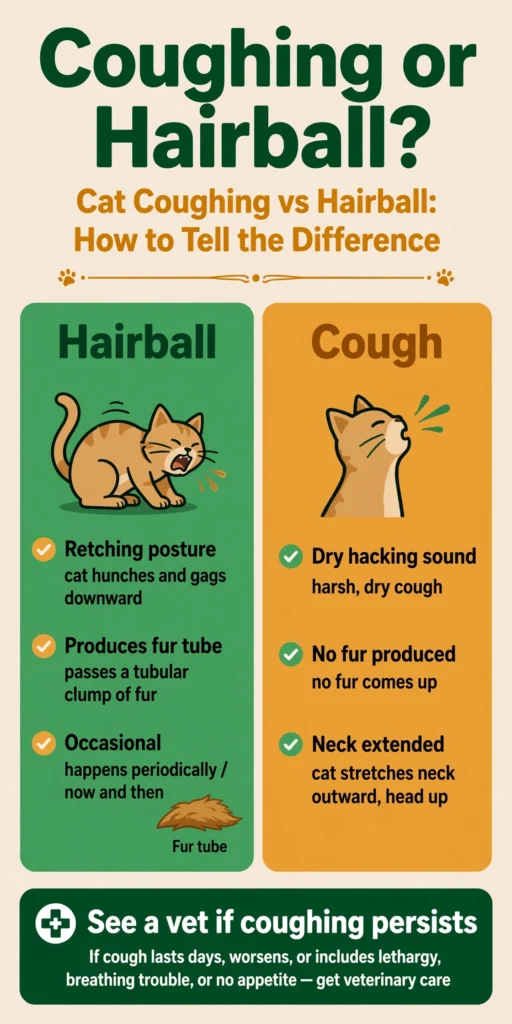
Coughing often starts with the cat crouched low, neck extended, and chest or abdomen working in short bursts. The cat may make a dry hacking sound and produce nothing. Asthma, airway inflammation, infection, parasites, and inhaled irritants are the usual possibilities. Cats very rarely cough from heart disease — Cornell’s typical heart-disease signs are rapid or difficult breathing, not cough. A cough that repeats, wakes the cat, follows exercise, or is paired with breathing effort needs veterinary attention.
What does a hairball episode look like?
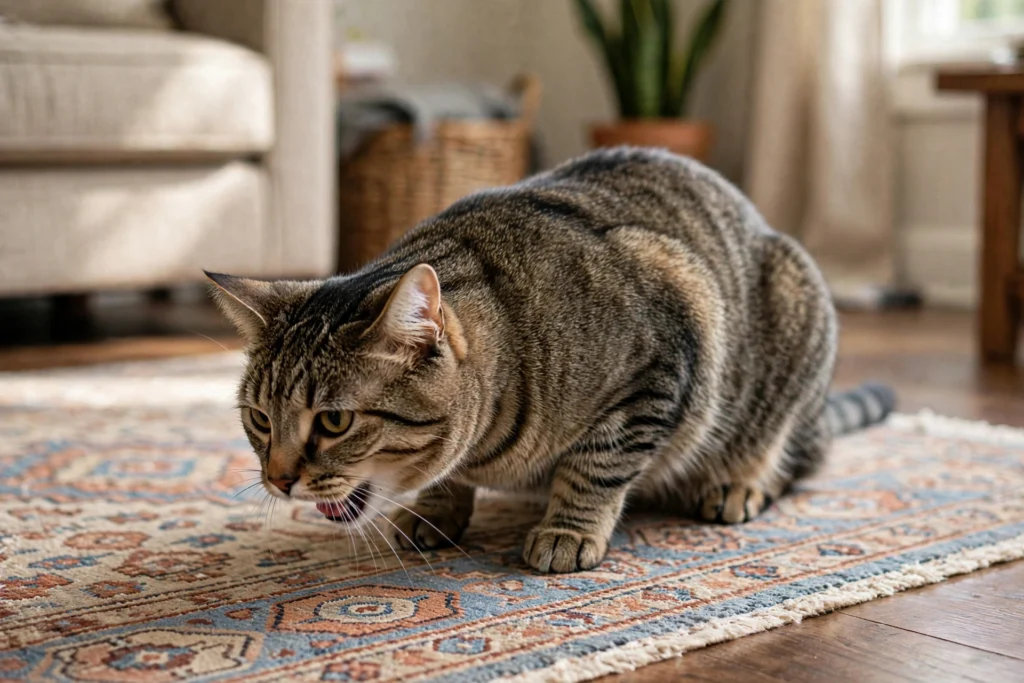
A hairball episode usually involves retching with abdominal effort and may end with a cylindrical wad of hair or fluid. Not every retch produces a hairball. Repeated unproductive retching, vomiting, refusal to eat, a painful abdomen, or lethargy can signal gastrointestinal disease or an obstruction. Cornell and VCA both caution against treating frequent episodes as routine grooming.
Coughing versus hairball: a quick comparison
Look for location and outcome. A cough is an airway sound and may happen without nausea; a hairball episode is active retching and often follows lip licking or swallowing. Coughing may occur with wheeze or rapid breathing. Hairball trouble may come with vomiting, constipation, or appetite loss. These clues are not a diagnosis, so video plus a clear timeline is more useful than a label.
When should I seek urgent care?
Go to an emergency clinic for open-mouth breathing, blue or gray gums, collapse, severe breathing effort, choking, or a cat that cannot settle. Call the vet promptly for repeated coughing, a cough with fever or nasal discharge, rapid breathing at rest, weakness, poor appetite, or a kitten or senior cat. Do not force food, induce vomiting, or give human cough medicine.
Cornell gives a normal resting rate of about 15–30 breaths per minute and advises calling the veterinarian when the relaxed or sleeping rate is consistently over 35 per minute.
| Normal | 15–30 breaths per minute |
| Call the vet | Consistently over 35 per minute while relaxed or sleeping |
What should I record for the vet?
Note whether the episode followed eating, drinking, play, litter dust, or a new cleaner. Record frequency, duration, posture, sound, discharge, appetite, stool, and breathing between episodes. A video should show the whole body if possible, but do not delay care to film. The cat vomiting guide explains why vomiting, regurgitation, and hairballs should not be collapsed into one symptom.
Can brushing prevent hairballs?
Regular gentle grooming may reduce loose hair ingestion, especially in long-haired cats, but it does not explain a persistent cough. Ask your veterinarian before using hairball pastes or changing diet; products are not interchangeable and can be inappropriate for a cat with an obstruction or another illness. Keep string, ribbon, and small toys away from cats that chew.
If you’re hearing sneezing rather than coughing, the cause may be nasal rather than airway. Retching that produces nothing can signal nausea — and feline herpes can cause respiratory symptoms that mimic a cough. Remember that difficulty breathing is always an emergency.
Veterinary sources:

Could it actually be feline asthma, not a hairball?
This is the mix-up vets see most. An asthmatic cat crouches low, stretches its neck out, and makes a wheezy coughing sound, which looks and sounds remarkably like a cat working on a hairball. The difference is what comes out: with a hairball episode, something usually comes up eventually; with asthma, nothing ever does, because the problem is inflamed airways, not something stuck.
Clues that point toward asthma rather than hairballs: a whistling or wheezing sound mixed into the cough, episodes that cluster in certain seasons or around triggers like dust, smoke, or scented litter, and a cat that is otherwise a infrequent hairball producer. Asthma can start at any age but often appears in young to middle-aged adults.
An asthma workup is straightforward but specific: a careful history of when episodes happen, chest X-rays to look at the airways and rule out other causes, and often a heartworm test, since heartworm disease can mimic asthma signs. Treatment exists and works well for most cats, but it is prescription-only and tailored to the individual, so this is firmly an “ask your vet” situation, not a home-diagnosis one.
Which hairball remedies actually help — and which are myths?
The single most effective hairball reducer is also the simplest: regular brushing. Most swallowed hair comes from grooming, so removing loose fur with a brush (daily for longhaired cats) cuts the raw material dramatically. Good hydration and a vet-recommended diet with adequate fiber help the digestive tract move through whatever hair is swallowed.
Now the myths. Butter, coconut oil, or petroleum-based “hairball pastes” given on folk advice: the evidence for kitchen fats is thin, and fatty extras can upset digestion or add unneeded calories, so ask your vet before using any of them. Human laxatives are outright dangerous for cats and should never be used. And shaving a longhaired cat to prevent hairballs trades a manageable problem for a stressed, sunburn-risked cat; regular brushing does the job without the drama.
Frequency is your guide. An occasional hairball in a longhaired cat is normal life. Hairballs arriving weekly, or any hairball episode paired with appetite loss, weight loss, or lethargy, stops being a grooming issue and starts being a vet question. Chronic vomiting can signal intestinal disease that has nothing to do with hair.
Why does the coughing happen at night or right after playing?
Timing is diagnostic gold. Asthma-related coughing in cats, as in people, often worsens at night and in the early morning hours. If your cat’s episodes reliably arrive after midnight or wake them from sleep, mention that first at the appointment. It points the vet toward reactive airways rather than the digestive tract.
Post-play coughing tells a similar story: exercise, excitement, and cold air can all trigger airway narrowing in an asthmatic cat. A cat that coughs five minutes into a vigorous play session but never at rest is describing exercise-induced airway reactivity.
Keep a simple log for a week or two: date, time of day, what the cat was doing just before, how long the episode lasted, and whether anything came up. Patterns like “always at 2 a.m.” or “only after running” are exactly what help a vet separate a cat coughing vs hairball problem from asthma in a single visit.
FAQ: Cough or hairball
My cat coughs but acts normal. Is that okay?
One mild event may pass, but a repeated cough deserves a veterinary conversation because cats can hide airway disease.
Why does nothing come up?
Dry coughs and unproductive retching have different causes; neither should automatically be called a hairball.
Can I give a human cough syrup?
No. Ask a veterinarian for cat-safe treatment.
If breathing changes, use the cat emergency guide rather than waiting.
Film an episode on your phone and count your cat’s resting breathing rate when calm — both give the vet far more than a description.
Note how often episodes happen and whether anything like play, dust, or cold air seems to trigger them.
A true hairball cough usually ends with a hairball and a cat that bounces right back; repeated dry coughing, wheezing, or episodes that end with nothing warrant a closer look. Film an episode and count breaths at rest — a video beats any description at the appointment. If the cat struggles to breathe or collapses, that’s an emergency.
Sources consulted
- https://www.vet.cornell.edu/departments-centers-and-institutes/cornell-feline-health-center/health-information/feline-health-topics/danger-hairballs
- https://vcahospitals.com/know-your-pet/coughing-in-cats
Educational information only; this guide does not diagnose or replace veterinary care.
More cat health guides: browse the cats hub.
Related cat guides
Related guides in this cat-health cluster: Why Is My Cat Sneezing, Cat Ate String What To Do.
Veterinary Review & Editorial Standard
This clinical guide was prepared using peer-reviewed veterinary literature and guidelines from leading veterinary associations. If your pet exhibits acute symptoms or distress, please seek immediate in-person veterinary emergency care.