Why Is My Cat’s Third Eyelid Showing? Causes and When to Worry
 The Pets Passion Medical Team
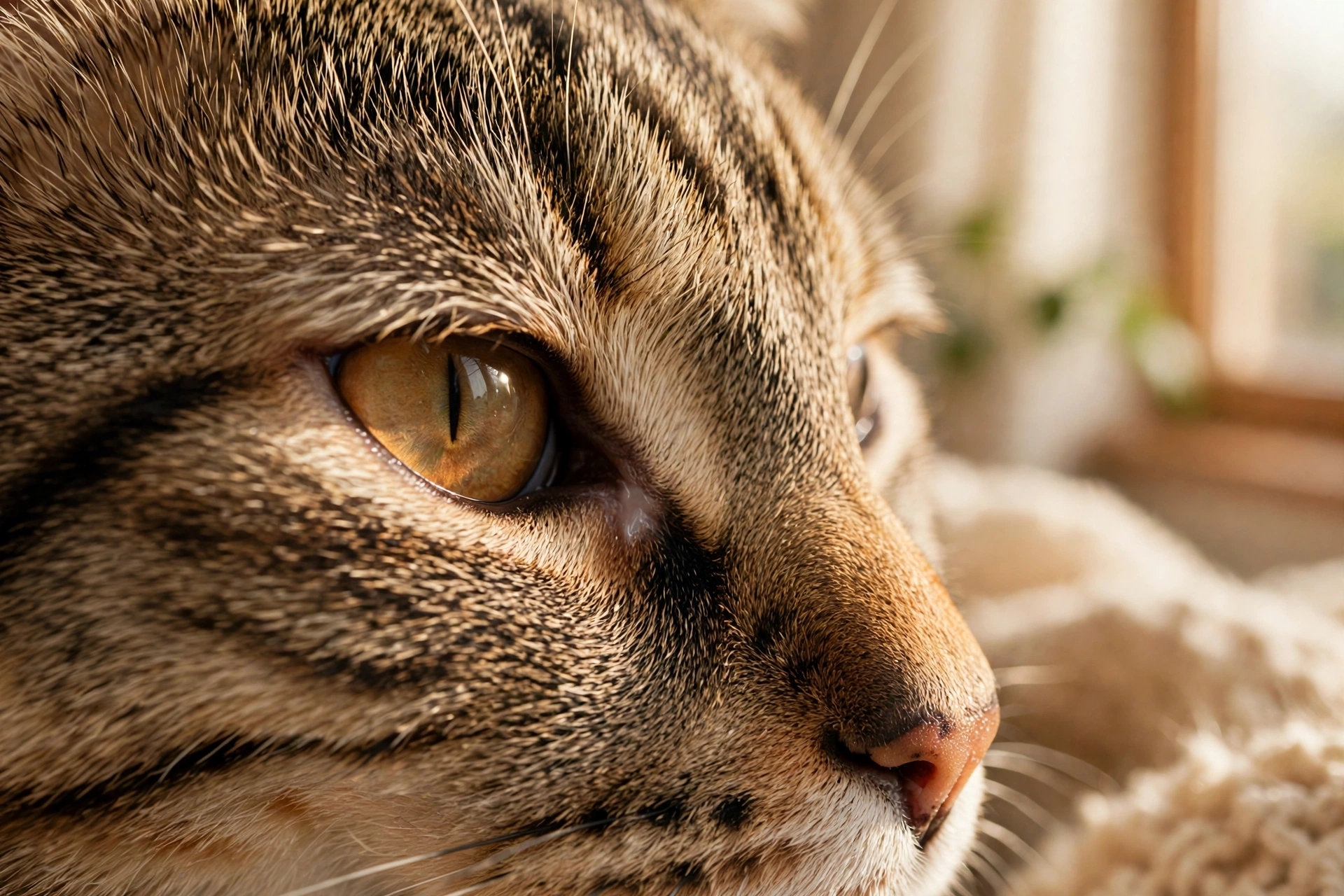
Cat third eyelid showing? That pale, whitish film creeping across your cat’s eye is the third eyelid — and it’s not always a problem. Seeing it when your cat is drowsy, just waking up, or mid-yawn is completely normal. But if the membrane is still visible once your cat is fully awake, or it shows in just one eye, call your vet.
What is my cat’s third eyelid?
Every cat has three eyelids. The third eyelid, also called the nictitating membrane or “haw,” sits in the inner corner of the eye near the nose and stays tucked out of sight most of the time. It sweeps across the eye to spread tears over the cornea, clear away dust, and shield the eye from harm.
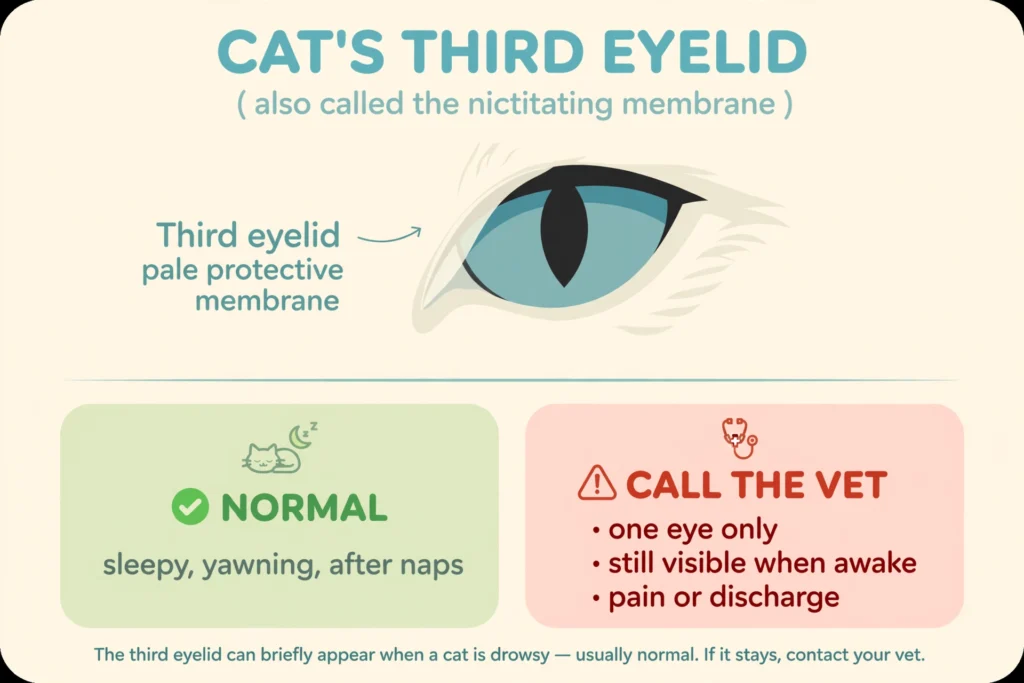
The membrane is usually pale pink or whitish and moves quickly and independently of the other lids — which is why it looks so strange the first time you notice it. Seeing a thin edge of it while your cat dozes is normal.
Is it normal for my cat’s third eyelid to show?
Yes — briefly. It’s completely normal to see the third eyelid when your cat is sleepy, just waking from a nap, yawning, or deeply relaxed — you may also catch it during a blink or when your cat’s eyes are half-open in sleep.
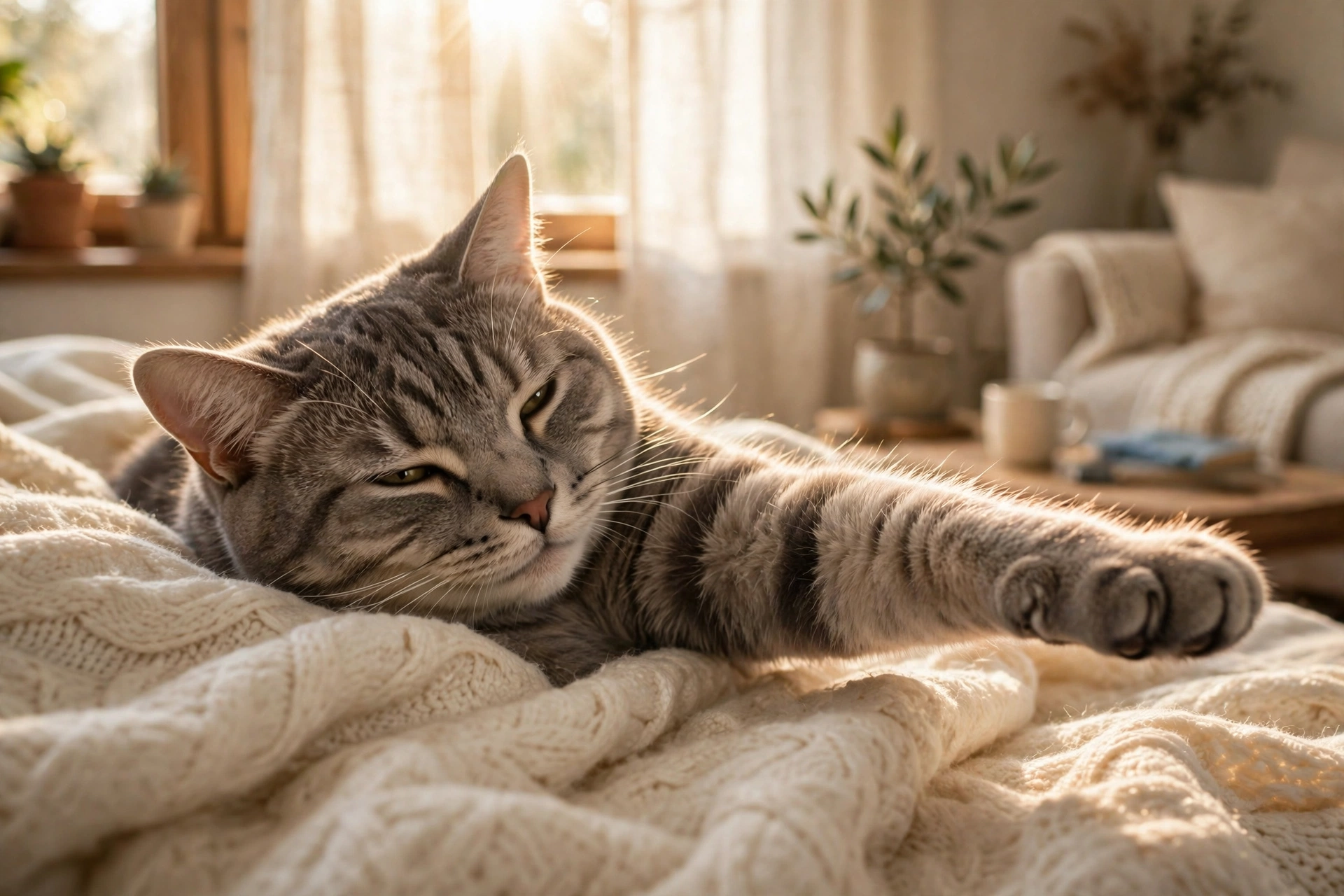
Rule of thumb: sleepy cat, visible membrane = normal. Awake cat, visible membrane = worth checking. Give it 20–30 minutes after waking — once your cat is up and moving around, the membrane should slide back. If it’s still there, or you notice any of the following, call your vet:
- Visible in only one eye
- Still visible 30+ minutes after waking
- Redness, swelling, discharge, or squinting
- Pawing at the eye or face
- Change in appetite, energy, or behavior
What causes a cat’s third eyelid to show?
A visible third eyelid is a symptom, not a diagnosis. Causes fall into two groups: eye problems and whole-body problems.
Eye-related causes:
- Conjunctivitis — inflammation of the eye’s lining, often with redness and discharge
- Corneal ulcer — a scratch or sore on the eye’s surface; usually painful, with squinting
- Glaucoma — increased pressure inside the eye; an emergency
- Foreign body — a grass seed or speck of debris trapped under the lids
- Trauma — a scratch from another cat or a bump during play
Whole-body causes:
- Dehydration or recent weight loss — the eye sits slightly deeper, letting the membrane drift across
- Gastrointestinal illness — the classic “Haw’s syndrome”: both third eyelids rise during or after a bout of diarrhea or intestinal upset, then settle on their own over a few weeks
- Upper respiratory infection — often with sneezing and eye discharge
- Horner’s syndrome — nerve disruption causing a droopy lid, sunken eye, and visible third eyelid on one side
- Systemic infection or fever
What will the vet do?
At the appointment, the vet will examine both eyes closely, usually with a magnifying light. Common next steps include:
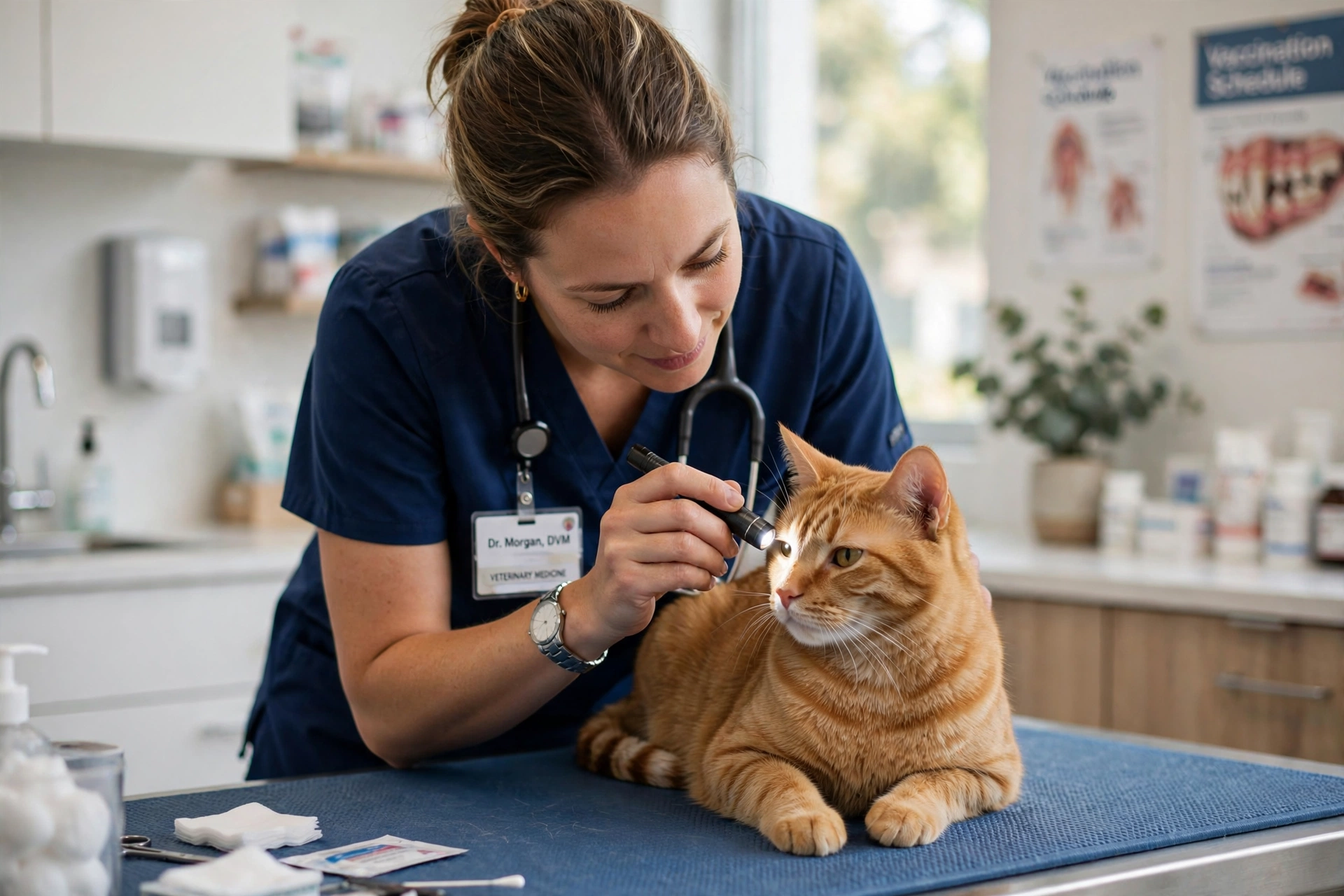
- Fluorescein stain test — a harmless orange dye that glows green under blue light wherever the cornea is scratched
- Tear production test — a small paper strip checks for dry eye
- Eye pressure check — to rule out glaucoma
- Bloodwork or fecal test — if a whole-body cause like infection or intestinal parasites is suspected
No home treatment can substitute for this exam — eye conditions can worsen fast, and the wrong eye drop can do real harm.
What should I do right now?
- Don’t touch or pull at the membrane. It’s delicate and attached — you’ll only hurt your cat.
- Note the details: one eye or both? How long has it been visible? Any discharge, sneezing, appetite change?
- Check the basics: is your cat eating, drinking, and using the litter box normally?
- Call your vet if the membrane is still visible once your cat is fully awake, if it’s one-sided, or if any pain signs are present. Eye problems are never “wait a week” problems.
When in doubt about your cat’s eyes, call your veterinarian — eye problems can deteriorate quickly.
If the membrane doesn’t retract or you’re unsure when to take your cat to the emergency vet, don’t wait — eye emergencies escalate fast. Also watch for not eating: appetite loss alongside eye changes can point to a whole-body illness.
What does Haw’s syndrome actually look like over time?
Haw’s syndrome is the diagnosis behind a large share of “both membranes up, cat otherwise fine” cases. The typical picture: the third eyelids rise in both eyes over a day or two, the cat shows no pain, no discharge, no squinting, and otherwise behaves completely normally: eating, playing, grooming, all unchanged.
The course is reassuring but slow: It is considered self-limiting, meaning it resolves on its own without treatment. Most cases improve over several weeks, though a few take a couple of months for the membranes to fully retract. Recovery looks like a gradual sinking back. One day you notice the film covers less of the eye than last week, then one morning it is simply gone.
Because it is a diagnosis of exclusion, your vet will still want to rule out the other causes first, especially dehydration and intestinal parasites, which are sometimes found alongside it. Call back for a recheck if the membranes have not started improving after a few weeks, if only one eye is affected, or if any new sign appears: discharge, squinting, appetite change. Haw’s gets better; anything that does not is something else.
Why does the vet care whether it’s one eye or both?
This is one of the first things your vet will ask, and the answer narrows the suspect list fast. One eye affected points to a local problem on that side: a scratch or ulcer on that cornea, a foreign body tucked under that lid, glaucoma, trauma, or Horner’s syndrome on that side of the face. The investigation stays focused on that eye.
Both eyes up together points away from the eyes themselves and toward the whole cat: dehydration pulling the eyes slightly back, Haw’s syndrome, an upper respiratory infection, or a systemic illness. That is why “both membranes, cat seems fine” so often ends at Haw’s, while “one membrane plus squinting” points to that specific eye.
Note which eye appeared first and whether the second followed hours or days later. That timeline is genuinely useful. A photo taken in good light, showing both eyes in one frame, gives the vet a baseline that words cannot. And if the pattern changes (one eye becomes two, or two become one), tell the vet, because a changing pattern can change the diagnosis.
How can I check my cat’s eyes safely at home?
You can gather useful information without touching the eye at all. Wait for a calm moment and good natural light. Sit at your cat’s level and simply look: compare the two eyes side by side. Note any discharge and its color (clear and watery versus yellow or green), whether one eye is squinting or held smaller than the other, any cloudiness on the surface, redness of the white, or pupils of obviously different sizes.
Write down what you see with times — “left eye half-closed since Tuesday morning, clear tearing” — and take a photo. Vets love photos, because eyes can look dramatically better (or worse) by appointment time, and the photo preserves what you actually saw.
What never to do: do not pry the lids open to “get a better look,” do not touch the eyeball, do not flush the eye with water or saline unless your vet specifically told you to. Do not use any eye drops or ointment, human or leftover pet products, without veterinary direction. Eyes are fragile, pain makes cats unpredictable, and the wrong product in an ulcerated eye can cause real harm. Observe, note, photograph, and let the vet do the touching.
Is a visible third eyelid painful for my cat?
The membrane itself isn’t painful, but the underlying cause often is — especially corneal ulcers or glaucoma. Squinting, pawing, or hiding are pain clues.
Can both third eyelids show at the same time?
Yes. Both membranes rising together often points to a whole-body cause such as Haw’s syndrome after intestinal upset, dehydration, or systemic illness — rather than an eye injury, which is usually one-sided.
What is Haw’s syndrome and is it dangerous?
Haw’s syndrome is the temporary rise of both third eyelids during or after gastrointestinal illness.
Will my cat’s third eyelid go back to normal on its own?
If it appeared while sleepy, yes — within minutes of waking. If it’s persistently visible while awake, don’t wait for it to resolve; the cause needs identifying.
Veterinary Review & Editorial Standard
This clinical guide was prepared using peer-reviewed veterinary literature and guidelines from leading veterinary associations. If your pet exhibits acute symptoms or distress, please seek immediate in-person veterinary emergency care.