Cat Vomiting: Colors, Causes & When It’s an Emergency
 The Pets Passion Medical Team

Occasional vomiting in an otherwise bright, eating cat can be minor — but it’s not “just a hairball” by default. Yellow liquid is usually bile from an empty or irritated stomach (PetMD). Treat it as urgent when vomiting repeats, lasts past about 24–48 hours, or shows up with lethargy, appetite loss, blood, diarrhea, pain, or a kitten/senior (VCA, Cornell). Call a vet urgently for repeated vomiting, blood, marked lethargy, breathing trouble, suspected toxin, or a cat who cannot keep water down; see the emergency-vet red flags for the go-now threshold.
Educational disclaimer: This guide from The Pets Passion summarizes public guidance from PetMD, VCA Animal Hospitals, the Cornell Feline Health Center, and the Merck Veterinary Manual. It is not a diagnosis or treatment plan. If you’re unsure, call your veterinarian or an emergency clinic. For possible toxins or human-food mishaps, use our pet toxic foods checker while you arrange care — it doesn’t replace a clinic visit.
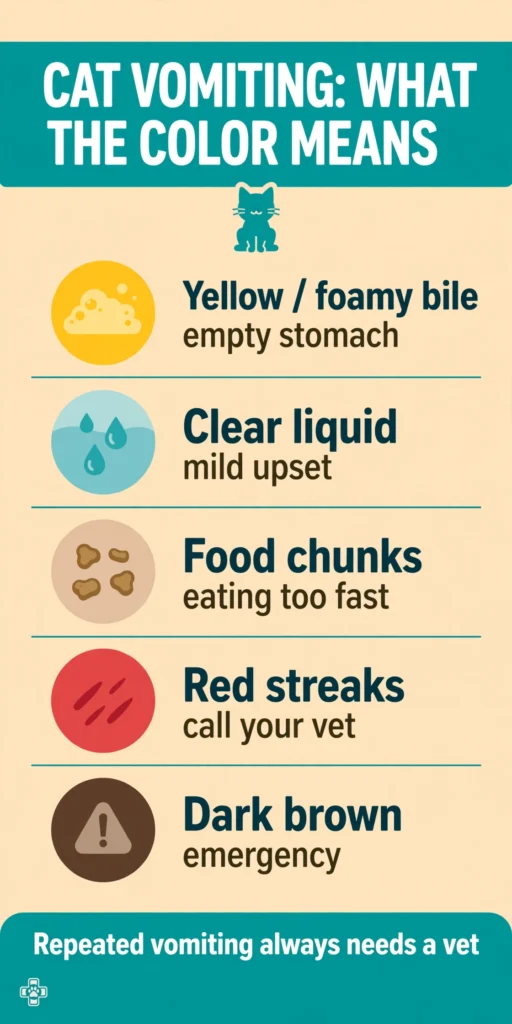
What does cat vomit color mean — especially yellow?
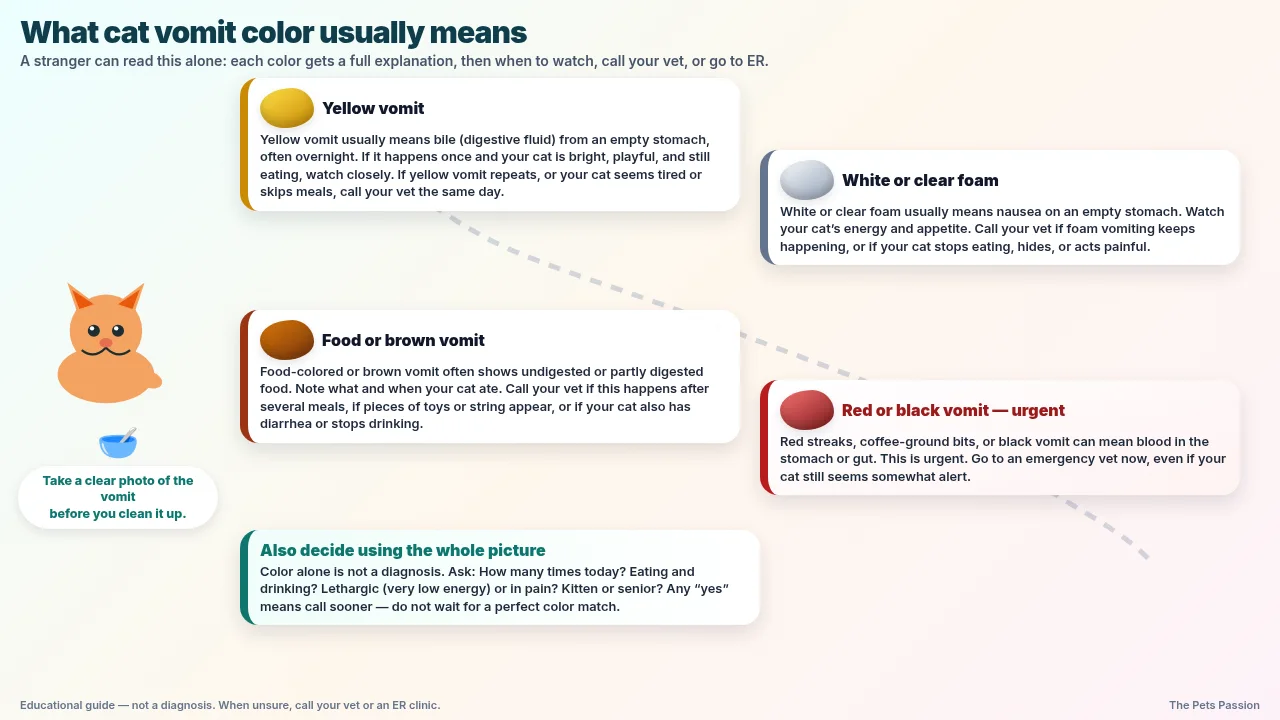
Color is a clue, not a diagnosis. Pair it with how often it happens and how your cat acts.
| Color / look | Common meaning (not a diagnosis) | Typical next step |
|---|---|---|
| Yellow / green-yellow | Often bile when the stomach is empty too long; PetMD notes bilirubin gives bile its yellow tint | One episode in a bright, eating cat may be monitorable; repeats or other signs → call the vet |
| Clear / white foam | Empty stomach, nausea foam, or fluid brought up with effort | Watch appetite/energy; repeat episodes need a check |
| Food / tan-brown (not “coffee grounds”) | Undigested or partly digested food; note time since the last meal | Persistent vomiting after meals → diet/GI workup with your vet |
| Bright red streaks / clots | Fresh blood from mouth, esophagus, or stomach lining | Urgent veterinary care |
| Dark brown / black / coffee-grounds | Often digested blood | Urgent veterinary care |
| Green | PetMD notes green can reflect material mixed with bile from farther along the gut | Treat like bile/food vomiting for triage; escalate if frequent or with red flags |
Cat throwing up yellow: PetMD explains that bile is made in the liver, stored in the gallbladder, and normally released with meals. If the stomach sits empty for long stretches, bile can irritate the lining and come up as yellow liquid. That’s why some cats vomit yellow early in the morning or before a delayed meal. PetMD also notes yellow can occasionally come from yellow-dyed food or an object — so context still matters.
Yellow bile alone isn’t automatically an ER visit if your cat is otherwise normal. It is urgent when there’s lethargy, reduced appetite, abdominal pain, suspected foreign body, or other illness signs (PetMD).
If your cat seems painful while sick, our cat grimace scale can help you describe facial pain cues to the clinic — it doesn’t replace an exam.
Is it vomiting, a hairball, or regurgitation?
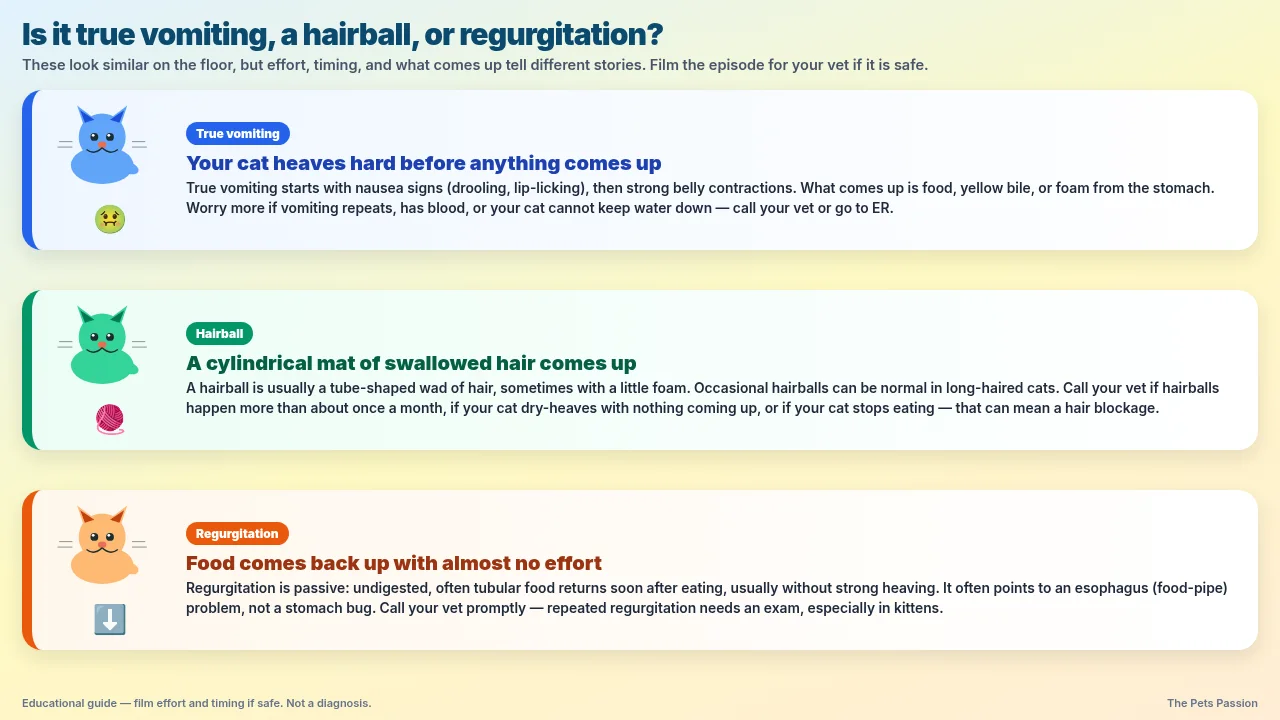
Owners mix these up all the time. The difference changes what your vet worries about.
Vomiting is active. You’ll often see nausea first — restlessness, lip licking, drooling, repeated swallowing — then forceful belly contractions that push stomach contents out (VCA).
Hairballs (trichobezoars) are wads of undigested hair, often cylindrical, sometimes mixed with yellow or foamy liquid. Cornell notes many cats bring up a hairball about once every week or two without lasting problems — but a hairball that won’t pass can irritate or even obstruct the gut, which is serious (Cornell — Danger of Hairballs). VCA advises contacting your veterinarian if hairball vomiting happens more than once a month. Unproductive retching, refusal to eat, or lethargy isn’t “just another hairball” — get examined.
Regurgitation is more passive: little or no abdominal heaving, often soon after eating or drinking, and the material may look tubular and undigested because it never really reached the stomach (VCA, Merck). That pattern points more toward esophageal problems.
A short phone video of an episode is worth more than a vague description. If you’re sorting symptoms across body systems, try the pet symptom checker for structured notes before you call — then still follow veterinary advice.
When is cat vomiting an emergency?
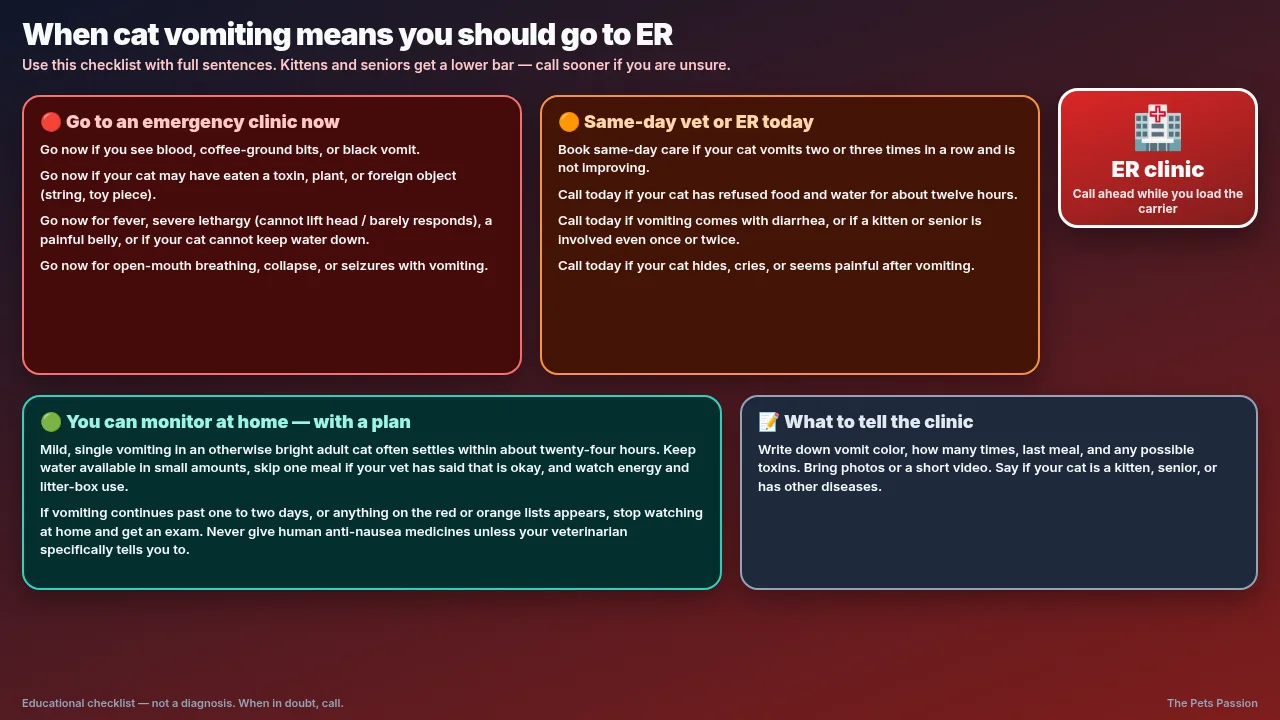
Use this triage as a practical filter — not a substitute for clinical judgment.
Go to emergency care now if your cat:
- Has blood in the vomit (red or coffee-grounds/black)
- May have eaten a toxin, toxic plant, string/foreign object, or human medication
- Is feverish, collapsed, severely lethargic, or clearly painful / has a swollen belly
- Can’t keep water down, or is rapidly dehydrating
- Is a kitten, senior, or chronically ill cat with repeated vomiting (lower threshold — they crash faster)
VCA lists fever, lethargy, loss of appetite, abdominal pain, diarrhea, dehydration, blood in vomit, and suspected foreign body or toxin as reasons to seek care immediately.
Call for same-day veterinary advice if:
- Your cat vomits more than two to three times in a row (PetMD)
- They won’t eat or drink for about 12 hours after several vomiting episodes
- Vomiting comes with diarrhea (harder to stay hydrated)
- They already have diabetes, kidney disease, hyperthyroidism, or similar — PetMD treats new vomiting in these cats as higher urgency
The 24–48 hour window
VCA notes many sudden vomiting cases improve within about 24 hours if the cat otherwise seems well — but if vomiting continues more than one to two days, get veterinary care. Ongoing vomiting can hide a serious cause and lead to dehydration or electrolyte problems.
Cornell’s broader red flags: vomiting more than once per week, or any pattern with lethargy, weakness, decreased appetite, blood, thirst/urination changes, or diarrhea — prompt evaluation.
Never give human antiemetics, painkillers, or leftover pet meds. Human drugs (including common pain relievers) can be toxic to cats. PetMD advises not giving food, water, or anything by mouth until you’ve spoken with a veterinarian for guidance when vomiting starts. Vets may prescribe feline-appropriate anti-nausea drugs (for example, maropitant / Cerenia® is commonly discussed in clinic resources) — that’s a clinical decision, not a DIY step.
What causes cats to vomit?
Vomiting is a sign, not a single disease. Common milder triggers include dietary indiscretion (plants, table scraps, spoiled food), hairballs, food intolerance, and parasites (VCA).
More serious causes VCA and Cornell list include foreign-body obstruction, toxins, pancreatitis, liver or kidney disease, thyroid disease, inflammatory bowel disease, infections, urinary tract obstruction, and cancer. Cornell also flags human medications, string/yarn, antifreeze, and foods like chocolate or onions as classic “what did they chew?” hazards.

Yellow bile specifically can link to an empty stomach, hairballs, gastritis/enteritis, pancreatitis, liver/gallbladder disease, diabetes, kidney disease, or obstruction when the cat stops eating and keeps vomiting (PetMD). Bilious vomiting syndrome (morning bile vomits) is well known in dogs and less commonly described in cats, but the empty-stomach pattern still shows up clinically (PetMD BVS).
If plant toxins are on your shortlist, check household hazards and call poison control when needed — our toxic-foods tool covers many pantry risks; plant ID still belongs with ASPCA/Pet Poison Helpline guidance and your vet.
What should I do at home in the first 24–48 hours?
Only for a single, mild episode in an adult cat who is bright, walking normally, and still interested in food/water — and only until you get clearer veterinary instructions.
- Remove hazards — string, toxic plants, human meds, trash access.
- Log it — time, color/texture (photo), what was eaten, litter box output, energy.
- Ask your clinic before fasting or refeeding — and keep any fast short (a few hours, not an extended one), because prolonged fasting can risk fatty liver disease (hepatic lipidosis) in cats. Follow your vet’s plan for water and bland-diet timing.
- Watch the clock — escalate at the red flags above; don’t stretch “wait and see” past the 24–48 hour guidance if vomiting continues.
- Skip home remedies — no hydrogen peroxide “just in case,” no human anti-nausea pills, no oils or human antacids unless a vet specifically instructs you.
If your cat starts hiding, stops grooming, or looks painful, note those changes for the clinic and consider cross-checking pain cues on the cat grimace scale.
What will the vet check, and how is vomiting treated?
Expect a history and physical exam first. Depending on severity, diagnostics may include fecal testing, bloodwork, urine tests, X-rays, ultrasound, and sometimes endoscopy or surgery if a foreign body is suspected (VCA, Cornell, Merck).
Treatment tracks the cause. Mild cases may use a vet-directed bland diet, anti-nausea medication, stomach protectants, or antacids. Severe or systemic disease may need IV fluids, hospitalization, deworming, surgery, or disease-specific therapy. Cornell emphasizes supportive care (fluids, bland diet once vomiting settles) while the underlying problem is identified.
Bring your vomit photos, a list of foods/treats/plants, and any video of the episode. That shortens the guessing.
More tools that pair with this topic: pet symptom checker, pet toxic foods checker, and the tools hub.
Bottom line
Call the vet now for blood in the vomit, suspected toxins or foreign objects, collapse, severe lethargy or pain, inability to keep water down, or repeated vomiting in a kitten, senior, or chronically ill cat. A single mild episode in an otherwise bright, eating adult cat can be monitored for 24–48 hours — but escalate if vomiting repeats, lasts past a day or two, or any red-flag signs appear.
Vomiting with diarrhea is harder on hydration — watch both. For swallowed string or small toys, don’t wait; vomiting and refusing food together also needs prompt care. Review the emergency signs of vomiting so you know the go-now threshold.
Veterinary sources:
Why is my cat throwing up yellow liquid?
Most often it’s bile from an empty or irritated stomach. One episode in a normal, eating cat may settle — repeated yellow vomiting or other illness signs needs a vet (PetMD).
How often is “normal” for hairballs?
Cornell describes roughly once every week or two as common for some cats; VCA suggests calling if hairball vomiting is more than once a month. Frequent or unproductive retching is not normal grooming fallout. These two statements serve different purposes: Cornell describes what is commonly observed in healthy cats, while VCA gives a conservative call-your-vet bar. When in doubt, use the lower threshold and ask your clinic what frequency it wants to hear about.
Can I give Pepto, Dramamine, or other human antiemetics?
No — not without veterinary direction. Many human medicines are dangerous to cats. Ask your clinic for a feline-safe plan.
My cat vomits once then acts fine — do I still need a vet?
Maybe not immediately for a single mild episode in a healthy adult. Escalate if it repeats, lasts into the next day or two, or any red-flag signs appear — with a lower bar for kittens and seniors.
What’s the difference between vomiting and regurgitation again?
Vomiting = effort + belly heaves after nausea signs. Regurgitation = passive, often right after eating, undigested/tubular material (VCA).
Should I be worried about toxins or plants?
Yes if exposure is possible. Use the pet toxic foods checker for pantry risks and call your vet or a pet poison hotline for plant/chemical exposures.
Related cat guides: Use the cat emergency-vet guide for go-now signs, then review cat calorie needs when appetite returns. The pet symptom checker can organize a call. More cat guides.
Last researched against PetMD, VCA, Cornell Feline Health Center, Merck Veterinary Manual, and Purina public education pages. Always follow your veterinarian’s advice for your individual cat.
Veterinary Review & Editorial Standard
This clinical guide was prepared using peer-reviewed veterinary literature and guidelines from leading veterinary associations. If your pet exhibits acute symptoms or distress, please seek immediate in-person veterinary emergency care.