
Cost of Owning a Dog: Build a Real First-Year and Annual Budget
 The Pets Passion Medical Team

YMYL / financial & medical disclaimer: This guide from The Pets Passion is educational. Published averages (AVMA, ASPCA Pet Insurance explainers, consumer analyses) describe populations—not your zip code, breed, or emergency. Insurance examples are planning ranges, not quotes. Nothing here is financial, legal, or veterinary advice. Shop policies carefully for exclusions and waiting periods.
Cost of owning a dog is really two questions: what does year one demand (setup + surgeries + puppy vaccines), and what does a typical ongoing year look like before the unplanned ER visit? AVMA survey reporting has put average dog-owner household pet spending above ~$1,700 in recent years (figures vary by report year; veterinary care is often about one-third of the total). ASPCA Pet Insurance’s size-based educational estimates cite roughly ~$512 / ~$669 / ~$1,040 annual care figures for small / medium / large dogs—useful as a conversation starter, not a ceiling. Build your sheet with our primary tools: the Pet Budget planner and the Pet Insurance Calculator.
Quick answer. Cost of owning a dog
| Bucket | What to include |
|---|---|
| One-time / year-one | Adoption/purchase fees, crate, bed, gates, microchip, spay/neuter, initial vaccine series, starter preventives, training deposit |
| Recurring annual | Food, preventives, wellness exams, dental care, grooming, waste bags, toys/rotation, licensing, boarding/sitting |
| Risk buffer | ER deductible fund and/or accident-and-illness insurance premium |
| Size multiplier | Large/giant dogs usually cost more in food and dose-based meds |
What do AVMA and ASPCA averages say about dog costs?
AVMA ownership statistics and news summaries from recent Sourcebook cycles report dog-owning households among the higher spenders—over ~$1,700 average total pet-related spend in multiple recent years—with veterinary care near ~one-third of the pile. For 2025 survey reporting, AVMA listed about $598 average veterinary spending per dog-owning household per year (population average, not a promise for a Great Dane with GDV).
Later-life spend is quality-of-life spend; keep a dog quality of life scale next to the emergency fund.
First-year vaccines and boosters are a fixed calendar cost—budget from a realistic puppy vaccination schedule, not a single clinic flyer.
Underestimating adult size underestimates everything downstream—use how big will my puppy get when you adopt young.
Food is predictable once you know energy needs—start from how many calories does my dog need before you lock the grocery line.
ASPCA Pet Insurance educational pages (partnering ASPCA cost framing) break annual ownership-style estimates by size—small/medium/large on the order of ~$512 / $669 / $1,040—plus separate notes on one-time setup costs. Treat these as structured ballparks.
Consumer analyses (e.g., ValuePenguin’s 2024 pet spending study) have estimated dog-owner spend near ~$1,248 in some modeled breakdowns (vet + food + products), and cited NAPHIA-linked average accident-and-illness premiums around ~$676/year for dogs in 2023 data. Premiums move yearly; always get a live quote.
None of these figures include “I bought a mid-century sofa and a Frenchie destroyed it.” Budget for your real life.
Why is the first year of owning a dog more expensive?
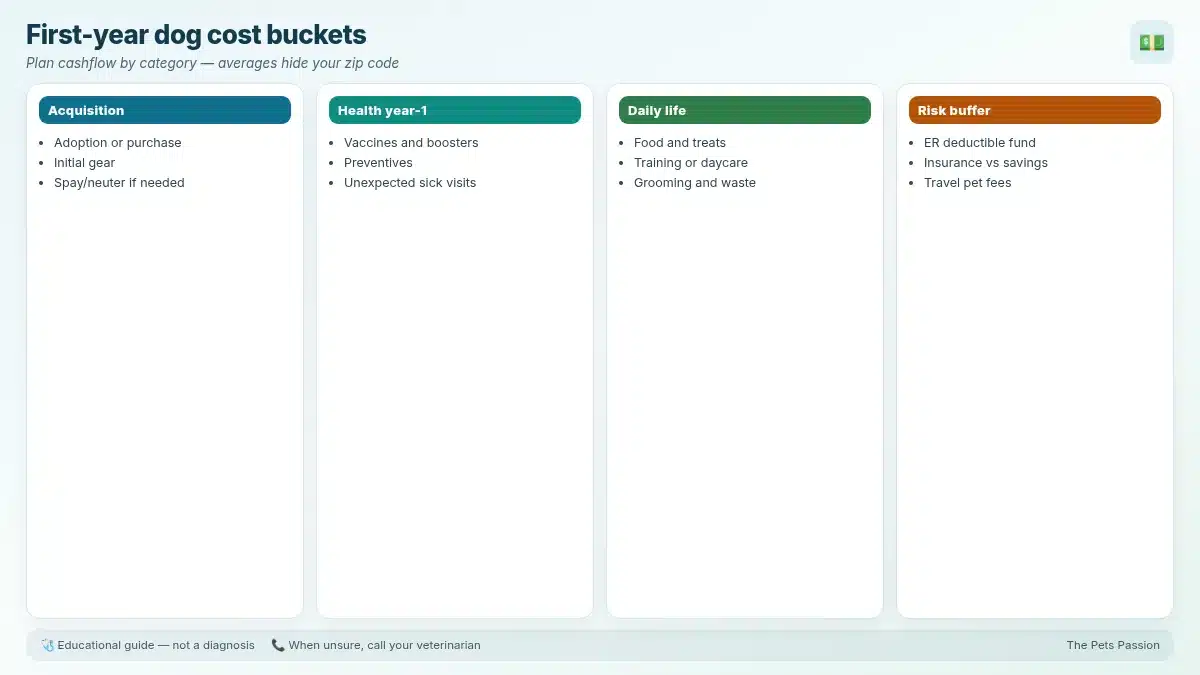
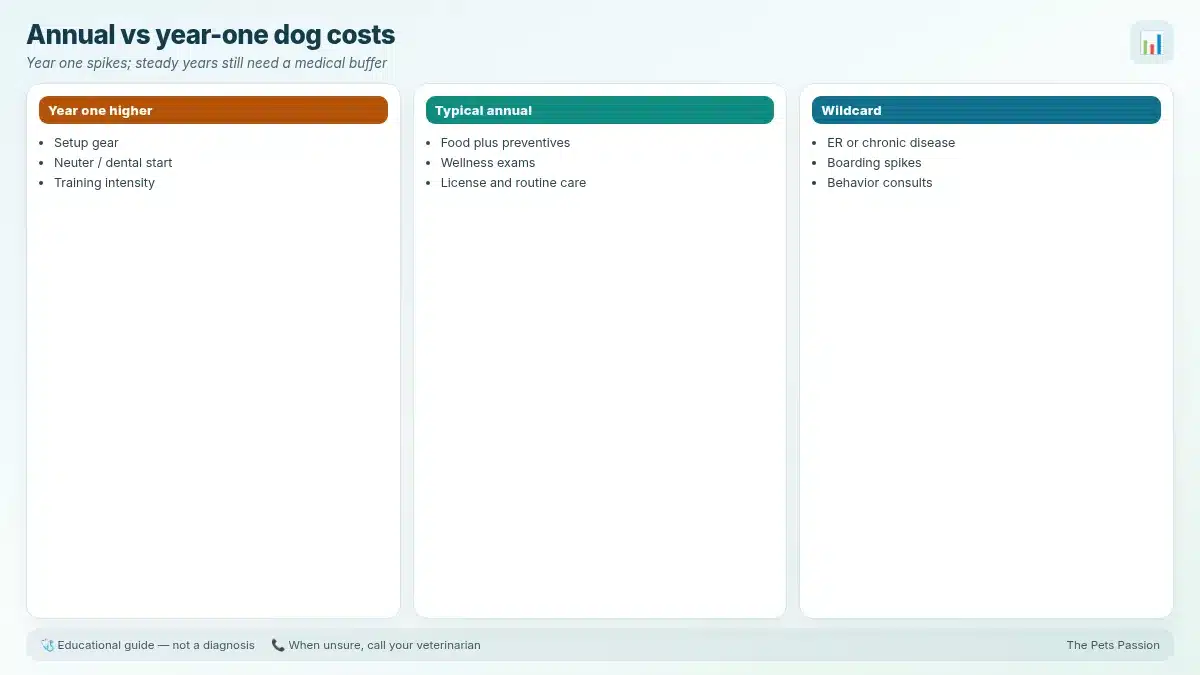
The Pet Budget tool’s own framing notes first-year costs often run ~40–70% higher than a steady ongoing year because crates, gates, spay/neuter, and multi-visit vaccine schedules stack up. Puppies also eat training classes and more ruined leash returns.
Year-one line items to price locally:
- Adoption fee or breeder price (huge range—verify health testing ethics separately)
- Spay/neuter and pain meds
- Core vaccines + boosters on a schedule (pet vaccine schedule tool)
- Fecal tests, deworming, heartworm/flea/tick preventives
- Microchip + registration
- Crate, gates, bed, bowls, leash/harness, ID tags
- Foundation training (group class or private)
- Immediate food and treat budget (use calorie calculator so you buy the right bag size)
Ongoing years: food, preventives, annual or biannual exams, dental cleanings when indicated, grooming if coat demands it, boarding, license, toy/food enrichment rotation, and the risk buffer.
How much does dog food cost as size goes up?
A 6 kg adult and a 40 kg adult do not share a grocery twin. Predict adult size early with the Puppy Weight Predictor if you are still guessing, then estimate kcal need via the Dog Calorie Calculator and divide by the food’s kcal per dollar. Boutique freshness matters less than complete nutrition you can afford for a decade.
Treats ≤10% of calories keeps both waistline and wallet quieter.
Veterinary care: wellness vs volatility
Averages hide the ER bimodal world: many years feel “fine,” then a foreign-body surgery lands like a second rent payment. That is why the budget tool recommends either active insurance or a dedicated emergency cushion on the order of $1,000–$2,500 (their educational range)—and why some families fund both.
Price wellness as non-negotiable: exams, preventives, fecal checks, dental assessments. Shop vaccines and spay/neuter only through reputable clinics—not parking-lot rumor deals that skip exams.
How should I estimate dog insurance costs?
Open the Pet Insurance Calculator. Enter species, age, size band, deductible preference, and reimbursement percentage to see a monthly planning range. Then read the checklist the tool emphasizes:
- Pre-existing conditions generally excluded
- Waiting periods apply
- Hereditary/congenital coverage varies—verify for your breed risks
- Exam fees may be excluded
- Reimbursement models mean you pay the clinic first
Accident-only policies cost less and cover less. Accident-and-illness is the usual serious conversation. Wellness riders are optional budgeting tools, not magic.
NAPHIA-linked figures cited in consumer reporting put average dog accident-and-illness premiums on the order of the mid–high hundreds of dollars per year in recent data—your young mixed mutt in a low-cost region will not match a senior brachycephalic in a coastal city.
Hidden costs people forget
- Time off work for midday puppy potty breaks
- Professional training for reactivity (often worth every cent)
- Increased rent deposits or “no dog” housing limits
- Nail trims if you will not DIY
- Diapers/boots for senior incontinence/mobility later
- Cremation/aftercare funds (pair emotionally with the Canine Quality of Life Scale long before you need it)
- Water waste? Negligible. Sofa replacement? Not negligible.
Q&A
What is the average cost of owning a dog per year?
Recent AVMA-linked reporting clusters dog-household total spend around or above ~$1,700 in several recent cycles, with veterinary care near one-third. ASPCA size ballparks sit roughly $500–$1,000+ depending on size. Your spreadsheet will disagree—and should.
How much is the first year?
Often substantially higher than year two because of setup and sterilization/vaccine stacks. Use the Pet Budget first-year vs ongoing split.
Is pet insurance worth it?
It is a risk-transfer product. Worth it when a single eligible claim would hurt and when you understand exclusions. Run premium ranges in the insurance calculator and compare to a self-funded ER account.
Do small dogs always cost less?
Often less in food and some dose-based meds; not always in dentistry, luxating patellas, or boutique gear habits. Insurance premiums also vary by breed risk, not only kilograms.
What about breeding “to offset costs”?
Please do not. Ethical breeding loses money when done correctly; casual breeding raises welfare and market risks this site will not help optimize.
Related guides and tools
- Primary tools: Pet Budget · Pet Insurance Calculator
- Dog Calorie Calculator
- Puppy Weight Predictor
- Pet Vaccine Schedule
- Canine Quality of Life Scale
- Pet Hydration Calculator
Build your sheet in one evening
- Open Pet Budget; choose dog + size + location cost tier.
- Edit every line to match local clinic quotes and your actual food brand.
- Add a training line even if the default underplays it.
- Open Pet Insurance Calculator; save the monthly range.
- Decide: insurance + small cushion, or large self-insurance fund.
- Revisit after adoption when the real dog (and real chewing) arrives.
Regional and lifestyle multipliers
- Urban high-rise: walking services and pet deposits
- Rural: possible lower boarding but higher wildlife/parasite pressure
- Hot climates: more cooling gear, never skip heatstroke awareness
- Competitive sport homes: entry fees, gear, sports med consults
- Multi-dog homes: economies on bags of food, diseconomies on ER odds
Adoption vs purchase pricing ethics
A $50 adoption fee does not mean a $50 dog. Many rescues include vaccines/spay; many do not include the next six months of training. Breeder invoices that look “expensive” may still exclude the orthopedic insurance you will want for at-risk breeds. Price the decade, not the handshake.
Sample monthly cash-flow thinking
Suppose your edited budget says $140/month ongoing and insurance planning adds ~$45–$60/month. Autopay preventives and insurance on payday. Sweep $25–$50 into an ER savings pot until you hit your cushion target. Cash-flow beats heroic annual resolutions.
Dental cleanings: the stealth line item
Anesthesia-based dentistry can rival a month or two of “average” costs in one invoice. Ask your clinic for a ballpark and whether bloodwork is bundled. Skipping dental care is not a savings strategy if teeth abscess later.
Grooming math
A wash-at-home mix may cost shampoo and time. A coated doodle-type may need professional grooming every 6–8 weeks at prices that rival food. Be honest before you fall in love with hair.
Training as insurance you can pet
Reactivity, separation distress, and resource guarding create broken leases and broken hearts. Allocate money early. A skilled trainer is cheaper than rehoming logistics—or bite-related liability nightmares this article will not dramatize.
Senior years: budget the arc
Costs often U-curve: puppy year high, adult mid, senior high again (mobility meds, labs, hospice). Keep QoL tools ready and revisit insurance eligibility before pre-existing conditions stack. Some families increase the cash cushion at age 8+.
Myth vs money reality
| Myth | Reality |
|---|---|
| "Food is the only big cost" | Vet volatility dominates bad years |
| "Insurance covers everything" | Exclusions and caps abound |
| "Small dog = cheap dog" | Dentistry and housing rules disagree |
| "I’ll just save if something happens" | Needs automatic funding, not vibes |
| "Averages tell me my number" | Your breed and city outvote averages |
Using tools together (primary CTA loop)
When someone asks the cost of owning a dog, send them through this loop:
- Pet Budget for transparent first-year vs ongoing totals you can edit.
- Pet Insurance Calculator for premium planning ranges and exclusion literacy.
- Size/calorie tools so food line items stop being fiction.
- A calendar reminder to update quotes annually.
Conversation script for partners/roommates
“I’ve built a first-year estimate of $X and ongoing $Y/month using The Pets Passion budget tool. Insurance planning adds $Z/month. Emergency cushion target is $W. Are we aligned before we meet the dog?”
Alignment prevents resentment when the first steamy GI night costs a rideshare to the ER.
Charity clinics and payment plans
Ask about CareCredit or clinic payment plans before anesthesia day. Nonprofit vaccine days help wellness cash-flow but do not replace exam relationships. Stealing care from tomorrow’s dental to fund today’s boutique treat subscription is backwards.
Preventives: the boring bargain
Heartworm disease treatment dwarfs a year of prevention in most markets. Flea allergy dermatitis creates skin cascades that eat grooming and vet budgets. Put preventives on autoship after your veterinarian confirms the right product for your region—wildlife, yard chickens, and tapeworm risk change the menu.
Boarding, daycare, and travel
Price ten boarding nights/year if grandparents will not dog-sit. Daycare can be enrichment or expensive chaos—budget a trial month before assuming five days weekly forever. Airlines and cross-border travel add certificates and crate rules; giant predicted adults may age out of cabin options fast (puppy weight predictor again).
Liability and licensing
City licenses are cheap compared to liability exposure from bites or neglected leash laws. Umbrella homeowners/renters policies sometimes help; ask your insurance agent, not a dog forum. This is not legal advice—just a reminder that “cost of owning a dog” includes being a responsible public citizen.
When the budget says not yet
If the edited Pet Budget total plus insurance planning exceeds what you can fund without skipping rent, wait. Foster through a rescue to keep dog time in your life while you build the ER cushion. The kindest adoption is the one you can afford on a bad Tuesday.
Bottom line
Cost of owning a dog is adoption joy plus a decade of predictable bills plus a jagged medical wild card. Anchor the predictable side in the Pet Budget planner and the wild card in the Pet Insurance Calculator plus a cash cushion. Averages from AVMA and ASPCA-style explainers keep you honest; your edited spreadsheet keeps you ready.
Veterinary Review & Editorial Standard
This clinical guide was prepared using peer-reviewed veterinary literature and guidelines from leading veterinary associations. If your pet exhibits acute symptoms or distress, please seek immediate in-person veterinary emergency care.