
My Dog Tested Positive for Lyme: What That Result Actually Means
 The Pets Passion Medical Team

YMYL / medical disclaimer: This guide from The Pets Passion is educational. It summarizes publicly available veterinary consensus (including the ACVIM consensus update on Lyme borreliosis and clinic teaching articles). It is not a diagnosis, prescription, or substitute for your veterinarian’s exam and lab interpretation. Tick-borne disease patterns, test brands, and treatment choices vary by region and patient. Call your clinic or an emergency hospital if your dog is lame, feverish, vomiting, not eating, or peeing oddly.
My dog tested positive for Lyme is one of the scariest texts you can get after a wellness blood panel. Take a breath. A positive antibody test means your dog has been exposed to Borrelia burgdorferi (or a closely related organism the assay detects). It does not, by itself, prove your dog is sick with Lyme disease right now. Most seropositive dogs in endemic areas never show clinical Lyme illness. The job after a positive screen is to sort three lanes: (1) truly asymptomatic and nonproteinuric, (2) clinically sick with suspected Lyme arthritis or systemic signs, and (3) proteinuric or Lyme-nephritis worry. Those lanes drive whether doxycycline is discussed now or whether monitoring and tick control come first.
Quick answer. My dog tested positive for Lyme
| Lane | What you see | Typical next moves (vet-directed) |
|---|---|---|
| Asymptomatic + no proteinuria | Happy dog, normal exam, clean urine protein screen | Tick prevention, urine monitoring plan; prophylactic antibiotics often not indicated |
| Clinical Lyme suspect | Fever, shifting-leg lameness, joint pain, lethargy, +/- anorexia | Workup for other causes + usually doxycycline course if Lyme fits |
| Proteinuria / kidney concern | Elevated UPC, active urine sediment, edema, azotemia | Urgent renal workup; antibiotics often part of plan plus kidney-directed care |
Direct answer: A positive Lyme test in dogs means exposure to Borrelia burgdorferi, not automatic illness. ACVIM and CAPC align on treating clinically sick or proteinuric dogs—often with doxycycline—while healthy seropositive dogs usually need urine protein monitoring and tick control, not reflexive antibiotics. Your veterinarian decides based on exam and lab findings.
What does a positive Lyme test mean in dogs?
Clinics commonly use in-house SNAP-type panels that detect antibodies to Borrelia C6 peptide (and often heartworm, Anaplasma, Ehrlichia at the same time). A reactive Lyme spot answers: “Has this dog made antibodies consistent with exposure?” It does not answer: “Are spirochetes actively causing arthritis today?” or “Will this dog get Lyme nephritis next month?”
Chronic joint pain after tick-borne disease is a different conversation from acute infection—if injection OA drugs come up, read Librela side effects with your vet, not a forum thread.
When Lyme arthritis or malaise drags on, a structured dog quality of life scale helps you track comfort between rechecks.
Important nuances your vet may mention:
- Vaccinated dogs: Some older assays cross-react with vaccine antibody. Modern C6-based screens are designed to favor natural infection markers, but always tell the clinic the vaccine history.
- Timing: Antibodies take time to appear after a tick bite. A negative today does not erase a bite from last week.
- Coinfections: The same tick species can carry Anaplasma or other pathogens. A dual-positive panel changes the conversation.
- Quant C6: Some labs offer quantitative C6 titers. ACVIM-aligned teaching notes that routine Quant C6 is not required for every happy, nonproteinuric seropositive dog; it is sometimes used to track antigenic stimulation after treatment in selected sick patients.
If you only remember one sentence: seropositive ≠ automatic sick.
Flowchart: asymptomatic vs treat
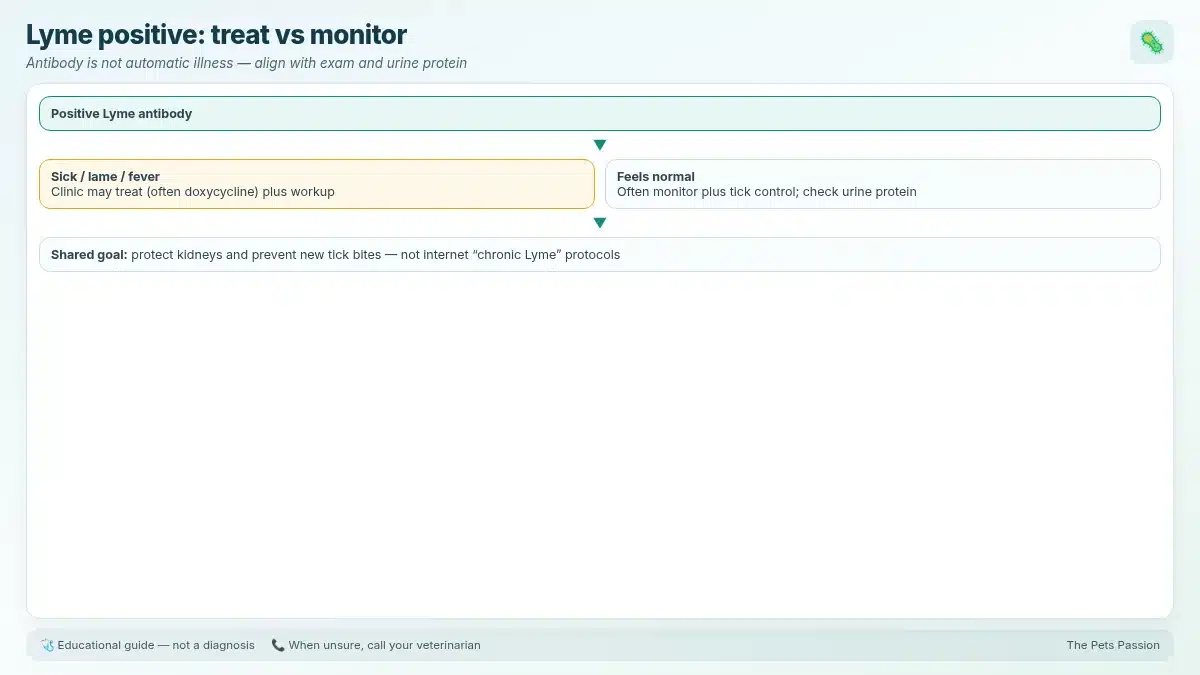
Think like a triage tree, not a panic spiral.
Step 1 — Is the dog clinically normal?
Ask (and have the vet examine for):
- Shifting or multi-limb lameness
- Reluctance to rise, swollen joints, pain on flexion
- Fever, lethargy, reduced appetite
- Neck pain or neurologic signs (less classic, still evaluate)
- Sudden drinking/peeing changes, vomiting, swollen belly (kidney-lane red flags)
If yes to clinical signs: move to the “treat / work up” lane with your veterinarian. Lyme arthritis suspects often improve quickly once appropriate antibiotics start, which is one reason clinicians use response as part of the clinical diagnosis package (Today’s Veterinary Practice case-based review).
If the dog looks great: do not skip Step 2.
Step 2 — Check urine for protein
ACVIM consensus and follow-on teaching strongly support evaluating all Borrelia-seropositive dogs for proteinuria. Lyme nephritis is uncommon relative to how many dogs test antibody-positive, but it is serious when it happens. Early protein loss can be quiet.
Typical clinic tools:
- Urinalysis (specific gravity, dipstick protein, sediment)
- Urine protein:creatinine ratio (UPC) when indicated
- Bloodwork (kidney values, albumin, CBC) when the history or UA is off
Dipstick protein alone is imperfect (urine concentration and blood contamination matter). Your vet decides when a UPC is needed.
Step 3 — Branch
| Finding / branch | What to ask next | Typical clinician-directed plan |
|---|---|---|
| Positive Lyme antibody | Are clinical signs consistent with Lyme (fever, shifting-leg lameness, lethargy)? | If YES: diagnose clinically, treat (often doxycycline per your vet), set a recheck plan; also rule out immune polyarthritis, trauma, and similar look-alikes. |
| Positive antibody + no Lyme-like signs | Is there proteinuria or another kidney concern? | If YES: renal workup ± antibiotics as part of a broader, vet-directed plan. |
| Positive antibody + no signs + no proteinuria | How will you monitor? | Monitor urine (often every 3–4 months in year 1) and keep strict tick control. Prophylactic doxycycline is generally not supported for asymptomatic nonproteinuric dogs. |
Quick takeaway: treat clinical disease and proteinuria concerns; do not assume every quiet seropositive dog needs antibiotics.
Clinician’s Brief summarizes the same split: treat clinical disease and proteinuria concerns; do not assume every quiet seropositive dog needs antibiotics.
Why urine protein matters so much
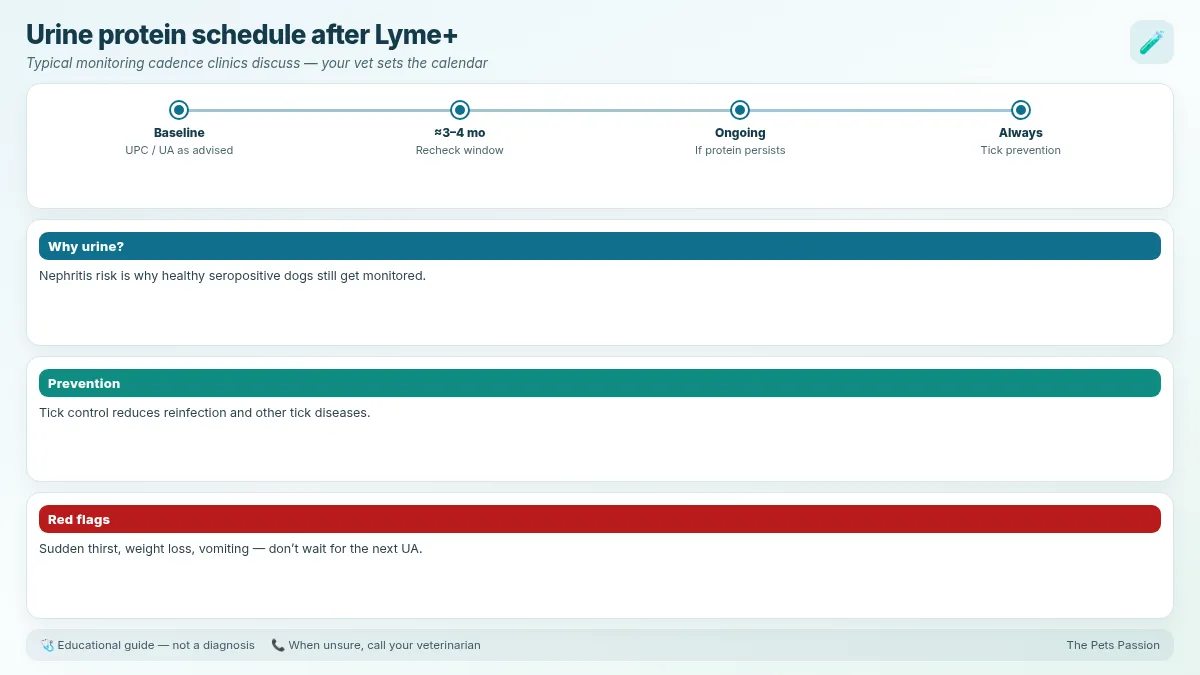
Lyme-associated protein-losing nephropathy (often discussed as Lyme nephritis) can progress fast in some dogs. Owners notice weight loss, poor appetite, vomiting, fluid belly, or sudden thirst. Sometimes the only early clue is lab work.
What monitoring usually aims to catch:
- New or rising proteinuria on UPC
- Hypoalbuminemia
- Azotemia (rising BUN/creatinine)
- Hypertension (clinic blood pressure checks)
If proteinuria appears, veterinarians investigate other causes too (urinary tract infection, Cushing’s, other tick diseases, chronic kidney disease, immune complex disease). Doxycycline may be started when Lyme-related glomerular disease is on the table, but kidney support (diet, anti-proteinuric drugs, blood pressure control, sometimes immunosuppression in rapidly progressive cases per ACVIM consensus discussions) is not optional “extra credit.” Antibiotics alone are not a full nephritis plan.
Bring a free-catch sample if the clinic asks, mid-stream if you can, and say whether the dog was straining or had accidents.
When is doxycycline used?
Clinical Lyme disease (especially arthritis)
Panelists writing the ACVIM consensus update recommend doxycycline as first choice for most sick dogs with suspected Lyme borreliosis, citing ease of dosing, activity against common coinfections, and anti-inflammatory properties. Exact dose and duration are still debated; many clinicians treat about four weeks, and owners should follow their prescription, not a blog table.
Expected pattern in classic Lyme arthritis: noticeable improvement within a couple of days. If nothing changes, the vet looks for other causes of polyarthritis rather than endlessly extending the same bottle.
Alternatives sometimes discussed for doxycycline-intolerant dogs include other antibiotics studied in Lyme models (amoxicillin historically; cefovecin protocols appear in research comparisons). Those are veterinarian decisions.
Asymptomatic, nonproteinuric seropositive dogs
Here the evidence bar flips. Teaching summaries aligned with ACVIM note no evidence that routine prophylactic doxycycline helps asymptomatic nonproteinuric dogs, and antibiotic stewardship arguments weigh against automatic treatment. Some individual clinicians still treat case-by-case; that is a conversation, not a mandate from a positive SNAP dot.
Proteinuric dogs
Antibiotics are more often part of the plan, alongside kidney diagnostics and therapy. Do not self-start leftover doxycycline from a prior kennel cough script.
Side effects owners should know
Doxycycline can cause GI upset; giving with food (as directed) helps some dogs. Esophageal injury risk is discussed more in cats, but always follow administration instructions. Never use expired tetracyclines. Pregnant dogs and growing animals need clinician-specific guidance; product labeling and regional approvals differ.
What about “chronic Lyme” narratives online?
Internet threads sometimes claim every fatigue day is untreated Lyme forever. Canine Lyme science does not support treating antibody status like a life sentence. Dogs can reinfect in tick country. Relapses after treatment may be reinfection, coinfection, or a different orthopedic disease. Stay with diagnostics, not Facebook timelines.
Vaccination against Lyme is a separate, geography- and lifestyle-based decision with your vet. Vaccines do not replace tick preventives.
Tick control after a positive test
A positive test is a lifestyle audit:
- Year-round (or season-smart) veterinarian-recommended tick preventive
- Daily tick checks after woods, tall grass, leaf litter
- Yard risk reduction where practical
- Screen housemates if they share the same trails
Preventives reduce new bites; they do not erase antibodies already made. Retesting strategies vary; ask whether your clinic wants annual screening as part of heartworm season labs.
Q&A
My dog tested positive for Lyme but acts fine. Do I need antibiotics today?
Often no, if the exam is normal and urine protein screening is clean. Monitoring and tick prevention are the usual backbone. Confirm the plan with your veterinarian rather than borrowing a neighbor’s doxycycline.
How often should we recheck urine?
Common teaching for the first year after seropositivity is roughly every 3–4 months, then spacing out if stable. Your clinic may adjust for age, breed, and concurrent disease.
Will the Lyme test go negative after treatment?
Antibody tests can stay positive for a long time. Clearing the SNAP is not the goalpost for a happy dog. Clinical signs and kidney markers matter more.
Can Lyme spread from my dog to my kids?
Dogs do not directly give people Lyme the way a cough spreads. Ticks do. If your dog is picking up ticks, your yard or hiking spots are a family risk. Focus on tick control for everyone.
What if my dog is limping and positive?
Call the clinic promptly. Many Lyme arthritis suspects get a diagnostic workup plus a doxycycline course when the picture fits. Lack of improvement in ~48 hours pushes the differential wider.
Is a homemade “Lyme protocol” of herbs enough?
No. Suspected clinical disease and proteinuria need veterinary medicine. Supplements are not a substitute for antibiotics or kidney care when those are indicated.
Related guides and tools
- Pet Symptom Urgency Checklist
- Canine Quality of Life Scale
- Dog Diarrhea: Top Causes… (if GI signs appear during illness)
- Hookworms in Dogs (parasite prevention mindset overlaps with tick programs)
How to talk to your vet without spiraling
Bring:
- Exact test name/date and any Quant C6 numbers
- Vaccine and preventive history
- Video of the limp if intermittent
- Fresh urine if requested
- List of other meds (especially NSAIDs, steroids, chemo)
Ask directly:
- “Are we treating exposure or disease?”
- “What is our urine monitoring schedule?”
- “What signs mean I should come in before the next recheck?”
Special situations
Puppies: Positive tests still mean exposure assessment; dosing and differentials differ. Do not copy an adult internet dose.
Dogs with chronic kidney disease already: Protein monitoring and drug choices need tighter coordination.
Immune-mediated arthritis workups: Lyme serology is one piece; ANA, radiographs, joint taps, and infectious panels may enter the plan.
Multi-dog households: Shared geography matters more than shared saliva for Borrelia.
Owner patterns clinics see (anonymized)
- Panic after a wellness SNAP, dog is bouncing; UA/UPC normal; no antibiotics; owner leaves with a tick-prevention upgrade and a urine calendar.
- Shifting rear-leg limp in tick season, positive Lyme, fever; doxycycline started; walking better in two days.
- Quiet dog with heavy proteinuria and positive Lyme; hospitalized for kidney support; antibiotics are only one line on a long sheet.
- Owner treats “just in case” with leftover doxy every spring without labs; GI side effects and no clearer long-term outcome.
Your dog’s lane beats the comment section.
Checklist after a positive Lyme antibody result
- Vet exam for lameness, fever, systemic illness
- Urinalysis ± UPC as directed
- Coinfection review on the same panel
- Clear decision: treat now vs monitor
- Written urine recheck schedule if monitoring
- Tick preventive on board and used correctly
- Red-flag list for kidney or arthritis flare (symptom checker)
- No DIY antibiotic courses
My dog tested positive for Lyme is a starting point for a plan, not a verdict. Separate exposure from illness, respect urine protein, use doxycycline when clinical disease or nephritis concern warrants it, and keep ticks off the dog going forward.
Quant C6 titers: useful tool or expensive distraction?
Owners often ask for a “Lyme level” the way people ask for a cholesterol number. Quantitative C6 (e.g., Lyme Quant C6) measures antibody against the C6 peptide. Teaching aligned with ACVIM and Today’s Veterinary Practice notes:
- Magnitude of Quant C6 does not reliably predict who will get sick
- Routine Quant C6 is not recommended for every happy, nonproteinuric seropositive dog
- In selected treated clinical cases, comparing a baseline Quant C6 with a value about 6 months later can be informative: a drop of roughly 50% or more may support reduced antigenic stimulation after therapy (smaller starting titers make that rule harder to apply)
If your clinic skips Quant C6 on a bouncing dog with clean urine, that can be guideline-congruent thrift, not neglect. If your dog has Lyme nephritis on the differential, a baseline titer may enter the record as one monitoring piece among many—UPC, albumin, blood pressure, and creatinine still carry more day-to-day weight.
Lyme nephritis: uncommon, not imaginary
Proteinuria is uncommon among Lyme-seropositive dogs; glomerular disease discussions sometimes cite figures under a few percent of seropositive animals, depending on the population studied. Retriever breeds appear over-represented in Lyme nephritis case series discussed in consensus literature, but any breed can be affected.
What owners should watch between rechecks:
- Sudden belly swelling or limb edema
- Marked thirst and large-volume urine
- Vomiting, picky appetite, weight loss
- Weakness or collapse
ACVIM-era glomerular disease recommendations stress that Lyme seropositivity can be a marker of tick exposure rather than proof that Borrelia caused the kidney disease. Coinfections (Anaplasma, Ehrlichia, leptospirosis, others by geography) deserve consideration. Severe, progressive immune-complex glomerulonephritis may need immunosuppression (mycophenolate ± corticosteroids appear in consensus treatment discussions) when standard care fails—that is specialist territory.
Never treat “Lyme kidney” with internet doxycycline alone while ignoring blood pressure and protein loss.
Vaccine after a positive test?
ACVIM did not reach consensus recommending Lyme vaccination for every at-risk dog. Vaccines can reduce infection risk in experimental and field settings cited by prevention reviews, but the decision stays individual: local tick pressure, hiking habits, prior reactions, and whether the household will actually give year-round preventives. A positive antibody test does not automatically equal “must vaccinate” or “must never vaccinate.” Ask how vaccine serology interacts with the assays your clinic uses so future screens stay interpretable.
Preventives that kill or detach ticks quickly still do the heavy lifting, because transmission risk rises with attachment time.
FAQ
What does a positive Lyme test mean in a dog?
It usually means antibodies to Borrelia burgdorferi (exposure), not proof of active Lyme disease by itself. Many dogs in endemic areas are seropositive and stay clinically well. Treat the result as one piece of a clinical picture (ACVIM/CAPC-aligned).
Should every Lyme-positive dog get antibiotics?
No. CAPC does not recommend antibiotics for clinically normal seropositive dogs without clinical or pathologic abnormalities. ACVIM panelists generally reserve treatment for dogs with compatible illness (for example Lyme arthritis) or protein-losing nephropathy—not reflexive doxycycline for a healthy positive screen.
When is doxycycline indicated?
Doxycycline is the usual first-line antibiotic when a veterinarian diagnoses clinical Lyme borreliosis (often polyarthritis) or Lyme-associated proteinuria/nephropathy. CAPC often cites about 10 mg/kg once daily for roughly 30 days; exact dose and duration are veterinary decisions.
Why monitor urine protein after a positive Lyme test?
ACVIM consensus supports testing all Borrelia-seropositive dogs for proteinuria. Many clinicians screen every 3–4 months for the first year so early kidney protein loss can be caught. Proteinuria plus seropositivity changes the treatment and monitoring plan.
What if my dog feels fine but tested positive?
Ask your vet for a physical exam, tick-borne co-infection screening as indicated, urinalysis (and UPC if protein is present), and a year-one proteinuria monitoring plan. Strengthen year-round tick prevention.
Can Lyme cause kidney disease in dogs?
A minority develop Lyme nephritis (protein-losing nephropathy), which can be serious. Seropositive dogs with PLN are typically treated with antibiotics plus standard kidney-support care under veterinary guidance. Seek urgent care for swelling, marked thirst, vomiting, or sudden lethargy.
How do I prevent future Lyme exposure?
Consistent tick control (product chosen by your veterinarian), prompt tick removal, and avoiding high-risk habitats reduce risk. Annual screening in endemic areas is often recommended so positive results become a prevention conversation—not an automatic antibiotic prescription.
Veterinary Review & Editorial Standard
This clinical guide was prepared using peer-reviewed veterinary literature and guidelines from leading veterinary associations. If your pet exhibits acute symptoms or distress, please seek immediate in-person veterinary emergency care.