
Librela Side Effects: What the FDA Context Actually Says
 The Pets Passion Medical Team

YMYL / medical disclaimer: This article from The Pets Passion is educational. It summarizes publicly available FDA communications and the Librela (bedinvetmab) prescribing information on DailyMed. It is not medical advice, a recall notice, or a recommendation to start or stop treatment. Only your veterinarian can weigh osteoarthritis pain control against risks for your dog. Report suspected adverse events to Zoetis (1-888-963-8471) and/or FDA (see FDA animal AE reporting).
Librela side effects searches spiked after the FDA’s Center for Veterinary Medicine published a Dear Veterinarian letter summarizing neurologic and other adverse events reported in dogs receiving bedinvetmab. That letter is a signal to pay attention and report, not a claim that every senior dog on monthly injections will collapse. Post-approval AE databases collect voluntary and sponsor-submitted reports. They help regulators spot patterns. They do not by themselves prove how often a problem happens in the real world, because we rarely know the exact number of doses given to every dog in the denominator, and many reports lack full workups.
This page walks through label data, FDA context, ataxia and neurologic watch signs, and when to call the clinic about stopping—without turning osteoarthritis care into doomscrolling.
Quick answer. Librela side effects
Source What it tells owners US/EU field studies (pre-approval / label tables) Commoner study events included UTI, skin infection, dermatitis, injection-site pain; EU study also noted more BUN increases vs control. Post-approval experience (label, updated) Neurologic reports (ataxia, seizures, paresis), anorexia/lethargy/recumbency, polydipsia/polyuria/incontinence, vomiting/diarrhea, muscle weakness; death/euthanasia in some AE narratives. FDA Dear Vet letter Same cluster highlighted for clinician awareness; encourages reporting. How to use this Watch mobility and bathroom habits after each injection; call your vet for new neurologic signs. Return-to-activity plans matter when pain relief boosts sudden sprinting. Pain relief that lets a previously sedentary dog suddenly sprint also raises soft-tissue injury risk—the Client Information Sheet discusses return-to-activity plans. Pair decisions with the Canine Quality of Life Scale and Pet Symptom Urgency Checklist.
Direct answer: Librela (bedinvetmab) is a Zoetis monthly anti-NGF monoclonal antibody for osteoarthritis pain in dogs. Per the FDA DailyMed label, common field-study reactions included urinary tract and skin infections; post-approval reports list neurologic signs such as ataxia and seizures. Contact your veterinarian for new weakness, balance problems, or sudden decline—do not change dosing yourself.
What is Librela?
Librela (bedinvetmab injection) is a canine anti-nerve growth factor (NGF) monoclonal antibody given subcutaneously about once a month for control of osteoarthritis pain in dogs. FDA approved it in 2023 (NADA 141-562). It is prescription-only. It is not an NSAID and not a steroid. That is why many clinics reach for it when NSAIDs are poorly tolerated or when a monthly injection fits the household better than daily pills.
Track comfort on treatment days with a simple dog quality of life scale so “better” is more than a vibe.
Comparing pathways for itch versus OA pain? See how clinics weigh Apoquel vs Cytopoint when the problem is allergic skin, not joints.
Label basics owners should hear before the first poke:
- Minimum target dose 0.5 mg/kg by weight band (clinic calculates vials)
- Effectiveness may build across the early doses (label effectiveness discussion notes benefit characterized with a minimum of two monthly doses in the evidence package)
- Not for breeding, pregnant, or lactating dogs
- Safe use with concurrent NSAIDs has not been established in dogs
- Not evaluated in dogs under 12 months of age
- Long-term effects beyond the studied windows are still being learned in the field
What did the clinical studies report?
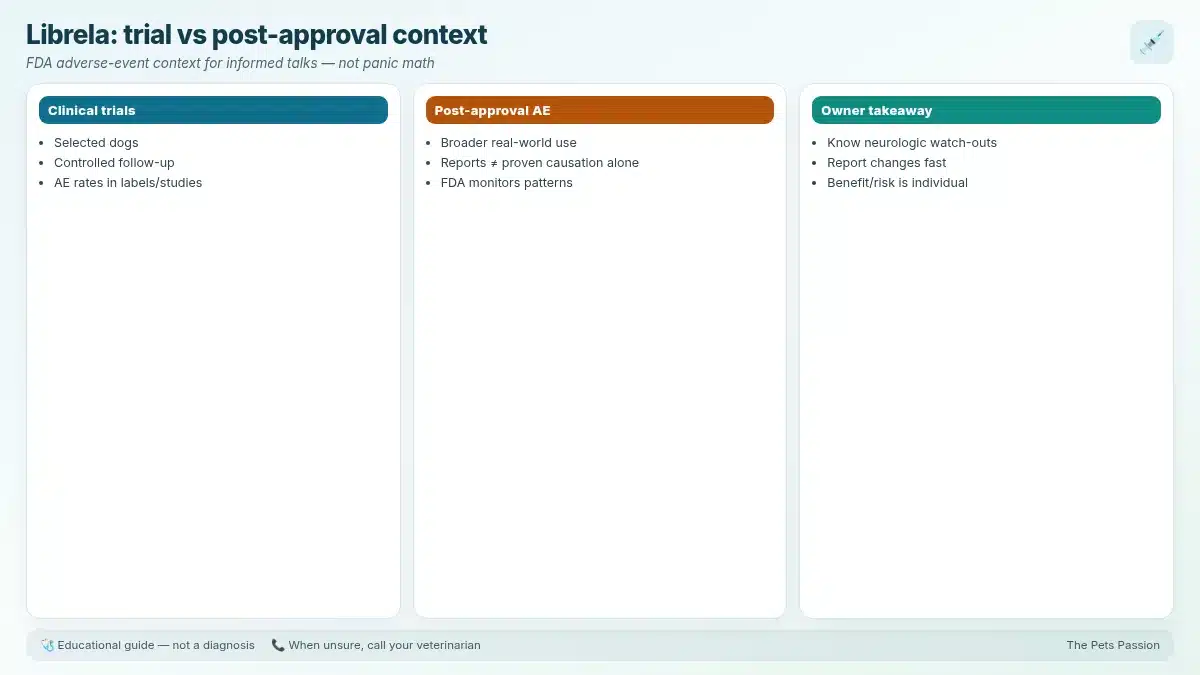
The DailyMed label summarizes masked, controlled field studies.
US field study (example label table): among adverse reactions tabulated, urinary tract infection, bacterial skin infection, dermatitis, dermal masses, erythema, injection pain, and inappropriate urination appeared in Librela-treated dogs, with control rates listed for comparison. Numbers are modest percentages in a few hundred dogs—useful, not infinite.
European field study: increased blood urea nitrogen (BUN) was reported more often in Librela-treated dogs than controls in that table; lethargy, emesis, anorexia, lameness, and cough also appear. The label narrates serious outcomes in individual dogs (including euthanasia associated with complex comorbidities such as worsening heart failure/renal disease or pancreatitis). Individual case stories in a label are not the same as a proven population rate.
Takeaway for owners: pre-approval studies catch common issues in controlled enrollment. Rare neurologic events may show up more clearly after millions of real-world doses.
FDA adverse event context (without the panic math)
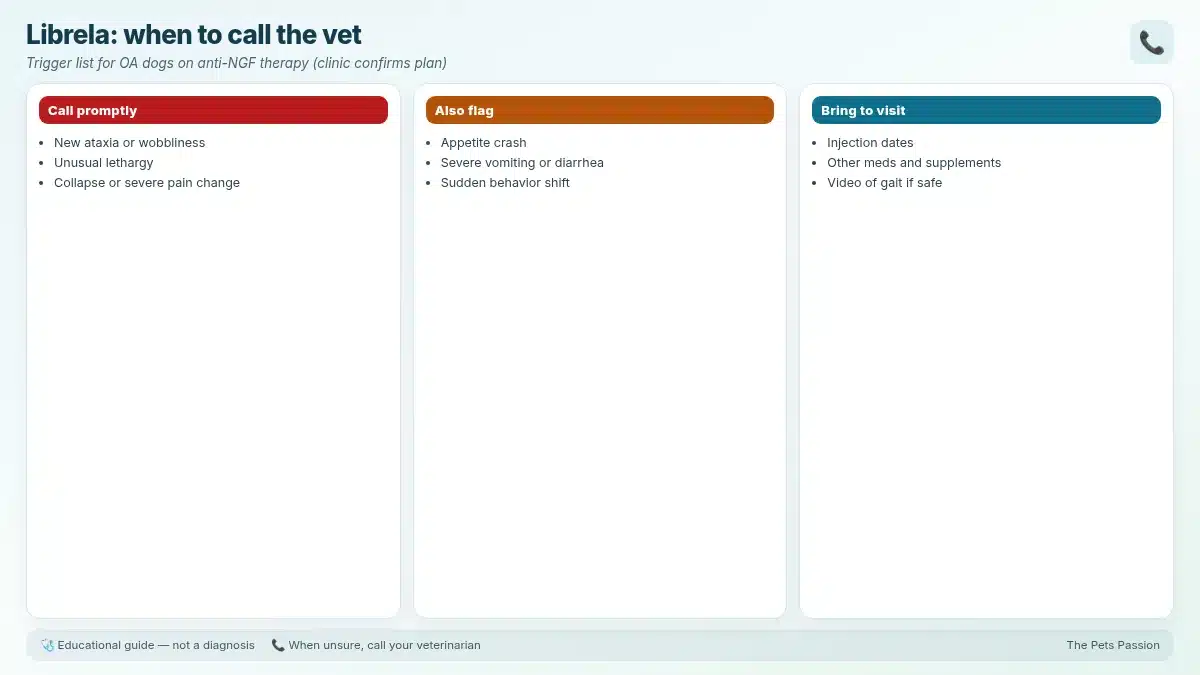
The FDA Dear Veterinarian letter states CVM reviewed adverse events in dogs of various ages treated with Librela and identified reports including:
- Ataxia
- Seizures
- Other neurologic signs (including paresis, recumbency, urinary incontinence)
- Polyuria and polydipsia
In some reported cases, death (including euthanasia) was an outcome. FDA posts rolling ADE summary materials in its FOIA reading room and asks veterinarians and owners to report events.
How to read AE counts responsibly:
- Reports can include coincidental disease in elderly OA dogs
- One dog can generate multiple clinical signs in one report
- “Number of times a sign was coded” ≠ unique dogs ≠ proven drug causation
- Absence of a report does not mean an event never happens
A 2025 zoetis-authored global pharmacovigilance paper in Frontiers in Veterinary Science described ataxia and several other signs as rare on a per-dose reporting framework in their dataset (order-of-magnitude: single-digit reports per 10,000 doses for several top signs). That is company pharmacovigilance analysis, not an FDA incidence certificate. Still, it is a useful counterweight to viral posts that imply neurologic disaster is typical.
Balance: rare is not never. If your dog’s rear end sways out of nowhere after an injection, you call the clinic—you do not argue online about reporting rates.
Ataxia and neurologic signs: what owners actually watch for
Ataxia means incoordination—drunken gait, crossing limbs, swaying, knuckling, missing steps on stairs. It is different from the stiff, short-strided hobble of sore hips, though owners can mix them up.
Label post-approval neurologic cluster (decreasing reporting frequency within the neurologic group as listed): ataxia, seizures, paresis, proprioception deficits, paralysis.
Also watch:
- Trouble standing up that is new and not just “bad arthritis morning”
- Collapse or dragging a limb
- Sudden urinary incontinence or dripping
- Drinking and peeing much more
- Marked lethargy, anorexia, lying in lateral recumbency unwilling to rise
- Vomiting or diarrhea that is out of character
- Muscle tremors or sudden weakness
Seizure? Treat it like any seizure: protect from stairs, time it, call emergency care. See also our dog seizure what to do guide for first-aid framing (educational).
Film a 20-second walk on your phone before calling. Videos beat “he seemed off.”
When to stop Librela (clinic decision, owner trigger list)
You do not write the stop order—your veterinarian does. But you supply the observations that make stopping or pausing obvious.
Contact the clinic promptly (same day / urgent care) if you see:
- New ataxia, knuckling, or inability to walk normally
- Seizure or suspected seizure
- Sudden paralysis/paresis
- New incontinence plus neurologic change
- Severe lethargy or refusal to eat after injection
- Any sign the Client Information Sheet flagged as serious
Discuss at the next appointment (sooner if worsening) if you see:
- Mild GI upset lasting more than a day or two
- Gradual increase in thirst/urination without other signs
- Injection-site scabbing that is enlarging
- Pain control fading earlier each month
- New masses or infections while on therapy
Hypersensitivity / anaphylaxis-type reactions: discontinue and treat emergently per veterinary guidance—the label warns monoclonal antibodies can be associated with hypersensitivity.
If Librela is stopped, osteoarthritis pain often returns toward baseline over time as the antibody clears (elimination half-life on label is variable; field harmonic mean around the mid-teens of days in one summary). Plan a pain bridge (other modalities) with the vet—do not leave a painful dog untreated out of fear alone.
Who may need extra caution?
Label precautions highlight several groups for clinician judgment:
- Dogs with significant cardiac disease (NGF biology in vasculature is an open long-term question)
- Young growing dogs (NGF in neural development)
- Recent cruciate tears (excluded from some field enrollments)
- Dogs that need ongoing NSAIDs (combination safety not established)
- Breeding / pregnant / lactating dogs (contraindicated)
- Known hypersensitivity to bedinvetmab or caution with other immunoglobulin therapies
Librela can form anti-drug antibodies in some dogs; loss of effectiveness is a labeled immunogenicity discussion.
Q&A
Are Librela side effects common?
Study tables show modest rates of several non-neurologic events. Post-approval neurologic events are important enough for an FDA Dear Vet letter and label updates, yet pharmacovigilance analyses have described several leading signs as rare on a per-dose basis. “Common on Twitter” ≠ common in clinics.
Does ataxia from Librela always reverse?
Outcomes vary in reports. Some dogs improve after stopping; some have complex senior comorbidities. Only serial exams answer your dog’s trajectory.
Can I give gabapentin or an NSAID with Librela?
Maybe—ask the prescribing vet. NSAID + anti-NGF combination safety is specifically called out as not established in dogs. Never stack pain drugs from the medicine cabinet.
Should every dog stop Librela because of the FDA letter?
No. The letter informs risk–benefit talks. Many dogs continue with monitoring because OA pain is also a welfare issue. Stopping without a plan can be harmful.
How do I report a side effect?
Call your veterinarian first for care. They (or you) can report to Zoetis and FDA. Good reports include date of injection, dose/vial strength if known, onset timing, videos, and concurrent drugs.
Is Solensia the same thing for cats?
Solensia is a feline anti-NGF mAb (frunevetmab). Different species, different label. Do not extrapolate dosing or AE lists across products.
Practical monitoring routine after each injection
Day 0–2: appetite, bathroom habits, walk quality.
Day 3–7: peak serum levels often fall in this window in lab PK summaries—still watch gait.
Week 2–4: pain score and activity diary; note any delayed oddities.
Bring notes to the next monthly visit.
Use the Canine Quality of Life Scale monthly so “better” is not a vague vibe.
Related guides and tools
- Canine Quality of Life Scale
- Pet Symptom Urgency Checklist
- Dog Seizure What to Do
- Pet Medication Converter (general med literacy; not for inventing Librela doses)
How clinics usually frame the conversation
A balanced visit sounds like:
- Confirm OA diagnosis and pain scores.
- Review alternatives (weight loss, physical therapy, NSAIDs if appropriate, other analgesics).
- Review Client Information Sheet every injection day, not only the first.
- Agree on stop-triggers in writing.
- Schedule rechecks for seniors with kidney/heart history.
Owners who only hear marketing (“monthly freedom!”) or only hear horror threads both get a partial story. The label and FDA letter exist so you get the middle.
Myth vs label
| Myth | Closer to evidence |
|---|---|
| "FDA banned Librela" | No—FDA communicated AE findings and continues to make ADE reports available |
| "Ataxia means the drug is poison for all dogs" | Ataxia is a reported AE to take seriously; population frequency remains constrained by reporting limits |
| "If the dog is old, side effects don't matter" | Senior dogs need more monitoring, not less |
| "Pain doesn't count as risk" | Untreated OA pain harms mobility, muscle, and quality of life |
Checklist before the next injection
- Read/review the Client Information Sheet with the nurse or vet
- Report any weird week since the last dose
- Confirm no new NSAID started at home
- Weigh the dog if body condition changed
- Agree what neurologic change triggers an emergency call
- Keep Zoetis/FDA reporting numbers handy
- Update the QoL score (tool)
Librela side effects deserve clear eyes: respect FDA and label warnings, watch for ataxia and related neurologic changes, partner with your vet on when to pause or stop, and remember osteoarthritis pain is also a clinical problem worth treating thoughtfully.
NSAIDs, other pain drugs, and the “stacking” trap
The Librela label states that safe use of anti-NGF monoclonal antibodies with concurrent NSAIDs has not been established in dogs. Human anti-NGF programs saw rapidly progressing osteoarthritis signals that increased when long-term NSAIDs were combined; that syndrome has not been characterized or reported in dogs, yet regulators still want caution rather than casual dual therapy.
Practical owner rules:
- Tell the clinic about every chew, galliprant/carprofen leftover, and CBD product before injection day
- Do not restart an old NSAID “for the rainy weekend” between Librela doses without asking
- Gabapentin, amantadine, joint diets, and physical therapy are separate conversations—list them anyway
If pain control is weak after the second monthly injection, Client Information Sheets advise talking about alternatives rather than endlessly hoping the next vial will suddenly transform the dog. Effectiveness packages emphasize benefit characterized across at least two doses.
Cardiac disease, young dogs, and other labeled cautions
NGF shows up in heart and vessel biology. Long-term effects of lowering NGF in dogs with cardiac disease remain unknown on the label—flag murmurs, cough, collapse history, or heart meds before starting. Dogs under 12 months were not the effectiveness/safety population. Recent cruciate ruptures were excluded from some field enrollments. Breeding, pregnancy, and lactation are contraindications because anti-NGF antibodies raise developmental toxicity concerns in lab species and can cross into milk.
Anti-drug antibodies can form and potentially blunt effect over time (immunogenicity section). Loss of bounce in a previously great responder deserves a recheck, not automatic dose freelancing.
What “report to FDA” looks like in real life
Good AE reports include:
- Exact injection dates and vial strengths if known
- Onset timing (hours vs days vs weeks)
- Video of ataxia or seizure
- Concurrent drugs and supplements
- Lab work and neurologic exam findings when available
- Outcome (resolved, ongoing, euthanasia)
Your veterinarian can report to Zoetis (1-888-963-8471) and FDA (reportanimalae). Sparse reports help no one; panicked duplicate posts on social media help less.
FAQ
What is Librela (bedinvetmab)?
Librela is a prescription canine monoclonal antibody that binds nerve growth factor (NGF) to help control osteoarthritis pain. Zoetis markets it for subcutaneous use in dogs once a month. It is not an NSAID; dosing and monitoring belong with your veterinarian.
What side effects are listed on the FDA DailyMed label?
In U.S. field studies, commonly reported reactions included urinary tract infection, bacterial skin infection, dermatitis, and injection-site pain. The DailyMed post-approval experience section lists neurologic events (ataxia, seizures, paresis, proprioception deficits, paralysis), plus anorexia, lethargy, urinary changes, vomiting, diarrhea, and musculoskeletal signs. Causality is not proven for every report.
What neurologic signs should owners watch for?
FDA and DailyMed advise contacting a veterinarian for balance problems, trouble walking or standing, weakness, seizures, increased drinking or urinating, loss of bladder control, vomiting, or diarrhea. In some reported cases, death or euthanasia followed serious adverse events. Early veterinary assessment matters more than waiting to “see if it passes.”
Is rapidly progressive osteoarthritis (RPOA) confirmed in dogs on Librela?
Human anti-NGF trials described RPOA, especially with long-term NSAIDs; the DailyMed warning states RPOA has not been characterized or reported in dogs. Regulators and journals continue reviewing musculoskeletal and neurologic adverse-event signals—discuss risks and the Client Information Sheet with your vet before each dose.
Can Librela be given with NSAIDs?
Per the label, safe concurrent use of anti-NGF monoclonal antibodies with NSAIDs has not been established in dogs. Do not add or stop pain medicines on your own; ask your veterinarian about your dog’s full medication plan.
When should I call the vet after a Librela injection?
Call promptly for new or worsening neurologic signs, sudden mobility decline, collapse, persistent vomiting or diarrhea, or marked lethargy. Report suspected adverse events to your veterinarian and Zoetis (1-888-963-8471); FDA’s animal AE line is 1-888-FDA-VETS.
Does every dog on Librela get serious side effects?
No. Many dogs receive Librela without serious problems, and field studies documented mostly mild common events. Post-approval reporting highlights rare but serious neurologic and other signs—risk–benefit decisions are individual and veterinary-led.
Veterinary Review & Editorial Standard
This clinical guide was prepared using peer-reviewed veterinary literature and guidelines from leading veterinary associations. If your pet exhibits acute symptoms or distress, please seek immediate in-person veterinary emergency care.