My Male Cat Is Straining to Pee—Can This Wait Until Morning?
 The Pets Passion Medical Team
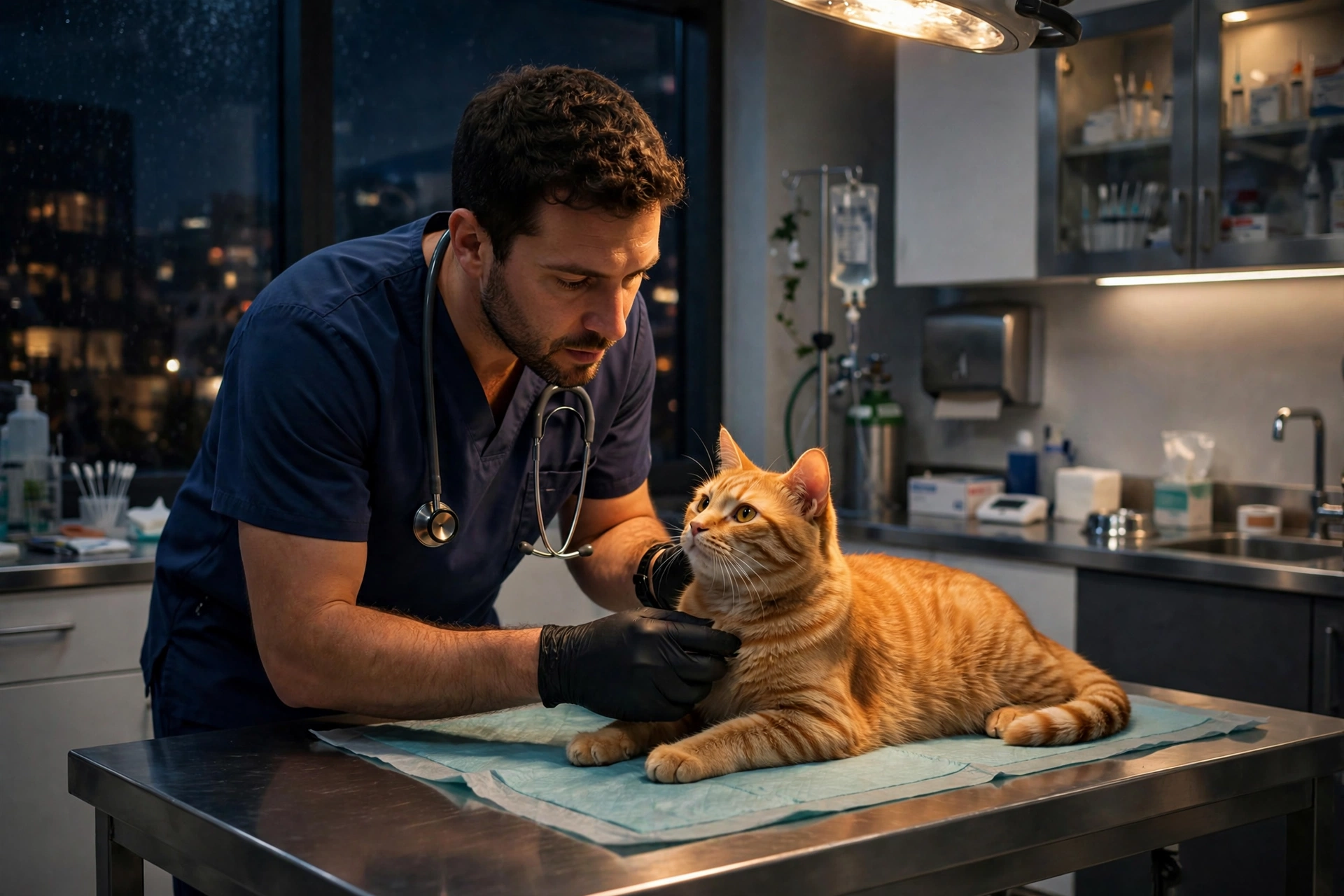
No — not if he is producing little or no urine. A male cat repeatedly straining in the litter box with drops or nothing may have a urethral obstruction (urinary blockage). PetMD, International Cat Care, and the MSD Veterinary Manual treat this as a same-night emergency. Untreated complete obstruction can lead to kidney failure, dangerous electrolyte changes (including high potassium that affects the heart), bladder injury, and death without care.
Educational disclaimer: This guide from The Pets Passion summarizes public owner-facing guidance from PetMD, VCA Animal Hospitals, the MSD Veterinary Manual, AVMA, and International Cat Care. It is not a diagnosis or treatment plan. If your male cat cannot pee, call your veterinarian or an emergency clinic now — do not wait for morning “to see.”
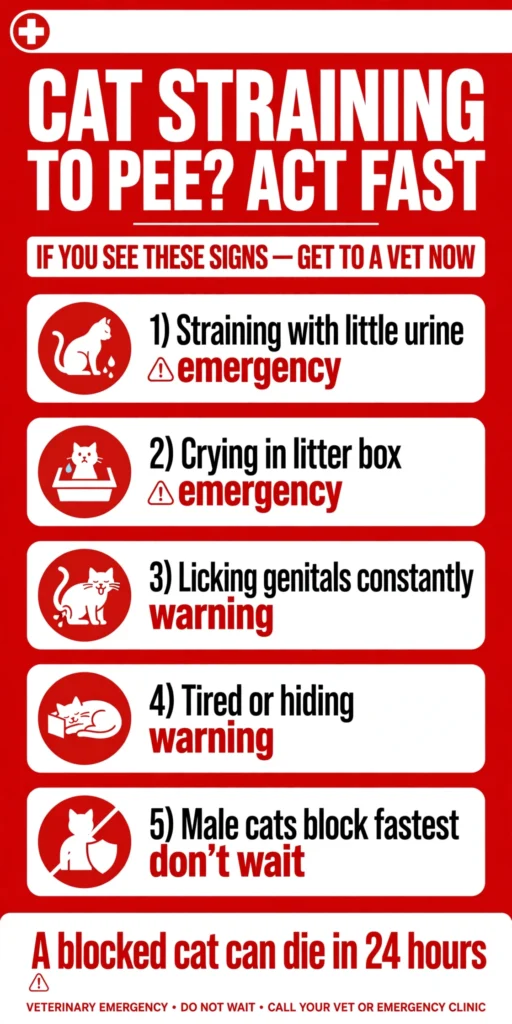
Can male cat straining to pee wait until morning?
Only if you are certain he is still passing a normal stream of urine — and even then, same-day veterinary advice is safer when straining, blood, or litter-box pain appears. The defining emergency pattern is straining with little or no urine. PetMD states that if you are unsure your cat is producing urine, treat it as an emergency and have him evaluated immediately. Blockages do not reliably “work themselves out” at home.
Male cats (neutered or intact) are at higher risk than females because the male urethra is longer and narrower. AVMA notes urethral obstruction is most often found in males about one to ten years of age, commonly from urethral plugs (minerals, cells, and mucus-like protein) or urinary stones.
If he is crying in the box at 2 a.m. with dry litter and a hard, painful belly feel when a vet later checks him, that night trip was the right call. Use our pet symptom checker to organize what you are seeing for the phone call — it does not replace an exam.
Is my cat blocked—or just constipated?
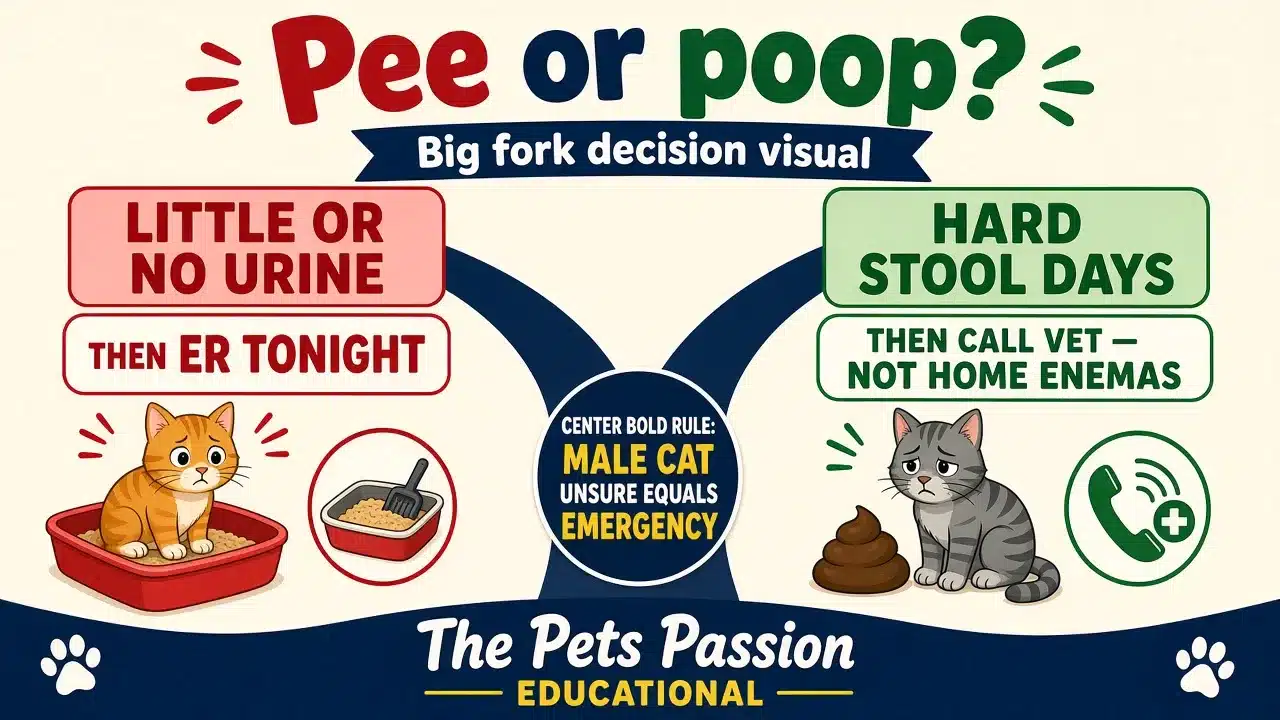
This is the classic pee-vs-poop trap. Owners of cats with urethral obstruction often mistake nonproductive straining for constipation — MSD Veterinary Manual and VCA both call this out. The litter box looks the same from the doorway: crouched, pushing, maybe vocalizing. What matters is what comes out.
| Clue | Points more toward urine problem / blockage | Points more toward constipation / hard stool |
|---|---|---|
| What you see in the box | Dry litter, tiny urine spots, or bloody drips | Firm/dry feces, or no feces for days with a full colon history |
| Posture / location | Often crouched over the litter like peeing; may go outside the box in small spots | May strain in a defecation posture; sometimes avoids the box after painful stools |
| Genital licking | Common with FLUTD / obstruction | Less typical as the main sign |
| Systemic “sick” signs | Vomiting, hiding, lethargy, appetite drop as toxins build | Usually slower onset unless severe obstipation |
| Vet exam feel (clinic only) | Firm, large, painful bladder “like a baseball” (PetMD) | Distended colon / fecal material; bladder may be empty or soft |
Rule for males: if you cannot confirm urine on the litter or pads after repeated trips, assume obstruction until a vet says otherwise. Do not give human laxatives, enemas, or pain meds at home.
If he looks painful in the face (squinted eyes, tense muzzle), the Cat Grimace Scale can help you describe pain to the ER — it does not clear a possible blockage.
UTI vs FIC/FLUTD vs crystals vs blockage: what’s the difference?
FLUTD (feline lower urinary tract disease) is an umbrella for bladder/urethra problems that look similar at home. FIC (feline idiopathic cystitis) is the most common cause of FLUTD in cats under about ten years when no infection or stone is found — VCA and AVMA describe it as inflammation without a single identified cause, often stress-linked. Male cats with FIC can still progress to urethral spasm or plugs and become blocked.
| Problem | What it basically is | Typical urine output | Owner urgency |
|---|---|---|---|
| Bacterial UTI | True bladder infection — less common as a primary issue in young cats; more often in older cats (VCA) | Usually still produces urine, often frequent small amounts | Same-day vet; ER if output stops or he collapses |
| FIC / idiopathic cystitis | Sterile inflammation; stress and environment matter (AVMA) | Frequent small pees, blood possible; bladder may feel small | Prompt vet; ER if little/no urine (males) |
| Crystals / stones (uroliths) | Mineral material in bladder; stones can lodge in the urethra | Variable; stones that lodge → no urine | Diet/workup with vet; ER if obstructed |
| Urethral plug | Mix of crystals, cells, mucus — PetMD: most common obstruction cause in males | Little or no urine | Emergency now |
| Complete urethral blockage | Urine cannot leave the bladder | Drops or none | Emergency now — not a morning plan |
Only a veterinarian can sort this with exam, urine testing, bloodwork, and often imaging. Home guessing between “UTI” and “blockage” is how nights get wasted.
What are the emergency signs of a blocked male cat?
Watch for the cluster PetMD, International Cat Care, and AVMA describe:
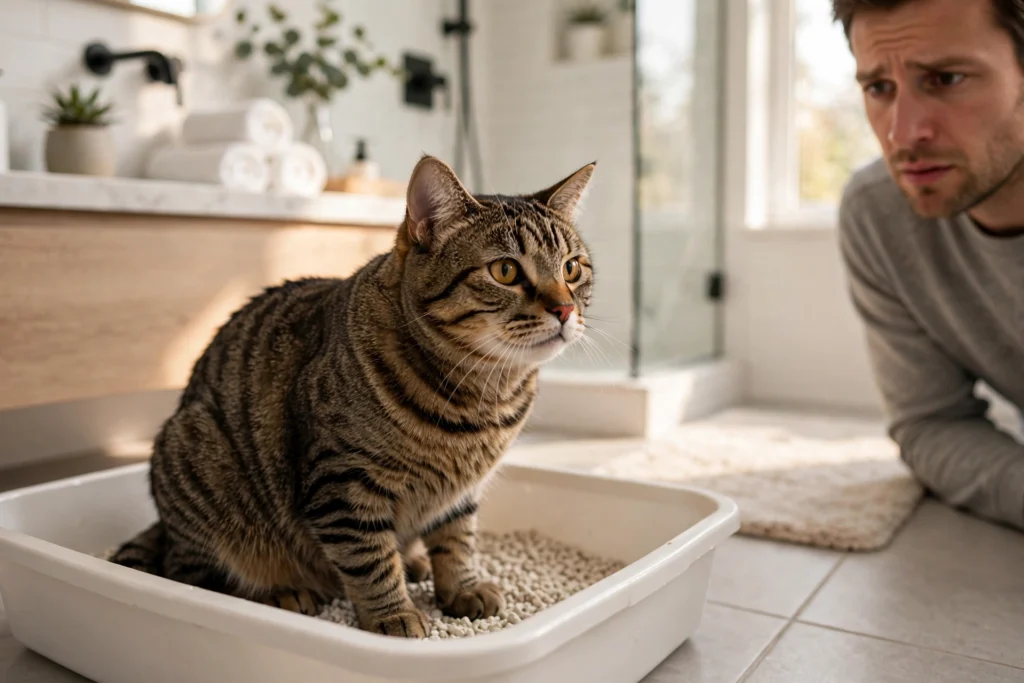
- Repeated litter-box trips with little or no urine
- Crying, yowling, or obvious pain while straining
- Urinating outside the box in small spots (or attempting to)
- Licking the penis / genital area excessively
- Restlessness, hiding, refusing food
- Vomiting, lethargy, or a “depressed” look as toxins build
- A belly that feels unusually firm or painful (exam is for the vet — squeezing a blocked bladder at home risks injury)
Go to ER immediately if urine output is uncertain, he is vomiting or collapsing, or straining has gone on for hours overnight. PetMD is blunt: a blockage will not resolve itself, and you should not try to “unblock” a cat at home.
How fast does a male cat urinary blockage become dangerous?
Suspected urinary obstruction is an immediate emergency. Deterioration — including dangerous potassium and toxin build-up — can be rapid and fatal. These numbers describe how fast the situation can turn, not a safe waiting window: go now.
| Window | What sources describe | Owner takeaway |
|---|---|---|
| First hours of nonproductive straining | Painful; bladder fills; owners often still think “constipation” | Call / go now — do not wait for morning |
| Within ~24 hours | PetMD: life-threatening consequences can occur in as little as 24 hours of inability to urinate | Overnight delay is dangerous |
| ~24–48 hours | PetMD / AVMA: death from untreated obstruction may occur in as little as 24–48 hours; AVMA notes kidney failure and electrolyte chaos | This is why ER exists at night |
| ~36–48 hours into complete obstruction | MSD: uremia develops → depression, vomiting, diarrhea, dehydration | Systemic illness, not “just a UTI” |
| ~72 hours | MSD: coma and death within approximately 72 hours without relief; International Cat Care: fatal within 2–3 days | Waiting is not a strategy |
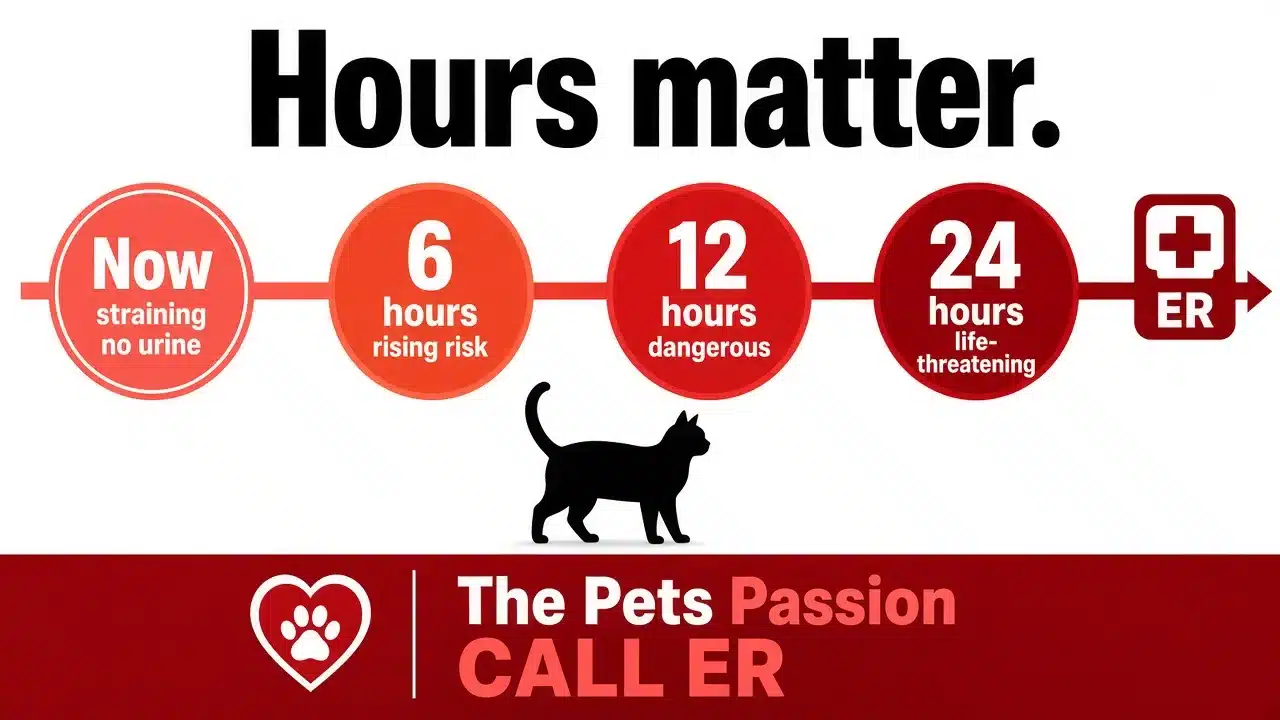
Individual cats vary. A cat who already looks dull or is vomiting may be further along than the clock on your phone suggests.
What will the vet do for a blocked cat?
Only the clinic decides the plan. Owner-facing sources describe a typical emergency pathway:
- Triage and exam — history of straining; palpation of a firm, painful bladder when obstructed (PetMD contrasts this with the tiny bladder often felt in non-obstructed FLUTD/FIC).
- Stabilization — IV fluids; treatment for life-threatening hyperkalemia (high potassium) and heart-rhythm risk when present (MSD).
- Relief of the obstruction — usually under sedation or anesthesia, passing a urinary catheter; plugs and stones may be flushed back into the bladder. Home attempts are unsafe (urethral tear, bladder rupture risk).
- Hospitalization commonly lasts several days — the exact catheter time and stay depend on electrolyte levels, kidney values, response to treatment, and recurrence risk. Confirm the plan with your clinic.
- Workup of the cause — urinalysis, culture when indicated, bloodwork, X-rays/ultrasound for stones.
- Aftercare — urinary diet when crystals/stones are involved, medications to ease urethral spasm, stress reduction. Recurrent blockers may be offered perineal urethrostomy (PU) surgery after repeated episodes — a specialist decision that does not erase FIC/FLUTD signs.
Prognosis is generally good when treatment is prompt. Delay is what turns a painful obstruction into kidney failure and cardiac crisis.
How can I lower the chance of another blockage?
Nothing replaces your vet’s plan, but credible prevention themes repeat across PetMD, VCA, AVMA, and International Cat Care:
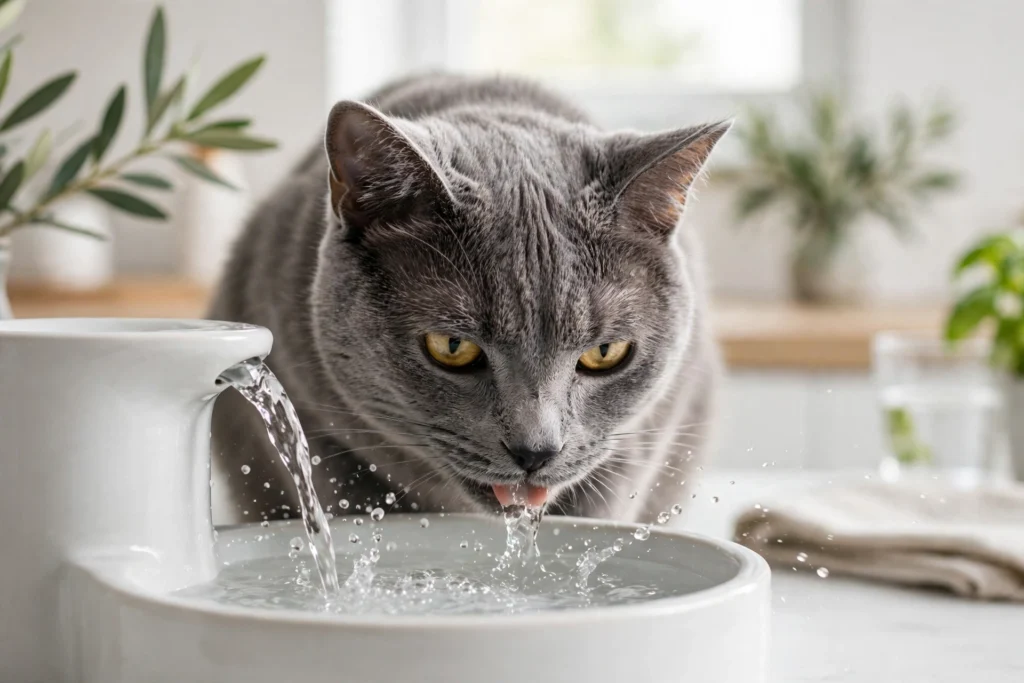
- Water first: canned food, multiple bowls, and fountains to raise urine volume. Our pet hydration calculator helps you sanity-check daily water goals while you follow clinic diet advice.
- Litter-box access: enough boxes (often “n+1”), quiet locations, scooped frequently so he never “holds it.”
- Weight and activity: FLUTD is more common in inactive, overweight cats with low water intake (VCA).
- Stress reduction: FIC is tightly linked to stress and multi-cat conflict (AVMA). Keep routines predictable after a hospital stay.
- Prescription urinary diets when your vet recommends them for crystal/stone prevention — do not DIY mineral experiments.
- Watch the box daily after discharge; any return of nonproductive straining is an ER trip again.
For organizing red-flag symptoms at 2 a.m., keep the pet symptom checker bookmarked next to your ER clinic’s phone number.
If you suspect a blocked cat is an emergency — go now, don’t wait for morning. For background, see FLUTD and FIC explained, plus tips on increasing water intake to prevent blockages. Learn straining to pee versus straining to poop so you describe the right symptom.
Veterinary sources:
Can a male cat urinary blockage wait until morning?
Not if urine output is little or none. PetMD and International Cat Care treat suspected obstruction as an immediate emergency. Morning is only for cats still clearly peeing — and even then, call your vet.
How do I tell constipation from a blocked cat?
You usually cannot tell safely from posture alone. Confirm urine in the box. Dry litter after many trips in a male = ER. Constipation produces feces (or a known stool history), not a baseball-firm painful bladder on vet exam.
Is straining with a little blood always a blockage?
Blood can appear with FIC, stones, or infection while urine still flows. Any male who progresses to tiny drips or no urine needs emergency care. Do not wait for “more blood” or “him to look sicker.”
Do female cats get urinary blockages too?
Urinary obstruction is far more common in male cats because of their narrower urethra (VCA, International Cat Care); females can obstruct rarely. Treat straining with no urine as urgent regardless of sex. Females still get FLUTD/FIC and need prompt care — but the classic overnight “blocked cat” ER case is male.
Will a urinary blockage clear on its own?
No — do not count on a blockage clearing on its own. It requires catheterization under sedation/anesthesia, and waiting worsens electrolyte and kidney damage.
Is FLUTD the same as a UTI?
No. FLUTD is the broad category. Bacterial UTI is only one cause and is less common as a primary problem in younger cats. FIC is often the leading diagnosis when infection and stones are ruled out.
What should I bring to the ER?
Note when straining started, whether you saw any urine, appetite/vomiting, prior urinary diets or blockages, and current meds. A phone video of a litter-box attempt can help — but do not delay leaving to film.
Bottom line
Male cat straining to pee with little or no urine cannot wait until morning. That pattern is the trademark of a possible urethral blockage — an ER disease measured in hours, not “see how he is after breakfast.” Sort pee from poop, treat uncertain output as obstruction, and let the clinic relieve the blockage and find whether FIC, plugs, crystals, or stones started it.
Related cat guides: Suspected obstruction belongs with the emergency-vet red-flag guide; organize observations with the pet symptom checker and Cat Grimace Scale. More cat guides.
Primary references: PetMD — Urinary Tract Blockage in Cats · VCA — Cystitis and FLUTD · MSD Manual — Urethral Obstruction · AVMA — FLUTD · International Cat Care — Urethral obstruction
Veterinary Review & Editorial Standard
This clinical guide was prepared using peer-reviewed veterinary literature and guidelines from leading veterinary associations. If your pet exhibits acute symptoms or distress, please seek immediate in-person veterinary emergency care.