Cat Constipation: When to Worry and What to Do
 The Pets Passion Medical Team
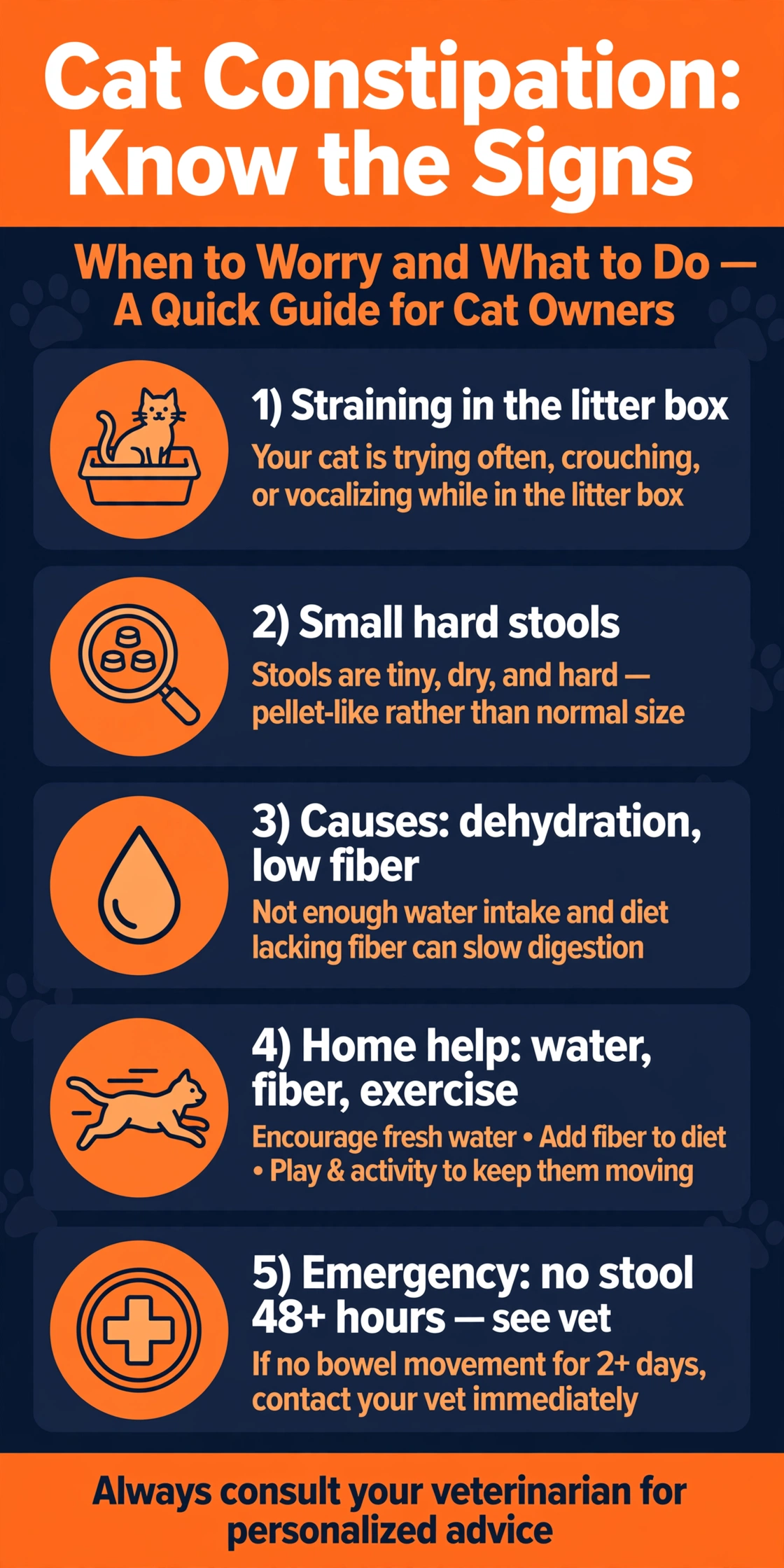
Cat constipation means stool is infrequent, difficult, or hard and dry. This guide answers the cat constipation when to worry question: it comes down to comfort, appetite, and what is actually coming out of the box. An occasional firm stool in a comfortable, eating cat is different from repeated straining, vomiting, or a painful belly. The dangerous trap is mistaking repeated litter-box trips for constipation when the cat is actually trying to urinate. A cat that strains and produces little or no urine, especially a male cat, needs emergency care now. If you are not sure whether you are seeing pee or poop, treat that uncertainty as urgent rather than waiting for a bowel movement.
What counts as normal?
There is no universal schedule. Many cats pass stool about once a day, but some healthy cats go every day and a half, and kittens on frequent meals may go more often. What matters is your cat’s own baseline. A change from that baseline is the signal, not the calendar. Note what is normal for your cat: how often, what it looks like, and how much effort it takes. A cat that has always gone every other day and is comfortable is not constipated just because a book says daily. But a daily cat that suddenly skips two days, or any cat whose stool turns hard and pellet-like, deserves attention.
What are the signs of constipation?
A constipated cat may visit the box repeatedly, strain, vocalize, pass small hard pieces, or defecate outside the box. The abdomen may feel tense. Some cats vomit, lose appetite, or become quiet as constipation worsens. A small amount of watery material does not always mean diarrhea; liquid stool can pass around an impacted mass, which fools many owners into thinking the problem is the opposite of what it is.
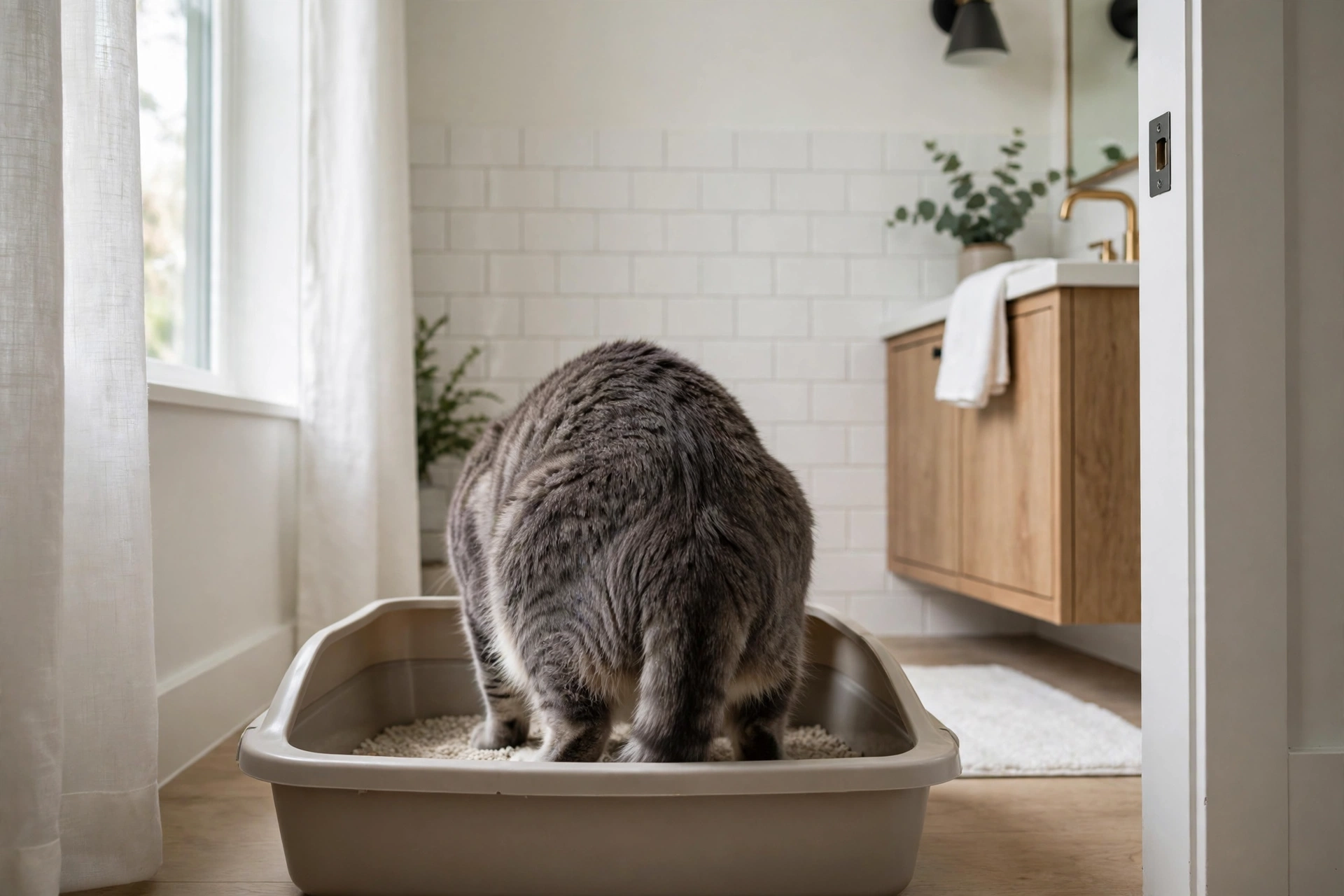
Take a photo of anything passed and record the last confirmed normal stool and the last confirmed normal urine. Those two facts are the most useful things you can bring to a vet call, because they separate constipation from the urinary emergency it can mimic.
Is it constipation or a urinary emergency?
Watch the output, not just the posture, because straining looks similar for both. This comparison helps you triage:
| Clue | Points toward constipation | Points toward urinary trouble |
|---|---|---|
| What comes out | Hard pellets, dry stool, or nothing | Drops of urine, or nothing at all |
| Litter clumps | Normal urine clumps present | No normal urine clump for hours |
| Vocalizing | Straining sounds, restlessness | Crying, licking genitals, agitation |
| Belly | Firm stool may be felt | Bladder may feel large and painful |
| Urgency | Call vet promptly | Emergency, go now |
When you cannot confirm a normal urine clump, assume the worst and call. Both conditions cause crying, restlessness, hiding, and licking, so behavior alone cannot separate them.
Cat constipation when to worry: at-home care vs emergency signs
Go to the vet now for severe pain, a swollen or very tender belly, repeated vomiting, collapse, marked weakness, suspected foreign material, or any doubt about urine production. These are emergency signs, not wait-and-see signs.
Seek same-day veterinary advice for repeated straining, no confirmed stool for roughly a day with discomfort, reduced appetite, or a history of constipation that is recurring. Kittens, seniors, and cats with kidney disease or other chronic illness need a lower threshold for a call, because they dehydrate and decline faster. One missed bowel movement in a comfortable, eating, drinking cat is not automatically an emergency, but the moment comfort, appetite, or urine output changes, the decision changes too.
Why do cats become constipated?
Most cases come down to a triangle of dehydration, hair, and diet, with other causes layered on. Dehydration pulls water out of the stool as it sits in the colon, making it hard and difficult to pass. Hair from grooming adds indigestible bulk, especially in long-haired cats and heavy seasonal shedders. Low-fiber or poorly suited diets can slow things down. Low activity and obesity compound the problem, and painful arthritis can make the straining posture hurt, so the cat holds it, which makes the stool harder, which makes the next attempt more painful.
Other possibilities described by Cornell and VCA include pelvic narrowing from an old injury, foreign material, neurologic disease, medication effects, and megacolon, where the colon stretches and loses its ability to push stool along. Severe constipation can stretch the colon and become harder to reverse, which is why a cat with repeated episodes needs a proper workup rather than a rotating series of home remedies.
Why are senior cats more prone?
Older cats collect several risk factors at once. They tend to drink less, move less, and groom more as their coat care changes. Arthritis makes the crouch painful, so they postpone going. Kidney disease, common in seniors, increases water loss through dilute urine, which dries the stool. If your older cat is straining, check the whole picture: water intake, mobility, and whether the box has low sides that an achy cat can manage. A senior that starts missing the box may be avoiding pain rather than being constipated at all.
What can I safely do while arranging care?
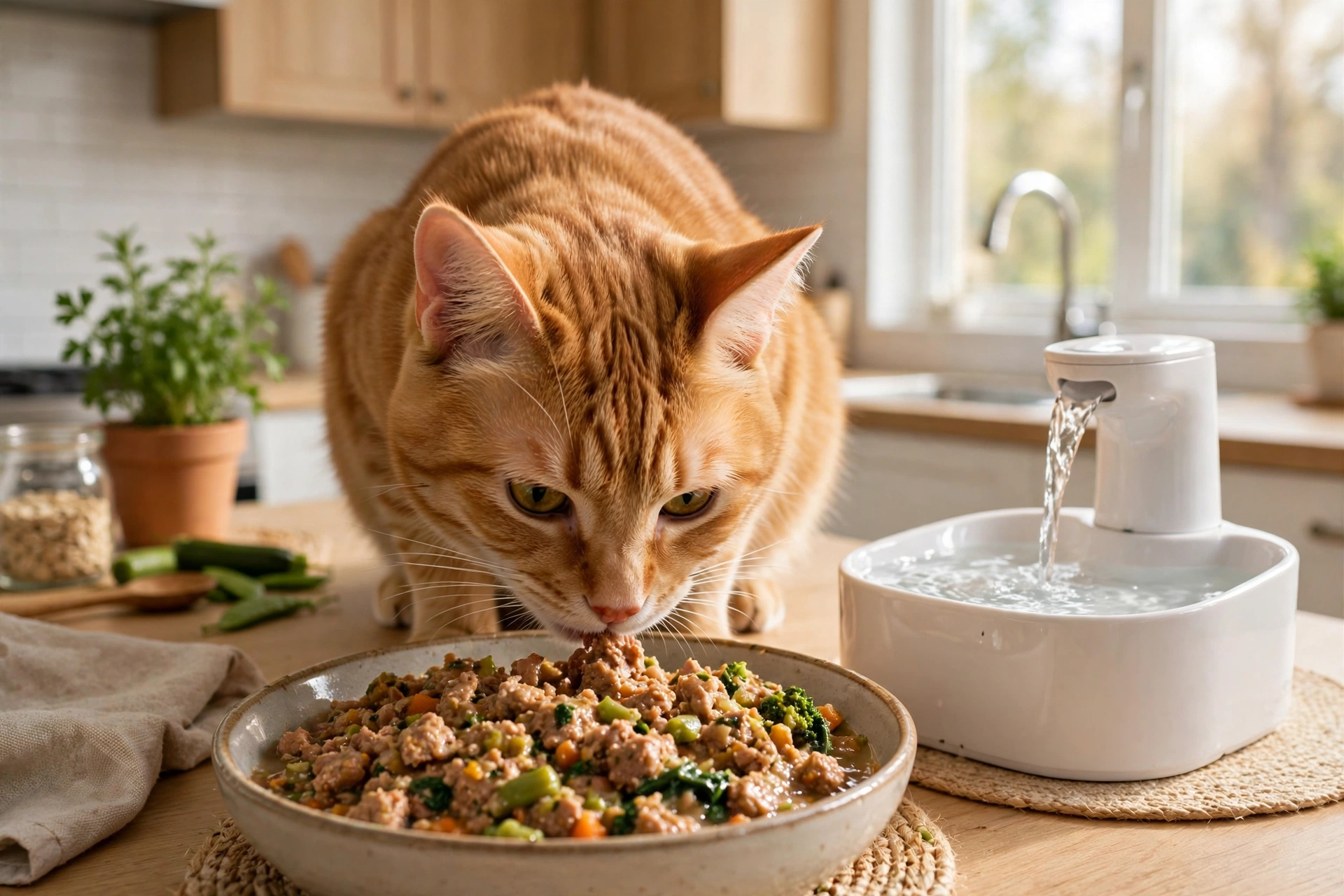
Provide access to fresh water and a clean, easy-to-reach box. Keep the cat calm and gather medication and diet details for the clinic. Ask your vet whether adding water to a familiar food is appropriate for your cat. Do not give a human enema, mineral oil, milk, a stimulant laxative, or a leftover prescription from another pet. Some of these products can injure a cat or mask an obstruction, and the wrong home treatment can turn a manageable case into an emergency. The pet hydration calculator is useful for planning questions, but it cannot replace an exam when output has changed.
How will the vet treat constipation?
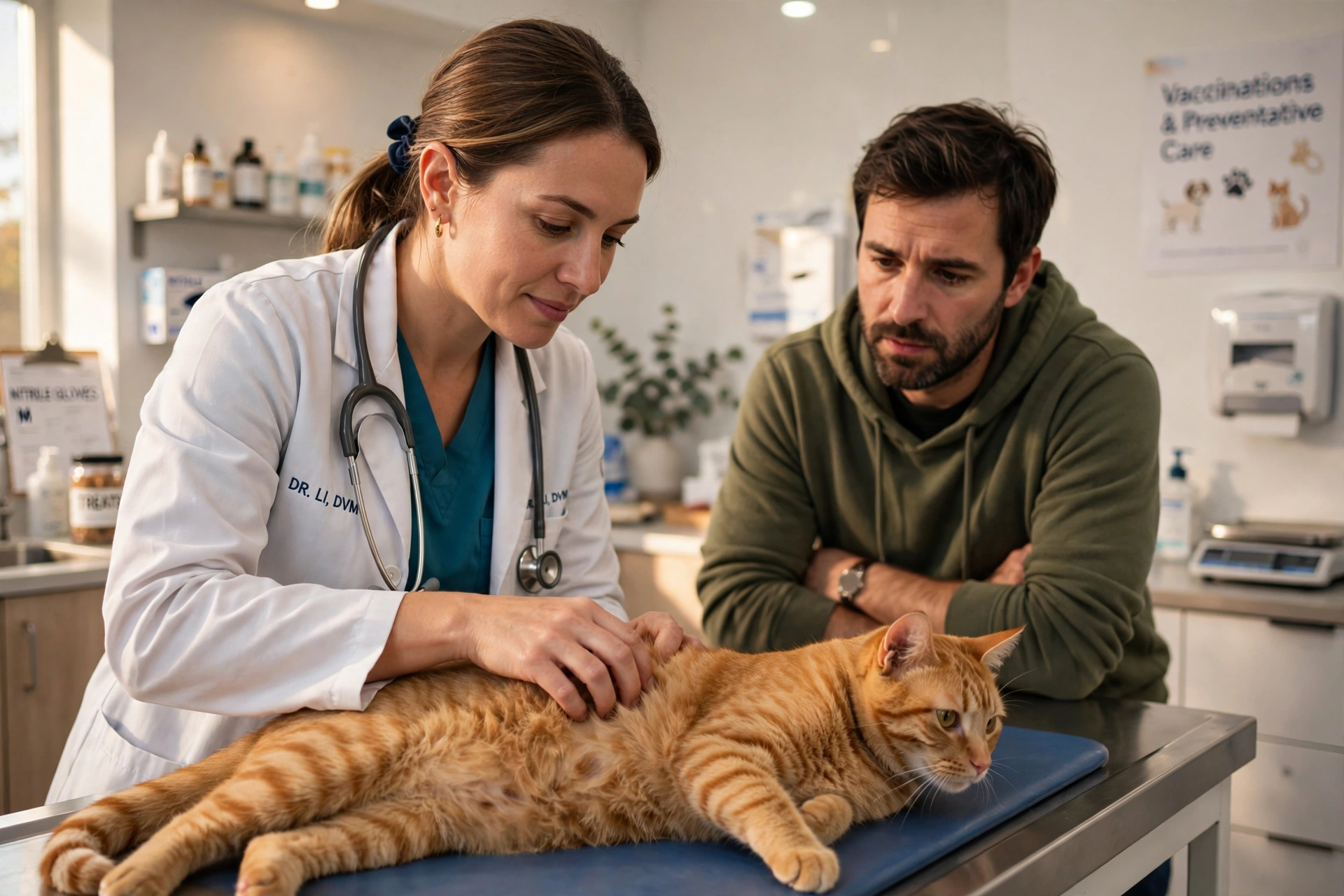
The clinic may feel the abdomen, assess hydration, run blood or urine tests, and use imaging when obstruction, pelvic injury, or megacolon is possible. Treatment can include fluids, a veterinarian-selected stool-softening plan, an enema performed safely in the clinic, motility treatment, diet changes, or hospitalization for severe cases. Severe or recurrent disease sometimes needs more intensive management. Never copy a dose from a different cat, and never assume the treatment that worked last time is right this time.
What happens after the first episode?
One episode that resolves is a warning to improve the setup; repeated episodes are a condition to manage. Long-term management usually centers on water, movement, and monitoring. Encourage drinking with fresh water in multiple spots, and ask your vet about gradually increasing dietary moisture. Keep the cat moving with daily play, manage weight, and groom long-haired cats regularly to cut down swallowed hair. For arthritic cats, pain management from the vet can restore normal box posture and break the hold-it cycle. Schedule a recheck if your vet advised one, and call sooner if straining returns.
A simple stool diary
For a week after an episode, or any time your vet asks you to monitor, jot this down daily. It takes thirty seconds and it is exactly what clinics wish owners brought in:
| Date | Stool passed? | Look and effort | Urine clump normal? | Appetite and water |
|---|---|---|---|---|
| Yes / No | Normal, hard pellets, straining, etc. | Yes / No / Unsure | Normal / Reduced |
Use the cat symptom checker to organize these observations, then call your veterinarian. After the first visit, call back if no stool appears within the timeframe your vet gave, or sooner if straining produces nothing, vomiting starts, or appetite drops. Note what the vet prescribed and what you have given so far, because the next step depends on it.
Constipation myths vs facts
| Myth | Fact |
|---|---|
| Milk helps constipation. | Milk can cause digestive upset in many cats. Ask your vet instead. |
| A little mineral oil is harmless. | Oils can be inhaled into the lungs or mask a blockage. Never give without veterinary direction. |
| Straining always means constipation. | Straining can mean a urinary blockage, which is an emergency. |
| Switching litter fixes it. | Keep the box clean and accessible, but address medical causes before shopping for litter. |
| Hairballs are the whole story. | Hair can contribute, but pain, dehydration, and diet matter just as much. |
FAQ: Cat constipation
Is one missed bowel movement always an emergency?
Not necessarily, but the answer depends on comfort, appetite, hydration, and confirmed urine. Repeated straining or uncertainty about urine changes the decision.
Can hairballs cause constipation?
Hair and other indigestible material can contribute, but vomiting, pain, or appetite loss requires a veterinary assessment.
Should I switch litter?
Keep the box clean and accessible; a painful cat may avoid any box. Address medical causes before buying a different litter.
Can I give my cat milk to help things move?
No. Many adult cats do not digest milk well, and it can cause cramping or diarrhea that complicates the picture. Fresh water and a vet-approved plan are safer.
My cat has been straining since last night. Can I wait until morning?
If you cannot confirm normal urine output, do not wait: go now. If urine is normal and the cat is comfortable and eating, call your vet for same-day advice rather than trying home remedies.
Sources consulted
Educational information only; this guide does not diagnose or replace veterinary care.
Related cat guides
Related guides in this cat-health cluster: Cat Not Eating When To Worry, Cat Diarrhea When To Worry, Cat Not Using Litter Box, Cat UTI Symptoms FIC, Cat Ate String What To Do. Remember that straining can mean a urinary blockage, not constipation: if no urine is coming out, that is an emergency.
Veterinary Review & Editorial Standard
This clinical guide was prepared using peer-reviewed veterinary literature and guidelines from leading veterinary associations. If your pet exhibits acute symptoms or distress, please seek immediate in-person veterinary emergency care.