
My Dog Tested Positive for Lyme: What That Result Actually Means
 The Pets Passion Medical Team
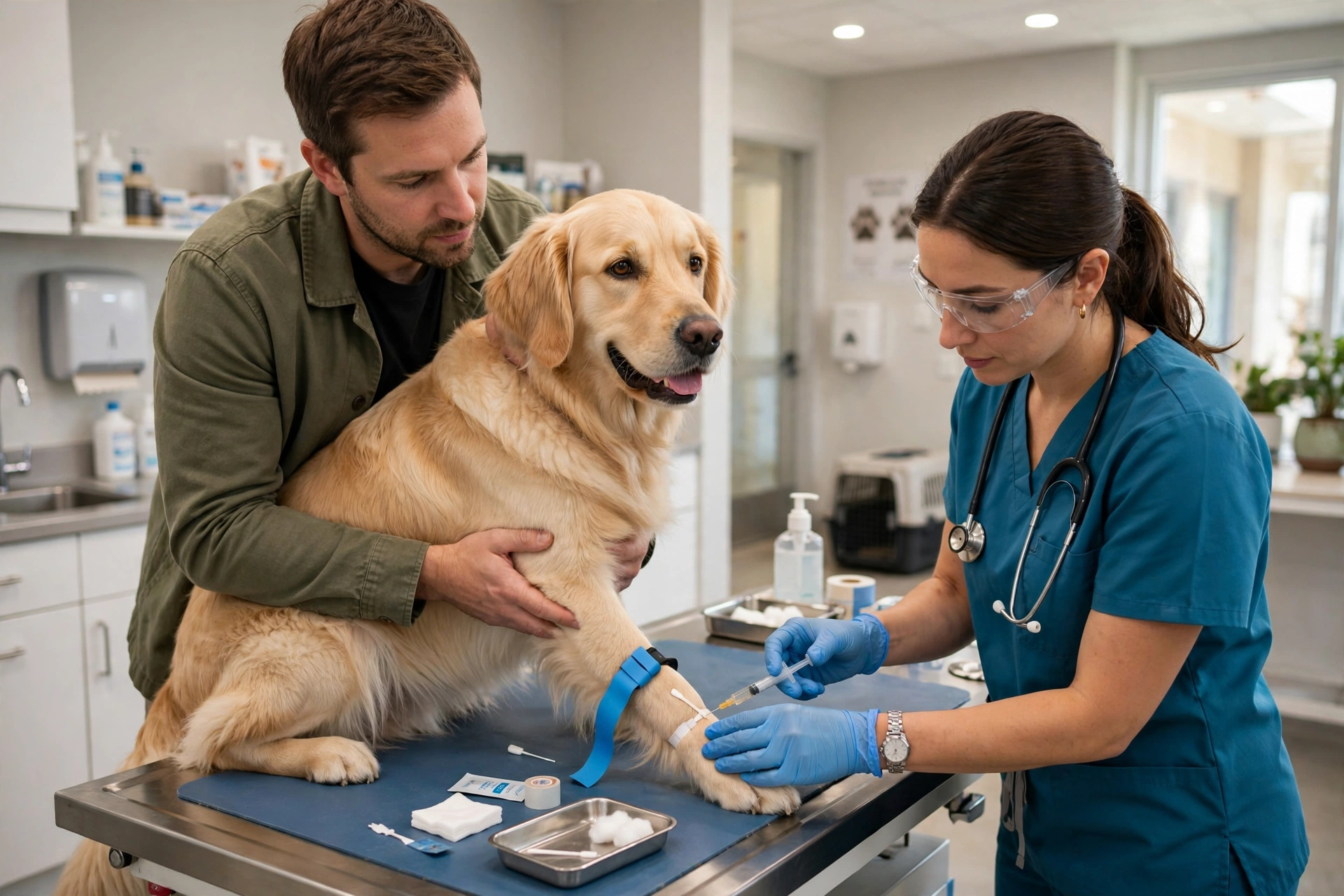
A positive Lyme result on your dog’s blood test means the test found antibodies against Borrelia burgdorferi, the bacterium that causes Lyme disease. It does not automatically mean your dog is sick right now, and it does not prove Lyme is the cause of any current symptoms. Most dogs with a positive screening test are healthy — what happens next depends on the exam, a few follow-up tests, and your dog’s individual risk.
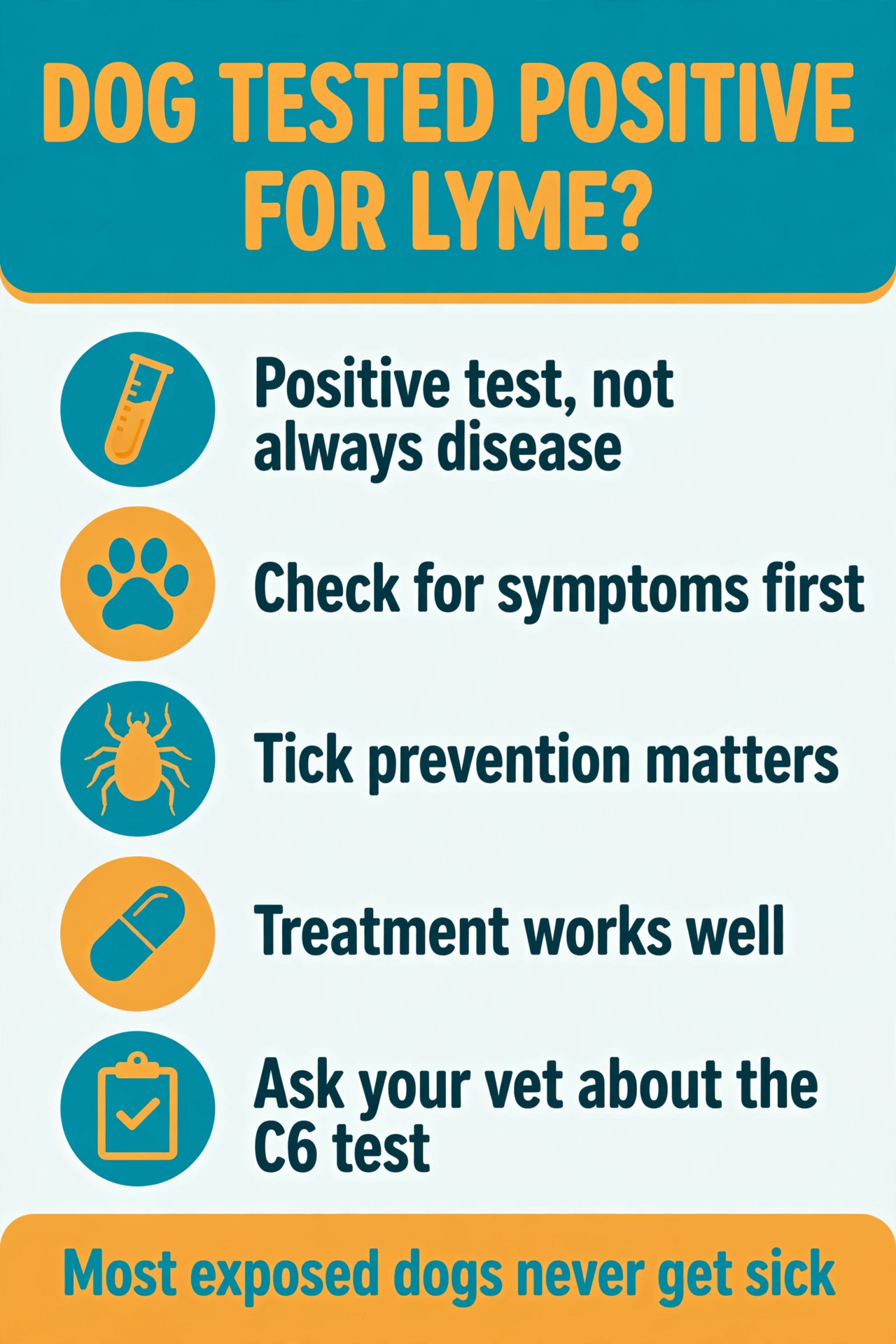
What does a positive SNAP 4Dx test actually mean?
The SNAP 4Dx Plus is the most common in-clinic screening test. It is an ELISA that uses the C6 peptide to detect antibodies produced after B. burgdorferi infection, and it does not cross-react with antibodies from canine Lyme vaccines — so a positive result reflects genuine exposure to the bacterium, not vaccination.
A positive result means your dog was bitten by an infected tick at some point and the immune system responded. Antibodies can persist for months or years. What the test cannot tell you:
- Whether the infection is still active or already cleared
- Whether Lyme is causing your dog’s current symptoms (if any)
- How severe any disease is
This is why a positive SNAP is the start of the workup, not the diagnosis.
If my dog seems healthy, is treatment needed?
Not necessarily. Many seropositive dogs never develop clinical Lyme disease, and whether to treat a healthy, asymptomatic dog with antibiotics is a genuinely debated area in veterinary medicine — do not assume every positive dog needs antibiotics.
That said, a positive result should never be filed away and ignored. Published consensus guidance supports a structured evaluation of every seropositive dog: a full physical exam, screening for protein in the urine (proteinuria), checking for coinfections from the same tick bite (such as Anaplasma or Ehrlichia, which the SNAP 4Dx panel also screens for), and putting serious tick control in place going forward.
What will the vet check after a positive result?
Expect some or all of the following, tailored to your dog:
- Full physical exam — joints, lymph nodes, fever, and general condition. Lyme-associated lameness typically shows as shifting-leg lameness, sometimes with fever and lethargy.
- Complete blood count and chemistry panel — general health baseline; there is no single blood value that “proves” Lyme.
- Urinalysis with urine protein assessment — this is the critical kidney screen. If protein is found, your vet will usually quantify it with a urine protein-to-creatinine ratio (UPC). Persistent proteinuria can be the first clue to Lyme-related kidney disease.
- Quantitative C6 antibody test (in selected cases) — the Quant C6 measures the amount of C6 antibody. It can be useful in some situations (for example, establishing a baseline before treatment or helping assess response), but paired quantitative C6 testing needs more study, and a falling antibody level must not be presented as proof the infection is microbiologically cured.
- Coinfection screening — because the same tick can transmit several organisms, your vet may test for Anaplasma, Ehrlichia, or Babesia, especially if bloodwork is abnormal.
Older published algorithms (including manufacturer guidance from IDEXX) describe a pathway of urinalysis with reflex UPC plus Quant C6 retesting at about six months. Treat that as one manufacturer’s framework, not universal current consensus — your veterinarian will follow the approach they judge appropriate for your dog.
How is Lyme disease treated in dogs?
Dogs that are clinically ill with Lyme disease are commonly treated with doxycycline, an antibiotic effective against B. burgdorferi. The exact dose, duration, and whether your dog needs treatment at all are decisions for your veterinarian — this article deliberately does not publish dosages, because dosing depends on weight, formulation, kidney status, and concurrent conditions.
What you should know as the owner:
- Give the full course exactly as prescribed, even if your dog improves quickly.
- Report vomiting, appetite loss, or worsening lameness during treatment.
- Pain management and joint support may be part of the plan; never give human pain relievers to your dog.
- Some dogs need re-evaluation of urine protein during or after treatment.
Treatment of a sick dog is usually rewarding — lameness and fever often improve within days. But antibiotics treat the infection, not every consequence of it, which brings us to the most important complication.
Do not be surprised if your vet also discusses Lyme vaccination going forward. Vaccination after a positive test is a separate, risk-based decision — not a treatment for the current result — and it does not replace tick preventives. Keep every recheck appointment: the follow-up urinalysis is how your vet confirms the kidneys stayed quiet, which matters more than whether the next SNAP test flips negative.
What is Lyme nephritis, and why does protein in the urine matter?
Lyme nephritis — Lyme-associated protein-losing kidney disease — is the most serious recognized complication of B. burgdorferi infection in dogs. In affected dogs, immune complexes damage the kidneys’ filtering units, protein spills into the urine, and kidney function can deteriorate rapidly. It is considered more common in certain breeds (Labrador and Golden Retrievers are overrepresented in reports), but it can occur in any dog.
This is why the urinalysis/UPC step is non-negotiable after a positive test. Warning signs that need prompt veterinary attention include increased thirst and urination, decreased appetite, vomiting, lethargy, and swelling of the limbs or abdomen — but early Lyme nephritis can be silent, which is exactly why screening catches it before symptoms do.
Lyme nephritis requires veterinary management beyond antibiotics alone — often including kidney-supportive medications, diet modification, and close monitoring. If your vet finds persistent proteinuria, follow their referral and recheck plan closely.
Can my family or other pets catch Lyme from my dog?
No — Lyme disease is not directly contagious. Your dog cannot give Lyme to you, your children, or your other pets through contact, licking, or shared bowls. It is transmitted only through the bite of an infected tick (primarily Ixodes species, the deer tick / black-legged tick).
The real shared risk is environmental: a positive dog means infected ticks are active where your dog walks, which means you and your other pets are being exposed to the same ticks. Use the result as a prompt to check everyone’s tick prevention, not as a reason to isolate your dog.
How do I prevent the next tick bite?
Tick prevention is year-round work in most regions, because adult ticks can be active on mild winter days:
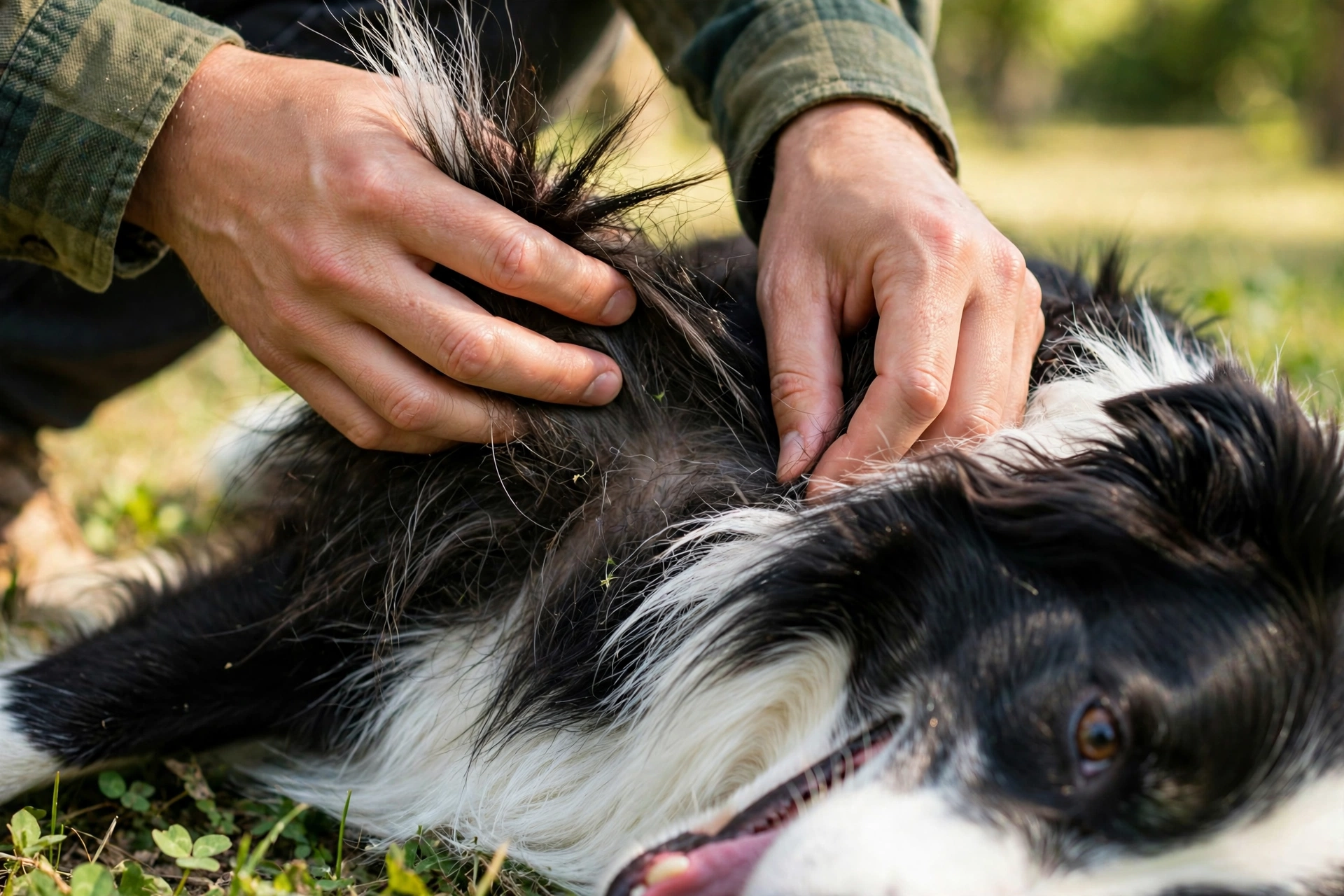
- Keep a veterinarian-recommended tick preventive on schedule — oral, topical, or collar products, used exactly as labeled. Ask your vet which fits your dog’s age, weight, and health.
- Check your dog after outings — ears, armpits, groin, between toes, under the collar, and around the eyelids. Remove attached ticks promptly with fine-tipped tweezers, grasping close to the skin.
- Manage the environment — keep grass short, clear leaf litter where ticks shelter, and consider the yard edge where woods meet lawn.
- Discuss Lyme vaccination with your veterinarian — the vaccine is a risk-based decision, not automatic for every dog. Your vet will weigh local tick pressure, your dog’s lifestyle, and the fact that vaccination does not replace tick preventives.
Should my dog be retested?
Possibly. Retesting is not about chasing a negative SNAP — antibodies can remain detectable long after successful treatment, and a persistently positive screening test alone does not mean treatment failed. Your vet may recommend:
- Rechecking urine protein (UPC) — to confirm the kidneys stay quiet.
- Quant C6 in selected cases — as one data point among several, not a cure certificate.
- Annual SNAP 4Dx screening — as part of routine wellness and to monitor for new tick-borne infections.
Ask your vet at the follow-up visit what “success” looks like for your dog specifically, and what would trigger a change of plan.

Beyond tick-borne disease, remember that intestinal parasites like giardia are a separate common risk — ask your vet about comprehensive parasite screening at wellness visits.
FAQ
Does a positive Lyme test mean my dog will get sick?
No. Many seropositive dogs stay healthy. The positive result means exposure happened and earns your dog a proper evaluation — exam, urinalysis with protein assessment, and tick prevention — not an automatic illness sentence.
My dog is limping and tested positive. Is it Lyme?
It could be, but lameness has many causes. Lyme-associated lameness is often a shifting-leg lameness with fever or lethargy, and your vet will rule out orthopedic and other infectious causes before attributing it to Lyme.
Can Lyme go away on its own?
Do not count on it. Some dogs’ immune systems control the infection, but clinical Lyme disease and especially Lyme nephritis need veterinary treatment. “Wait and see” is not a plan for a positive dog with symptoms or proteinuria.
How long does treatment take?
Your veterinarian sets the duration based on your dog’s condition and response. Give the full prescribed course and keep all recheck appointments, including urine protein rechecks.
Should I treat my yard for ticks?
Environmental control helps, but follow product labels carefully — some yard pesticides are hazardous to pets, pollinators, and waterways. Ask your vet or a licensed pest professional for pet-safe options.
Educational information only — not a diagnosis or treatment plan. Dosing decisions belong to your veterinarian.
Veterinary Review & Editorial Standard
This clinical guide was prepared using peer-reviewed veterinary literature and guidelines from leading veterinary associations. If your pet exhibits acute symptoms or distress, please seek immediate in-person veterinary emergency care.