
Flea Treatment for Cats: Safe Options and Big Mistakes to Avoid
 The Pets Passion Medical Team
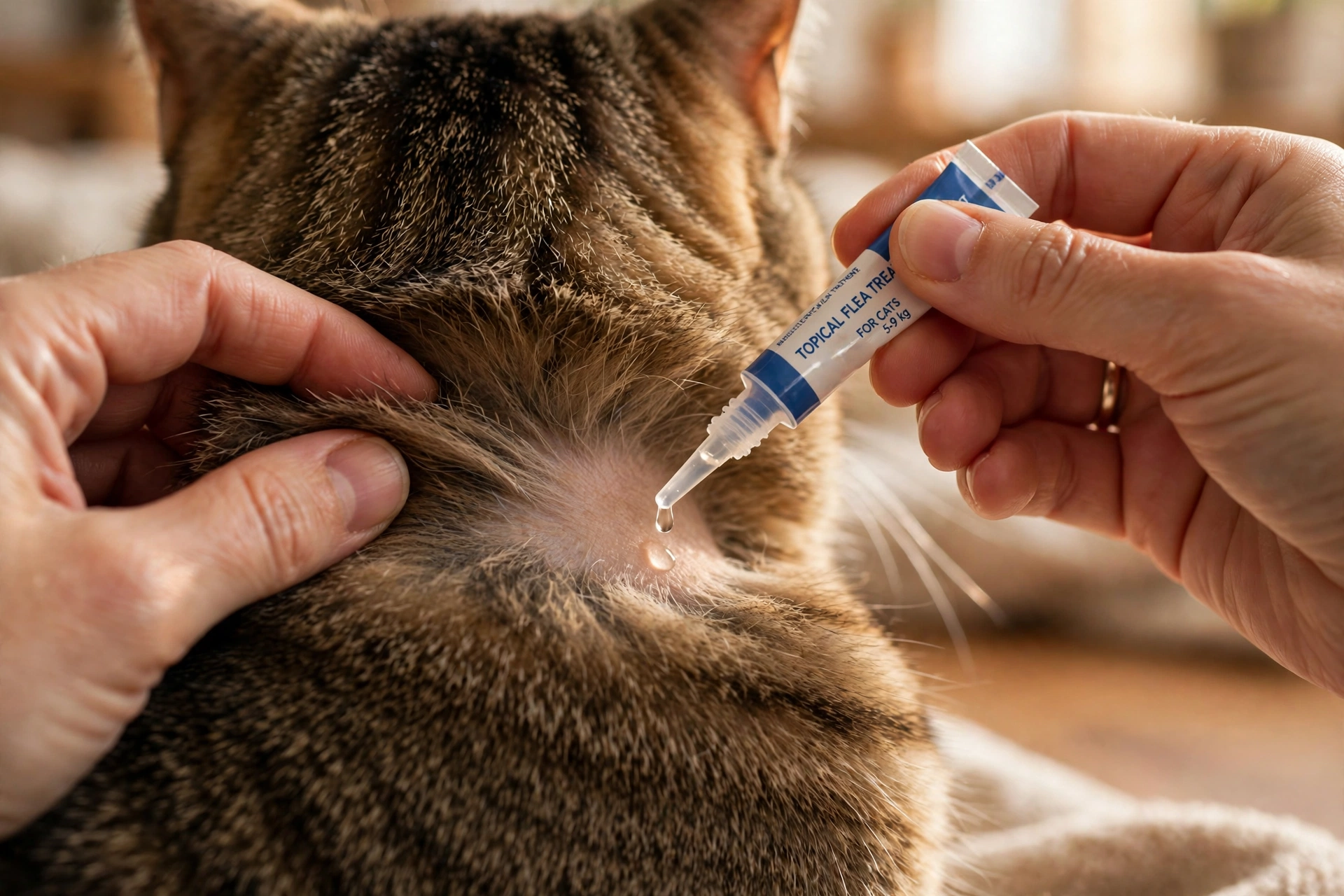
The safest flea treatment for cats is a product labeled for cats, matched to the cat’s age and weight, and chosen with veterinary guidance when the cat is young, sick, pregnant, or nursing. There are good feline options in several forms, but the classic dangerous mistake is using a dog flea product on a cat. Some dog products contain permethrin, which can cause life-threatening neurologic signs in cats. Get the product choice right, treat the home as well as the cat, and follow the plan through the full flea life cycle.
What does the flea life cycle look like?
The fleas you see on the cat are only the tip of the problem. Adult fleas feed on the cat and lay eggs that fall into bedding, carpets, and cracks. The eggs hatch into larvae, which spin cocoons and become pupae, and new adults emerge to jump back onto the cat. Most of the population lives in the environment, not on the animal, which is why treating only the cat fails: the home keeps restocking the infestation. A complete plan has to outlast the cycle, which is why vets insist on weeks of consistent treatment rather than a single application.
What are the signs of fleas?
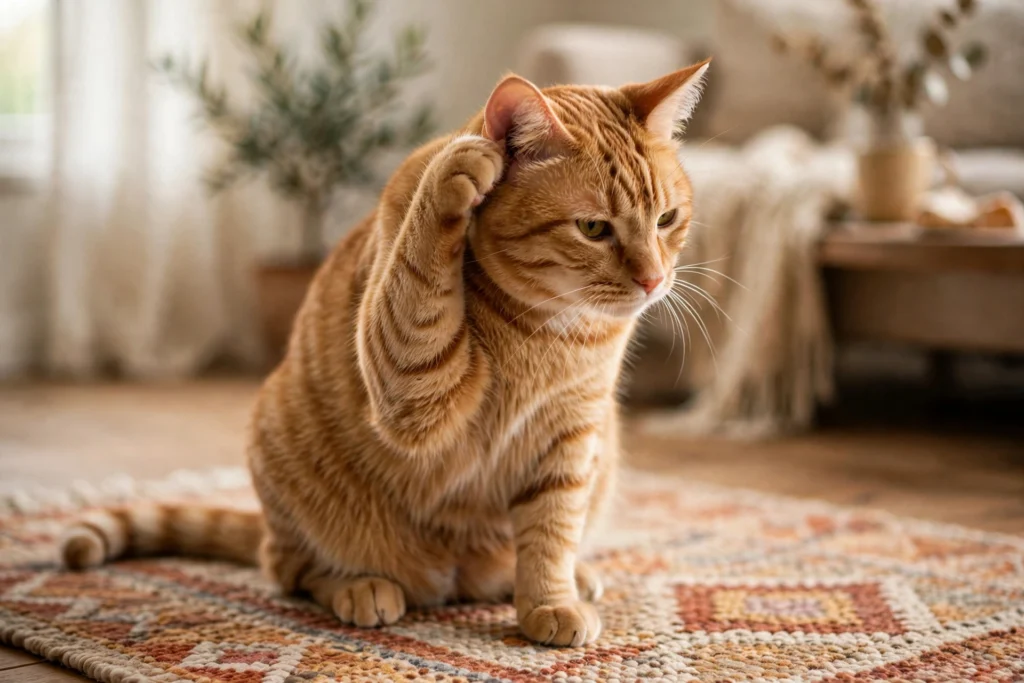
Fleas can cause itching, overgrooming, scabs, hair loss, and flea dirt: tiny dark specks that turn reddish on a damp paper towel because they are digested blood. Some cats show very little scratching despite an infestation, especially fastidious groomers that swallow the evidence. Heavy flea burdens can contribute to anemia, especially in kittens, and flea allergy can make a small number of bites miserable for a sensitive cat.
Pale gums, weakness, collapse, or a very young kitten with fleas needs prompt veterinary care rather than a home remedy. Fleas do not explain every cough, sneeze, or skin lesion, so a cat with nasal discharge or breathing changes may have a respiratory problem instead; see why cats sneeze.
How do I do a flea-comb check?
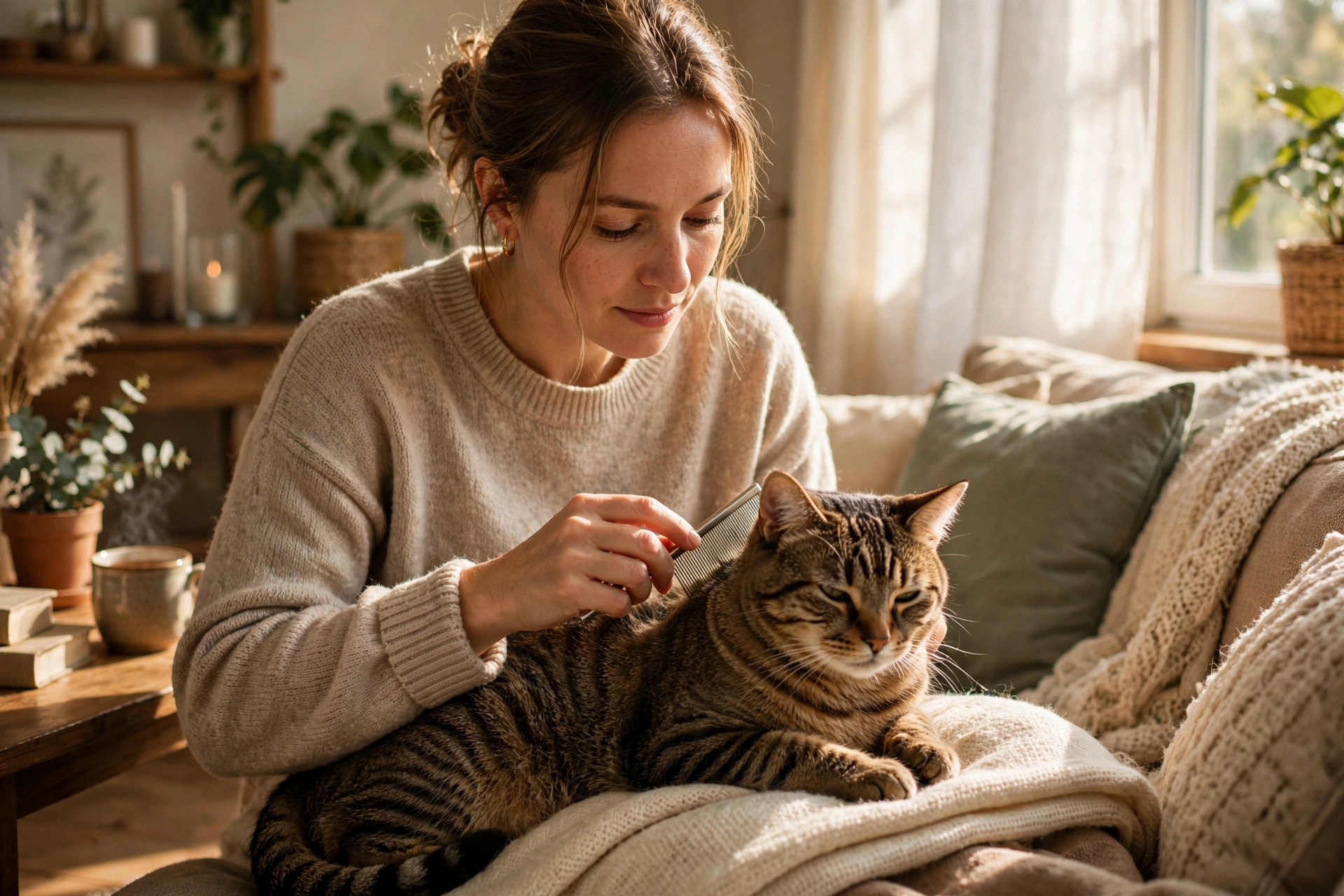
A fine-toothed flea comb is the cheapest diagnostic tool you own. Here is the routine:
- Choose a calm moment when the cat is relaxed, ideally on your lap or a light-colored towel.
- Comb against the grain around the neck, the base of the tail, and the belly, where fleas gather.
- Check the teeth after each pass for live fleas or dark specks.
- Test the specks: tap anything dark onto a damp white paper towel. Reddish streaks mean flea dirt, which confirms fleas.
- Drown what you catch in soapy water; fleas jump and are hard to crush.
Do this weekly during flea season or any time you suspect a problem. Finding nothing on a thorough comb is genuinely reassuring; finding flea dirt means it is time to act.
Why can dog flea products poison cats?
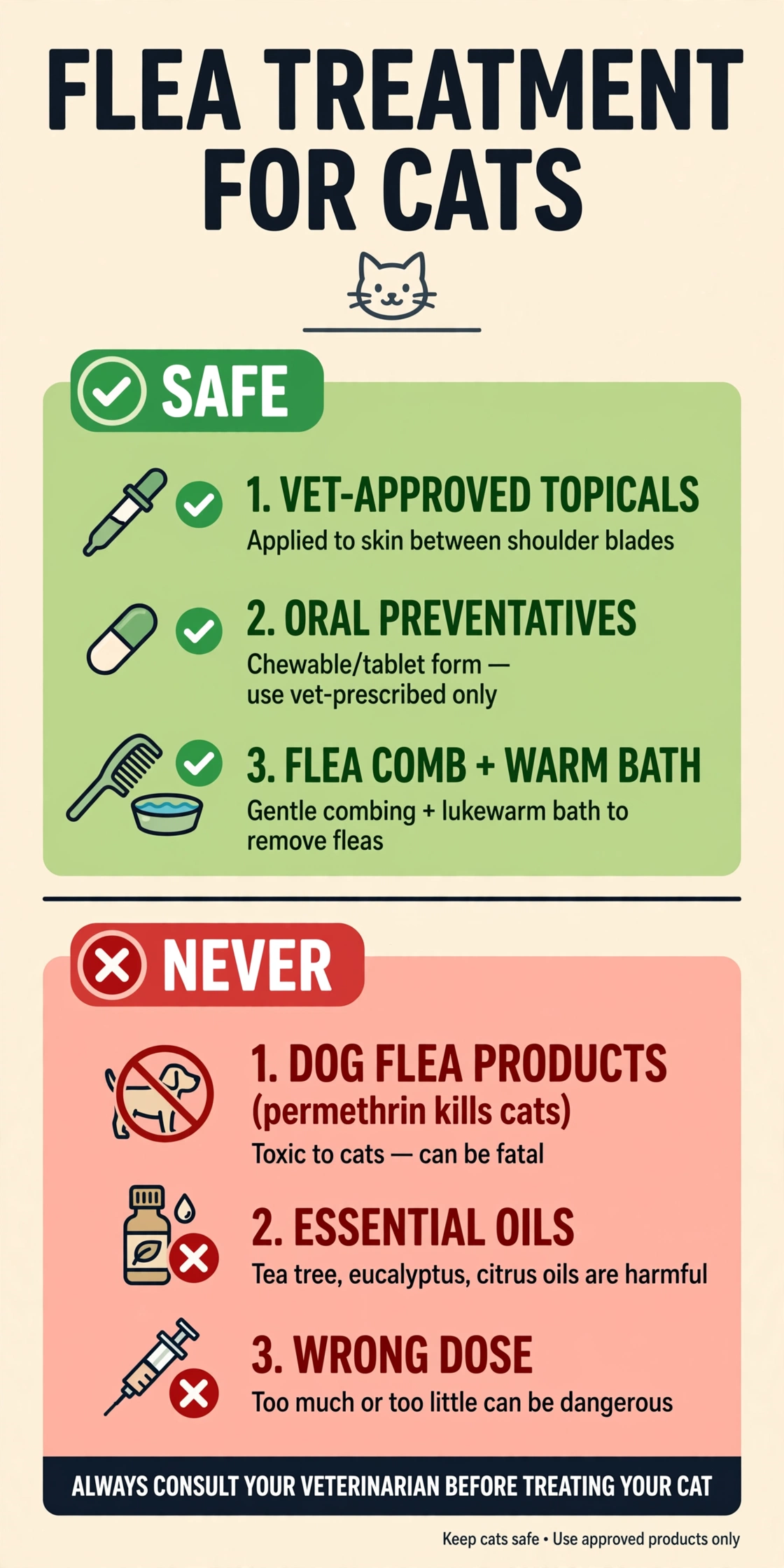
Never substitute a dog spot-on, spray, collar, shampoo, or “small dog” product for a feline product. Some dog formulas contain permethrin, which cats cannot metabolize the way dogs do. Exposure can cause twitching, tremors, seizures, weakness, and fever, and it can be fatal. Read the active ingredients, not only the brand name, because similar packaging across species is exactly how mistakes happen. Cats can also be poisoned by grooming a recently treated dog, so separate treated animals as directed. If a cat has been exposed, call a veterinarian or pet poison service immediately; do not wait for symptoms and do not apply another product to cancel it out.
How do I choose a safe flea treatment for cats?
Work through this checklist before anything touches the cat:
- Species on the label: it must say cats. Dog products, even small-dog ones, are never substitutes.
- Age and weight: match the minimum age and the weight band to your cat. Kittens need kitten-labeled products.
- Active ingredients: read them and photograph the box for your records.
- Form: spot-ons, oral products, and collars all exist for cats; the best form is the one your cat tolerates and you will use correctly.
- Other conditions: ask the veterinarian about interactions with current medication and whether the product fits seniors, pregnancy, nursing, or chronic disease.
- One plan at a time: avoid stacking collars, sprays, shampoos, and spot-ons without a professional plan. More product is not more protection.
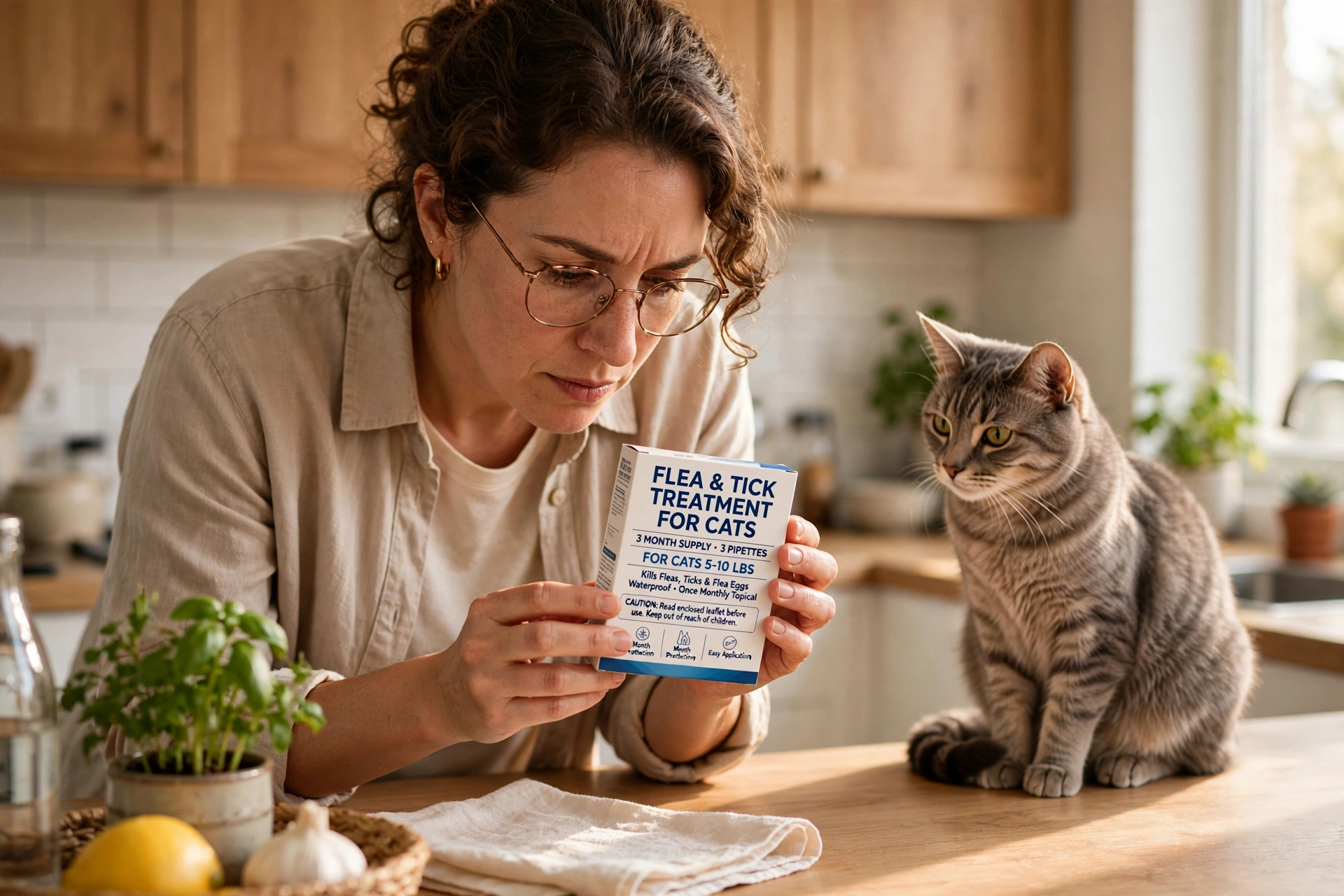
At the pharmacy counter, confirm the product is labeled for cats and matches your cat’s weight band. Ask how it interacts with other treatments already in use. When in doubt, call your vet before applying anything; a two-minute call beats a poisoning case.
What about kittens, pregnant, or nursing cats?
These cats need vet-chosen products, full stop. Minimum ages differ by product, and some formulas safe for adult cats are not safe for neonates or for queens nursing kittens. Very young kittens with fleas are also at real risk of anemia, so a heavy burden in a tiny kitten is a vet visit, not a bath at home. The same caution applies during your kitten’s first vet visits: always ask about safety for pregnant or nursing cats before using anything, including products marketed as gentle or natural.
What does the home plan look like week by week?
Because most of the flea population lives off the cat, the environment plan matters as much as the product:
- Weeks 1 to 2: wash all pet bedding in hot water, vacuum resting areas, rugs, and cracks thoroughly, and empty the vacuum outside so fleas do not crawl back out. Start the vet-approved cat treatment.
- Weeks 3 to 4: keep vacuuming weekly; vibration stimulates pupae to emerge, which sounds bad but actually exposes them to the treatment cycle. Reapply the cat product exactly on schedule.
- Ongoing: stay on preventive through the full plan your vet set. Stopping early because the itching faded is the most common reason infestations rebound.
Your veterinarian can advise on a household plan that is safe for every species in the home. Do not use concentrated agricultural or household insecticides around cats unless the label and a professional explicitly say how.
What if the cat licks the product?
Follow the product’s first-aid label first, then call the clinic if the cat shows drooling, vomiting, agitation, tremors, weakness, or unusual movement. Prevent grooming of a wet application spot by separating pets as directed until it dries. Never induce vomiting unless a veterinarian or poison service explicitly tells you to. Bring the package or a photo of the active ingredients so the clinic knows exactly what was ingested. If you suspect flea-treatment poisoning, treat it as a veterinary emergency and call immediately rather than waiting for symptoms to worsen.
Do natural remedies work?
Most do not, and some are dangerous. Essential oils are the biggest myth: several, including tea tree oil, are toxic to cats, whose livers handle these compounds poorly. Garlic and onion, sometimes suggested online, can damage feline red blood cells. Diatomaceous earth and herbal collars have thin or no evidence and their own risks. “Natural” is not a synonym for safe. If you want to minimize chemicals, say so to your vet and ask for the gentlest effective veterinary option rather than experimenting from internet recipes.
Fleas, sneezing, and other symptoms
Fleas do not explain every cough, sneeze, or skin lesion. Treat the fleas you can confirm, and investigate other symptoms on their own terms rather than assuming one cause covers everything. A methodical approach, one problem at a time, gets cats better faster than a pile of simultaneous guesses.
FAQ: Flea treatment for cats
Can I use a dog flea shampoo on a cat?
No, not unless a veterinarian confirms the product is labeled and safe for that cat.
Do indoor cats need flea prevention?
Indoor access lowers exposure but does not make it impossible. Discuss risk with your vet.
How fast should fleas disappear?
The visible adult population and the home life cycle do not always resolve at the same speed. Follow the full plan.
Can I just bathe the fleas off with dish soap?
A bath may remove some fleas but it is not a treatment plan, and frequent bathing strips the coat and stresses the cat. Ask your vet for a proper product instead.
Do I need to treat all the pets in the home?
Yes, coordinate with your vet. Dogs and cats each need species-appropriate products, and untreated animals keep the cycle going.
Sources consulted
Educational information only; this guide does not diagnose or replace veterinary care.
Related cat guides
Related guides in this cat-health cluster: Why Is My Cat Sneezing, Kitten Vaccination Schedule, How Long Are Cats Pregnant. For general care, visit the cats hub.
Veterinary Review & Editorial Standard
This clinical guide was prepared using peer-reviewed veterinary literature and guidelines from leading veterinary associations. If your pet exhibits acute symptoms or distress, please seek immediate in-person veterinary emergency care.
💬 1 Community Response
Comments are closed for this article.