
How Long Are Cats Pregnant? Timeline, Signs and Vet Care
 The Pets Passion Medical Team

A typical cat pregnancy lasts about 63–65 days — roughly nine weeks from breeding — and knowing how long cats are pregnant helps you time vet visits, nutrition changes, and birth preparation. Count from the first day of mating, not from when signs appear, because early pregnancy is easy to miss. An unspayed female can cycle again quickly after giving birth, so keeping her indoors only is safest until you have a spay plan.
How long are cats pregnant, exactly?
Most queens deliver between 63 and 65 days after mating, with a normal range of about 60–70 days. Calendar math helps, but breeding dates are often estimates — your vet can narrow the window with palpation, ultrasound, or X-ray later in pregnancy. Do not try to predict the day from behavior alone; nesting and restlessness vary widely between cats. Call your vet if labor signs pass day 70 without kittens.
What are the early signs of pregnancy?
“Pinking up” — nipples turning pinker and more prominent around weeks 2–3 — is a classic early sign. Appetite may rise, the belly gradually rounds, and some cats become more affectionate while others want more space. Weight gain is gradual at first; a sudden large belly with lethargy can signal something else, such as infection, and deserves a vet check. A vet visit confirms pregnancy and rules out look-alikes like false pregnancy.
False pregnancy vs real pregnancy: how do I tell?
A false (pseudo) pregnancy happens when hormonal changes mimic pregnancy even though no kittens are developing. The cat may show nesting behavior, enlarged mammary glands, and even produce milk — but the belly does not keep growing week after week the way a real pregnancy does. Only a vet can reliably tell the difference, usually with palpation or ultrasound from around week 4 onward. If you are unsure whether your cat is truly pregnant, do not guess — a single confirmation visit settles it and lets you plan properly.
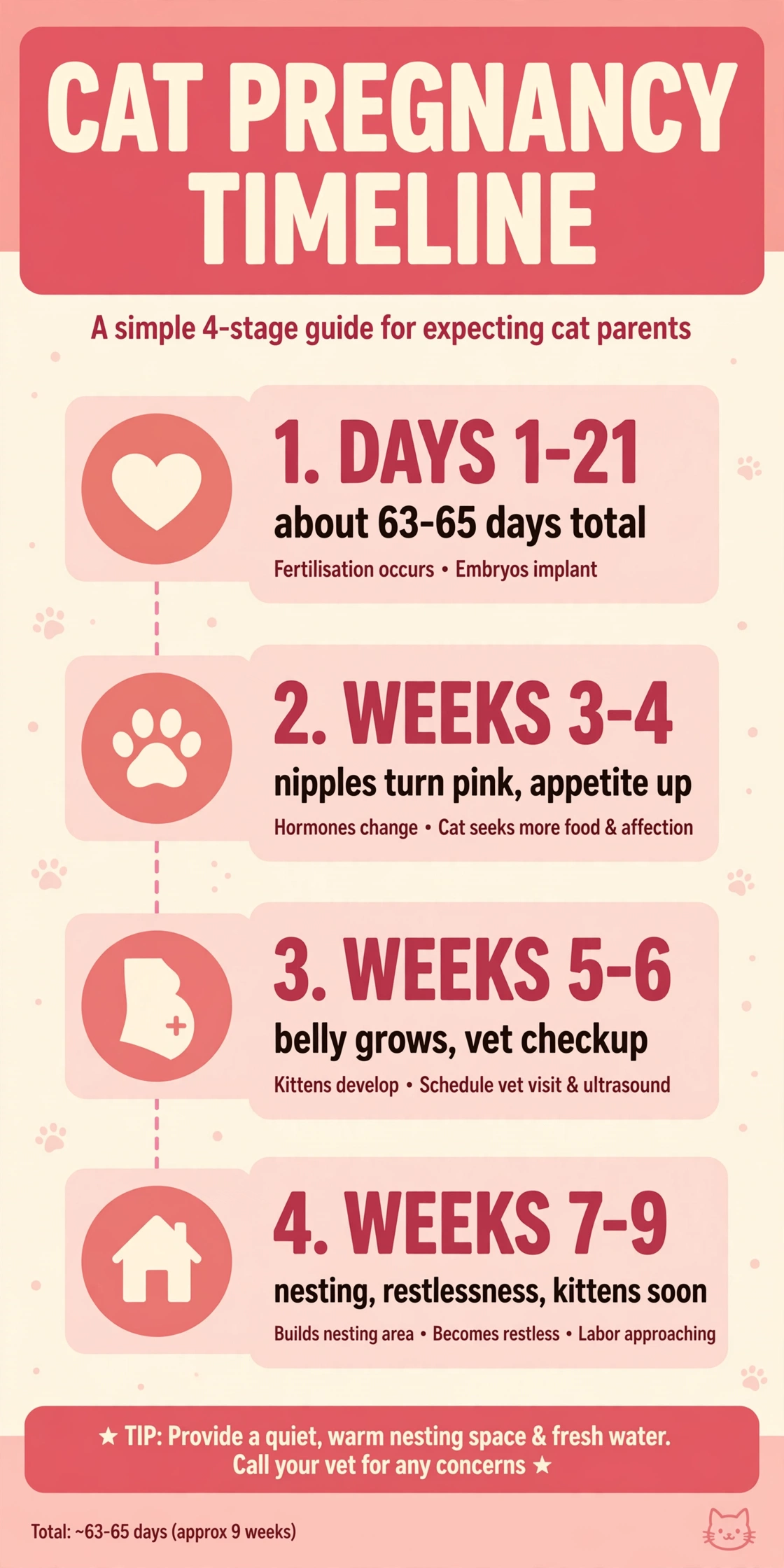
What does the cat pregnancy timeline look like week by week?
- Weeks 1–2: fertilization and implantation; few visible changes.
- Weeks 3–4: pinking up, possible mild nausea, appetite shifts.
- Weeks 5–6: belly visibly rounding, steady weight gain; the vet can often confirm via palpation or ultrasound.
- Weeks 7–8: kittens grow fast, mammary glands enlarge, nesting behavior may start.
- Week 9: restlessness, nesting, possible milk leakage, a temperature drop — labor is near.
Keep her routine gentle throughout: avoid rough play, unnecessary stress, and big household changes.
What should I feed a pregnant cat?
Nutrition needs rise as the kittens grow, and the biggest jump comes in the second half of pregnancy. Your vet will usually recommend a high-quality kitten or all-life-stages diet, because kitten food is more energy- and nutrient-dense than adult maintenance food. A practical rhythm:
- Weeks 1–4: keep her on her normal high-quality diet; appetite changes are mild.
- Weeks 5–6: transition gradually to the kitten food your vet recommends.
- Weeks 7–9: offer smaller, more frequent meals — a growing uterus leaves less room for a full stomach.
- Fresh water always, and keep feeding amounts guided by your vet rather than guesswork.
Do not add supplements on your own; excess calcium and some vitamins can harm developing kittens. Keep vaccinations and parasite prevention current only with vet-approved products — many drugs are unsafe in pregnancy.
What vet care does a pregnant cat need?
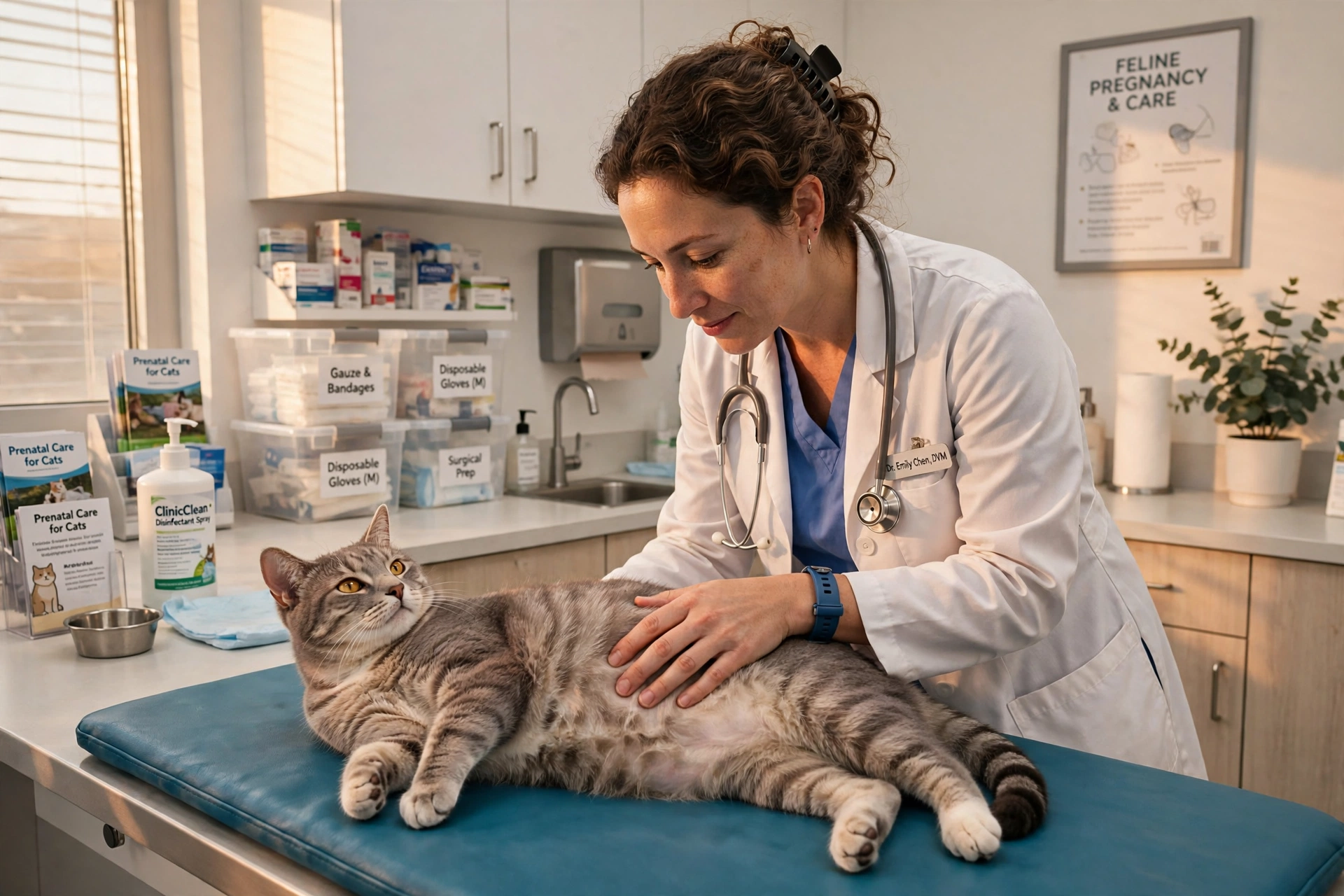
Schedule a prenatal visit once pregnancy is suspected. The vet may confirm with palpation, ultrasound, or X-ray and advise on nutrition. Ask about the birth plan while you are there: when to call, what normal labor looks like, and where emergency care is if labor stalls. If you are already thinking ahead, ask about kitten vaccination schedules and flea prevention that is safe for newborns — flea treatment for cats needs extra care around pregnancy and nursing, so only use products your vet approves.
How should I handle and house a pregnant queen?
Pregnant cats often want more affection, more quiet, or both — follow her lead. Handle her gently and avoid picking her up around the belly in late pregnancy. Give her a calm room she can retreat to, away from other pets and household traffic, especially in the final weeks. Keep her daily routine predictable: same feeding times, same resting spots, minimal visitors. Stress is not just unpleasant for her — a calm environment also sets up a smoother birth.
How do I prepare for the birth?
Set up a quiet nesting box in a warm, draft-free spot — a sturdy box with low sides and clean bedding works well. Let the queen explore the box ahead of time; do not force her to use it. A birth-kit checklist helps:
- Clean towels and a change of bedding
- Your vet’s number and the emergency clinic’s number
- A carrier, in case a trip to the clinic becomes necessary
- A warm, quiet room away from other pets
- A small scale, if you want to track kitten weights for your vet
What are the labor signs, and when do I call the vet?
Stage one: restlessness, panting, nesting, possible appetite drop — can last 6–12 hours. Stage two: straining and kitten delivery, usually minutes to a couple of hours apart. Stage three: passing placentas. Call the vet for:
- Strong straining over 20–30 minutes with no kitten
- Heavy bleeding
- A kitten stuck in the birth canal
- Green discharge without progress
- Labor stopping for hours mid-delivery
If you are unsure whether something can wait, do not wait — call. Our guide on when to take a cat to the emergency vet covers the decision in more detail.
What do I need to know about the first 48 hours with newborns?
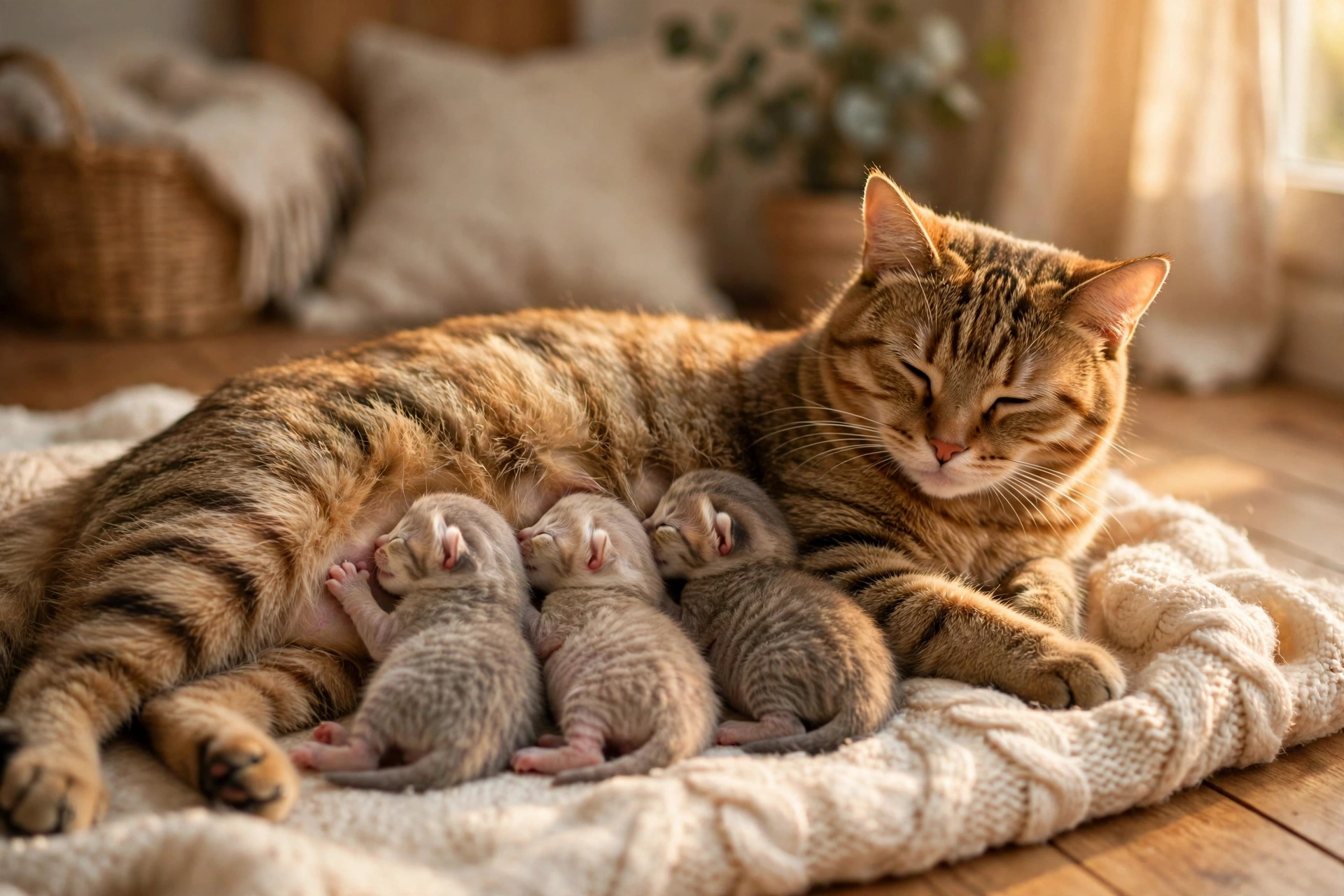
Healthy newborns nurse within the first hours and sleep in warm piles between feeds. Keep the room warm and draft-free, handle the kittens as little as possible, and let the mother eat and drink freely — nursing takes enormous energy. Call your vet if a kitten is not nursing, feels cold, cries constantly, or if the mother seems in pain, stops eating, or ignores the kittens. Weighing kittens daily for the first week or two gives your vet useful data at the first checkup.
When should I spay after birth?
A queen can come back into heat surprisingly soon after giving birth — sometimes within weeks — so do not assume you have months. Talk to your vet about spay timing at the kittens’ first checkup. Many vets spay once the kittens are weaned, typically around 6–8 weeks, but the exact timing depends on the mother’s recovery and your household setup. Until then, she stays indoors — no exceptions.
Frequently asked questions
How can I tell if my cat is pregnant?
Early signs include pinker, more prominent nipples around weeks 2–3, rising appetite, and a gradually rounding belly. A vet visit with palpation or ultrasound from around week 4 is the reliable confirmation.
Can I feel the kittens move?
Sometimes, in the final week or two, you may feel movement if you rest a hand gently on her side while she is relaxed. Never press or squeeze the belly — leave confirmation to the vet.
What should I feed a pregnant cat?
A high-quality kitten or all-life-stages diet, as your vet recommends, with more frequent smaller meals in the final weeks. No self-added supplements.
Can a pregnant cat be around other pets?
Keep her separate from other pets in the final weeks, in her own calm room. Stress and rough play are risks, and newborns need a quiet, protected space.
When should I call the vet during labor?
Strong straining over 20–30 minutes with no kitten, heavy bleeding, a stuck kitten, green discharge without progress, or labor stopping for hours — call immediately for any of these.
Sources consulted
Related guides
- Flea Treatment For Cats
- Kitten Vaccination Schedule
Veterinary Review & Editorial Standard
This clinical guide was prepared using peer-reviewed veterinary literature and guidelines from leading veterinary associations. If your pet exhibits acute symptoms or distress, please seek immediate in-person veterinary emergency care.