Cat Not Eating: When to Worry and What to Do
 The Pets Passion Medical Team

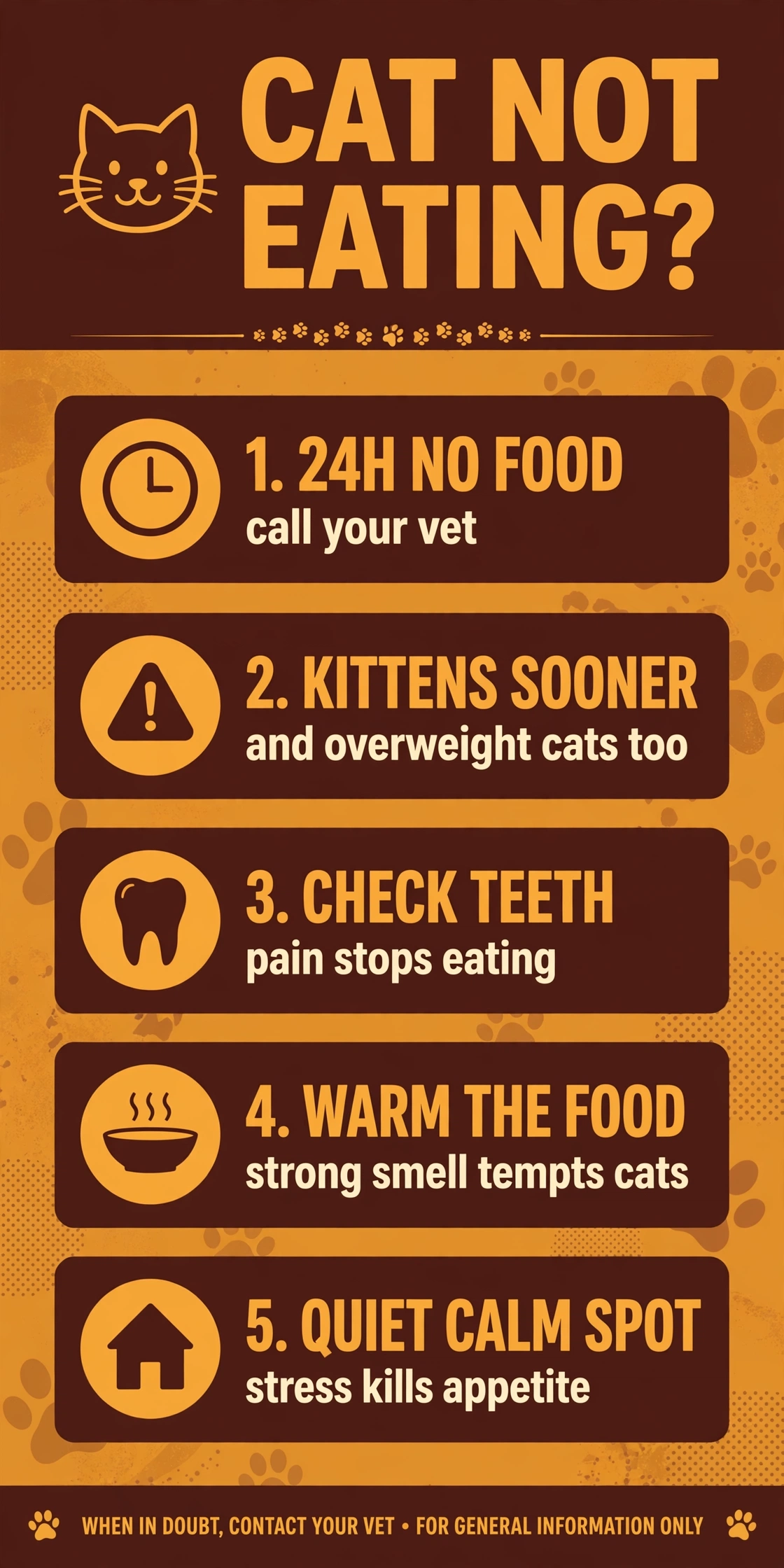
When a cat stops eating, it is time to worry sooner than most owners expect. A cat not eating for more than a day — or eating markedly less than usual for more than 24 hours — should prompt a call to your veterinarian, because cats can become seriously ill both from the underlying cause of appetite loss and from going This guide breaks down cat not eating when to worry, what to try at home, and what your vet will do. without food itself. Overweight cats face a particular danger: hepatic lipidosis, or fatty liver, which can develop when the body mobilizes fat during a prolonged drop in appetite. Kittens, seniors, and cats with diabetes or other chronic illness need an even lower threshold — call the same day they refuse food.
How do I tell the difference between picky eating and appetite loss?
True appetite loss means your cat does not want food. “Pseudo-anorexia” means your cat wants food but cannot pick it up, chew, or swallow comfortably — often because of dental disease, mouth ulcers, or congestion. Watch what actually happens at the bowl:
- Approaches but walks away without sniffing — usually true appetite loss.
- Sniffs eagerly, then leaves or drops food — may indicate mouth or tooth pain, nausea, or trouble swallowing.
- Drooling, pawing at the mouth, or tilting the head while chewing — dental or mouth problems.
- Sniffs but cannot seem to smell the food — a congested nose can make food uninteresting, since cats rely heavily on smell.
- Hides and ignores food entirely — nausea, pain, fever, or whole-body illness.
These small details genuinely help your vet choose which exam and tests to run, so note exactly what you see.
How long can a cat go without eating?
There is no safe universal waiting period. Use this as a working threshold: call your vet the same day when a cat refuses several consecutive meals or eats markedly less than usual for more than 24 hours. For kittens, seniors, and cats with diabetes, kidney disease, or other chronic illness, do not wait that long — call promptly.
Seek urgent care right away for vomiting that will not stop, severe lethargy, dehydration, signs of pain, breathing trouble, a suspected toxin or swallowed object, or a cat that cannot keep food down. When in doubt about whether something can wait, read our guide on when to take a cat to the emergency vet.
Why is my cat not eating? Common causes
Appetite loss is a symptom, not a diagnosis. Common causes include dental pain, nausea, fever, congestion, stress, kidney or liver disease, pancreatitis, urinary trouble, and a swallowed foreign object. Medication side effects and post-vet-visit stress can also suppress appetite for a day or two.
- Mouth and teeth: dental disease, mouth ulcers, or a sore throat make eating painful.
- Stomach and gut: nausea, pancreatitis, or an obstruction can kill appetite.
- Whole-body illness: fever, kidney or liver disease, and infections often show up as refusing food first.
- Stress: moving house, a new pet, houseguests, or a changed routine can cause short appetite dips.
- Medications: some drugs cause nausea or appetite loss as a side effect — always tell your vet everything your cat takes.
What is hepatic lipidosis, and why does it matter?
Hepatic lipidosis, or fatty liver, is the illness that makes “not eating” more dangerous in cats than in many other animals. When the body lacks enough incoming energy, the liver processes mobilized fat. In some cats — particularly cats carrying extra weight — fat builds up in the liver faster than the liver can manage. The result is a serious illness that worsens appetite and can cause jaundice (yellow-tinged skin and gums), vomiting, weakness, and dehydration. It is not a reason to force-feed at home; early veterinary support is much safer. This is the main reason a cat that has not eaten for a day needs professional advice, not just a tempting treat.
How do I measure how much my cat is actually eating?
Owners often over- or underestimate intake, so measure rather than guess:
- Measure the portion you put down — use a kitchen scale or a consistent scoop.
- Measure what is left after 20–30 minutes, before it dries out.
- Record it daily — a simple notebook line: date, food offered, amount eaten, water drunk, litter box notes.
- Watch treats and extras — they can mask how little regular food is being eaten.
Bring this log to the vet. A clear record of intake over several days is far more useful than “she seems to be eating less.”

What can I try at home while I arrange care?
These are comfort measures, not substitutes for a vet visit — and nothing here should delay calling the clinic.
- Offer the familiar food your cat normally tolerates, in a quiet place, at a comfortable temperature. Warming wet food slightly can make it smell more appealing.
- Try a smaller portion of the regular food rather than a brand-new recipe — novelty can upset an already uneasy stomach.
- Keep fresh water available at all times.
- Tempt briefly with a stronger-smelling food if your vet approves — but only briefly.
- Avoid onion, garlic, heavy spices, and rich human foods.
- Do not force-feed, syringe-feed, or share human remedies — especially dog medication. These can cause aspiration, pain, or poisoning.
- Note what you offer and what gets eaten, and keep the cat indoors and resting until the clinic visit.
What about assisted feeding or appetite stimulants?
Decisions about assisted feeding — appetite stimulants, feeding tubes, or syringe feeding — are made with your veterinarian, not at home. They depend on the diagnosis, the cat’s overall condition, and whether feeding is safe (a cat with an obstruction or certain mouth injuries must not be fed by mouth). If your vet recommends a feeding plan, follow their amounts and schedule exactly, and report back if the cat still refuses. Do not improvise an assisted-feeding plan from internet advice.
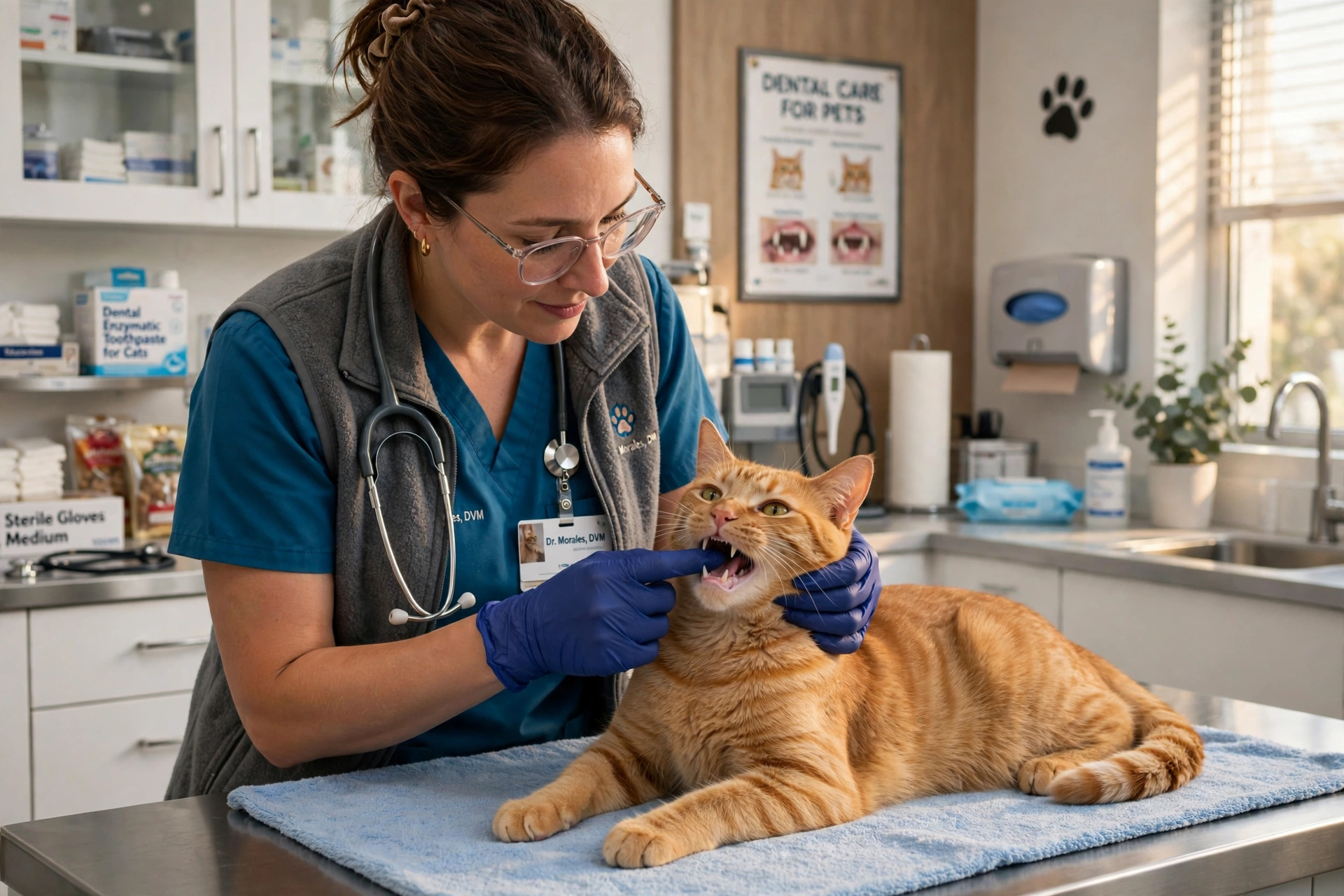
What will the veterinarian do?
The clinic will typically examine the teeth and mouth, check hydration, feel the abdomen, take the temperature, weigh the cat, and assess for pain. Bloodwork, urinalysis, or imaging may follow depending on what the exam reveals. To help the visit go well, bring:
- Food labels and a list of all current medications
- Your daily intake log — how long the appetite loss has lasted, how much is eaten
- Notes on whether water intake changed
- Any recent stressors: moves, new pets, boarding, new foods
Before you leave, ask: when should we recheck, what daily feeding target should I aim for at home, and which warning signs should trigger a callback.
How do calories fit into recovery?
Once the cause is addressed and your veterinarian says feeding is safe, calorie planning can help rebuild intake gradually. A cat calorie calculator is a starting tool, not a treatment plan — illness, weight, and diet formulation change the target. Let your vet set the daily goal, then translate that goal into measured portions. Track daily intake so you can report progress accurately at rechecks. Going too fast can also upset a recovering stomach, so gradual increases are usually better.
Frequently asked questions
Is a cat who drinks but will not eat okay?
Drinking is good, but it does not make skipping food safe. A cat that drinks yet refuses food for more than 24 hours still needs a vet call — the 24-hour threshold applies to food, not water.
Should I offer tuna or treats?
A small amount of something tempting may encourage a reluctant cat, but treats should never become the diet, and some cats refuse everything including treats when truly ill. If your cat refuses even favorite treats, that is useful information for your vet.
Is vomiting related to not eating?
Often, yes. Vomiting and appetite loss frequently travel together with nausea, pancreatitis, foreign bodies, or infections. See our vomiting red flags guide. Diarrhea paired with not eating is also a same-day call.
Can stress alone make my cat stop eating?
Yes — moving house, a new pet, loud guests, or even rearranged furniture can cause short appetite dips. But stress should not be assumed: if a cat skips more than a day of food, call the vet even if the cause seems obvious.
My cat ate a little but not much — is that enough?
Consistently eating much less than usual for more than 24 hours counts as appetite loss and deserves a call. Track the amounts with a scale so you can describe exactly what “less” means.
Sources consulted
Related guides
- Cat Constipation: When To Worry
- Cat Diarrhea: When To Worry
- Cat Ate String: What To Do
Veterinary Review & Editorial Standard
This clinical guide was prepared using peer-reviewed veterinary literature and guidelines from leading veterinary associations. If your pet exhibits acute symptoms or distress, please seek immediate in-person veterinary emergency care.