
How Much Water Should a Cat Drink? A Practical Guide
 The Pets Passion Medical Team
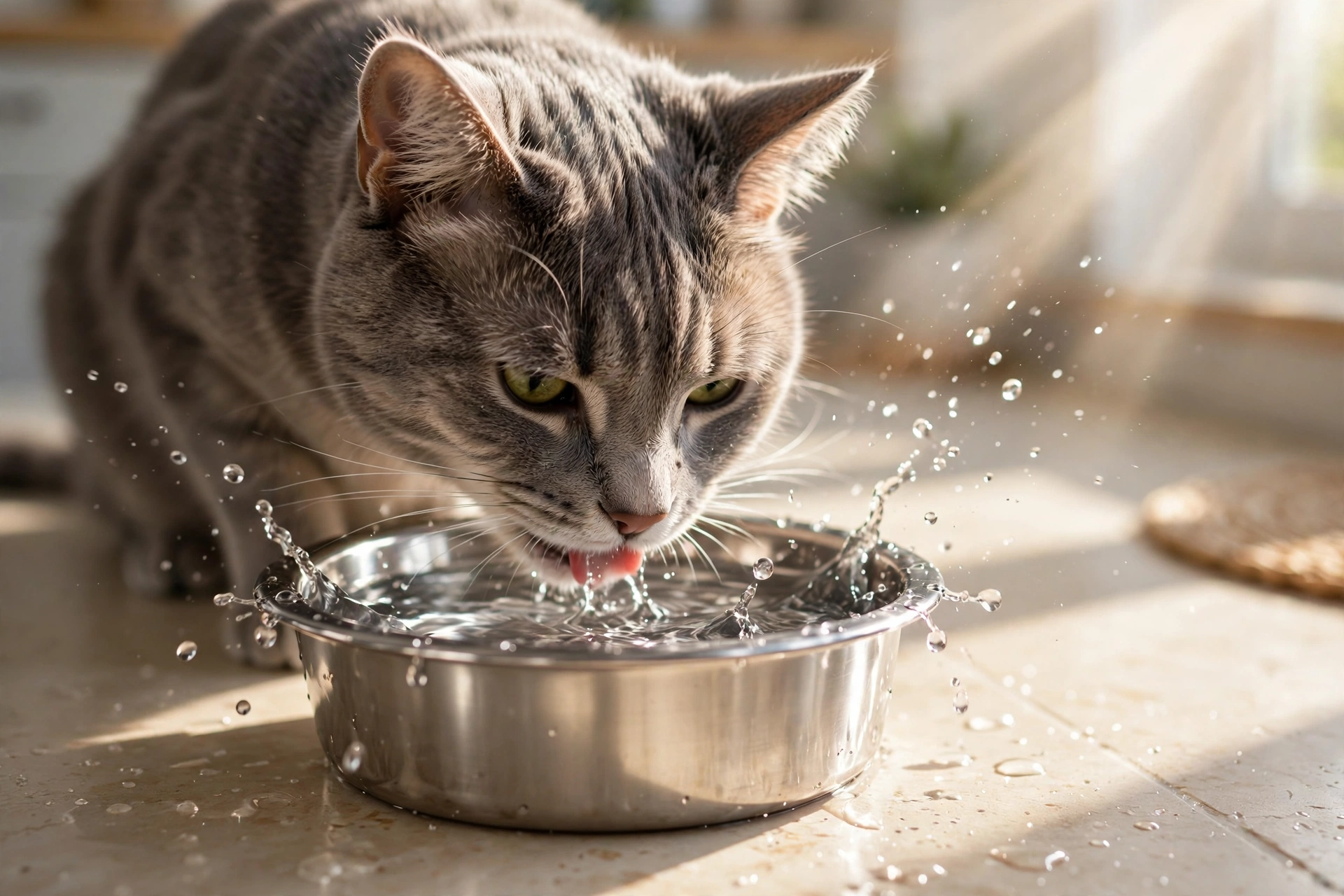
How much water should a cat drink? There is no single number that fits every cat, because food supplies a large share of feline water intake. A wet-food cat may barely touch the bowl and still be fine, while a dry-food cat often drinks visibly more. Age, weather, activity, kidney health, diabetes, vomiting, diarrhea, and medications all shift the need. An NRC-derived benchmark for total water need is about 50 to 60 mL per kilogram of body weight per day, and that includes moisture in food, not just bowl drinking. The more useful question is not only how much your cat drank, but whether intake or urine output has changed from this cat’s normal.
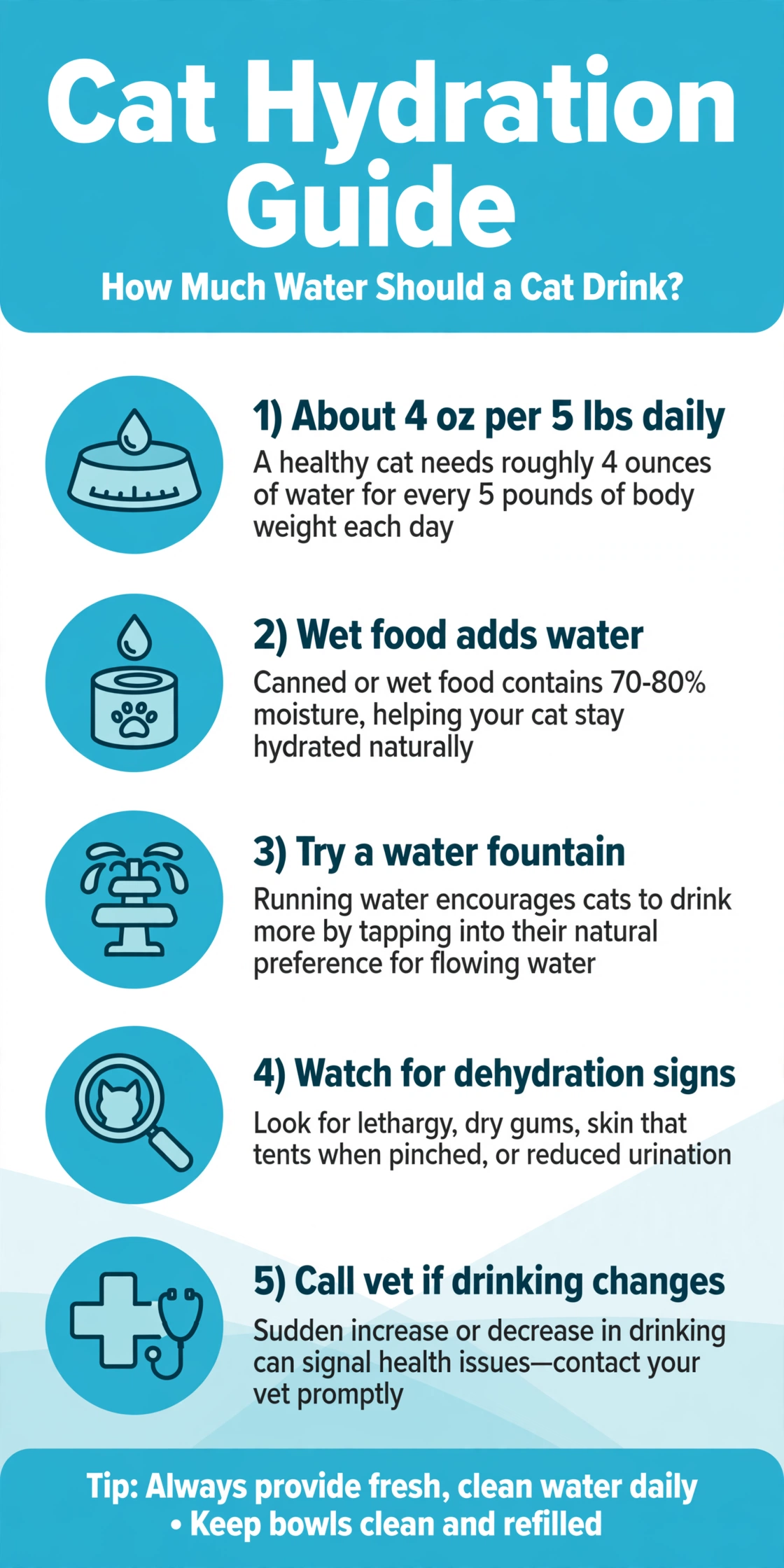
How much water should a cat drink each day?
Start with the benchmark and adjust for the individual. Total water need of roughly 50 to 60 mL per kilogram of body weight per day covers everything: bowl water, fountain water, tap drips, and the moisture inside food. Here is a worked example for a 4 kg cat: 4 times 50 to 60 mL gives 200 to 240 mL of total water per day. If that cat eats wet food, a large part of the 200 to 240 mL arrives in the meals, and bowl drinking may look surprisingly small. That is normal and not a reason to force more drinking.
The number is a planning aid, not a diagnosis. A cat that consistently sits far below or above the benchmark, or whose intake suddenly changes, deserves a vet conversation. Track for a few days before the visit so the vet sees a trend rather than one odd day.
Wet food vs dry food: where does the water come from?
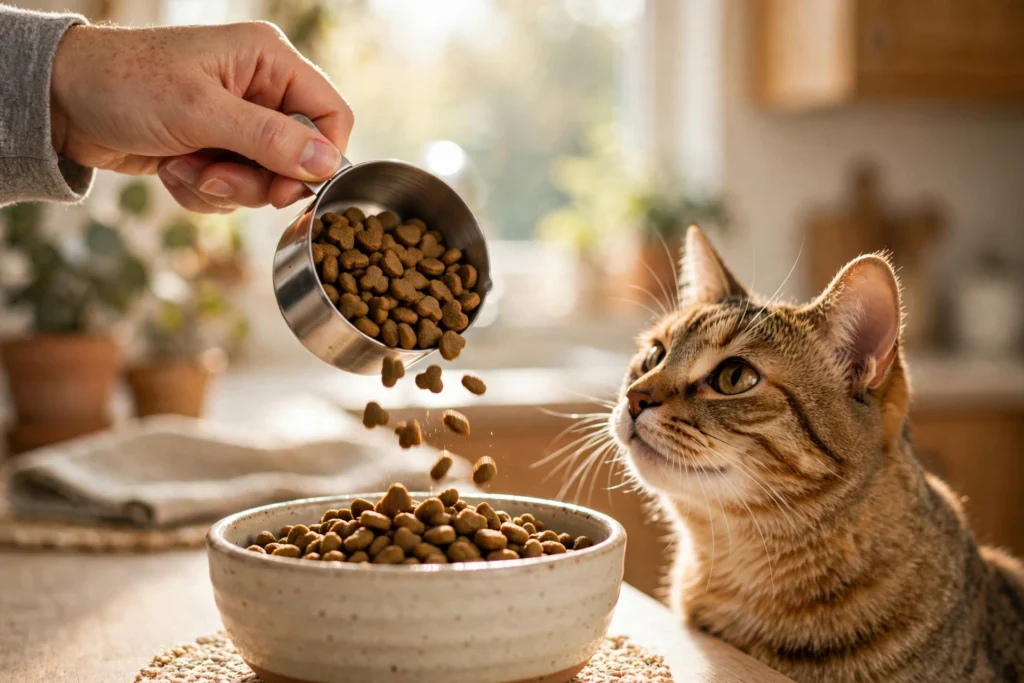
Food type is the biggest lever on visible drinking. Wet food is mostly water, while dry food is mostly not, so the bowl tells a very different story depending on the diet:
| Food type | Typical moisture | What you see at the bowl |
|---|---|---|
| Wet / canned food | Roughly three-quarters water | Little drinking; this is normal |
| Dry kibble | Roughly one-tenth water | Noticeably more drinking |
| Mixed feeding | Somewhere between | Moderate drinking |
This is why two cats can look completely different at the water bowl and both be fine. When appetite or food type changes, pair hydration notes with the cat calorie calculator, because wet and dry portions alter how much drinking you see. A gradual transition to a moisture-rich diet may help some cats, but cats on medical diets need a veterinarian-approved plan before anything changes.
Do kittens and senior cats need extra attention?
Yes, for opposite reasons. Kittens are small, active, and lose water faster relative to their size, and a kitten that stops drinking during a bout of vomiting or diarrhea can dehydrate quickly. Senior cats often drink less, and kidney disease, which becomes common with age, increases water loss through dilute urine. For both groups, fresh water should be within easy reach at all times, and any drop in intake paired with lethargy or appetite loss should trigger a prompt call. Senior cats also benefit from low-sided, easily reached bowls if arthritis makes bending or travel difficult.
What about hot weather?
Heat raises water needs. In summer, keep bowls out of direct sun, refresh water more often, and add an extra bowl in the cat’s favorite resting spot so drinking does not require a trip across a hot house. Watch for heavy panting, which is unusual in cats and can signal heat stress, not just thirst. Indoor cats in air conditioning still need the same monitoring, because dry indoor air and warm rooms quietly increase losses.
How can I measure my cat’s water intake?
For a 24-hour baseline, measure the water you place in each bowl, note spills and fountain refills, and measure what remains the next day. Include every household member in the plan so nobody tops up a bowl unrecorded. Track wet-food portions alongside, plus urine clump sizes, appetite, and body weight if your veterinarian has asked you to. Try the pet hydration calculator as a planning aid, but remember it cannot identify kidney disease or diabetes; only testing can.
In multi-cat homes, measuring gets tricky. Short separations at mealtimes with individual bowls, or color-coded bowls in different rooms with a daily log, can give you a per-cat picture for a few days. Even an approximate per-cat trend beats guessing.
How can I encourage my cat to drink more?
Cats have opinions about water, and working with the preference beats fighting it. Offer fresh water in more than one quiet location, away from litter boxes and competing pets. Some cats prefer wide, shallow bowls that keep whiskers clear of the sides. Some love moving water from a fountain; others dislike the noise and prefer a still bowl or even a dripping tap.
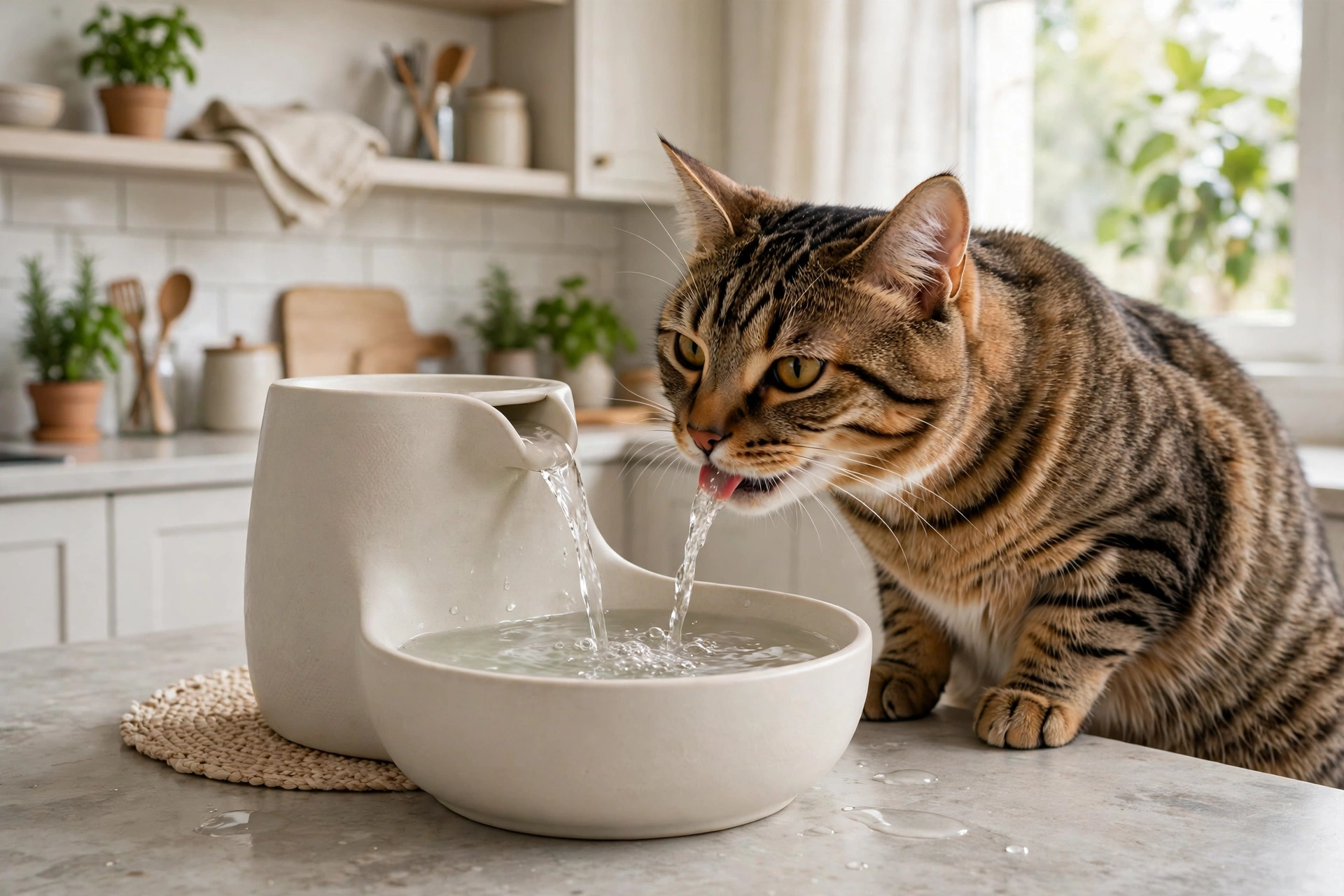
Keep bowls scrupulously clean, because a slimy bowl puts many cats off. Change one variable at a time so you learn the preference rather than creating a confusing buffet. Never add human sports drinks, salty broth, or supplements without checking ingredients with your vet, and avoid forcing water by syringe unless a veterinarian has trained you to do so. If you want to add water to food, ask your vet whether that suits your cat’s diet first.
How do I check for dehydration at home?
The skin pinch test is a rough screen, not a diagnosis. Gently pinch the skin over your cat’s shoulders, lift slightly, and release. In a well-hydrated cat the skin snaps back quickly; a slow return can suggest dehydration. Treat it as one clue among several: also check whether the gums feel dry or tacky instead of moist, whether the eyes look sunken, and whether the cat is lethargic or uninterested in food. Skin elasticity varies with age and body condition, so a slow tent in a very old or very thin cat means less on its own. When several signs point the same way, call your vet rather than trying to fix it at home.
When is increased thirst a warning sign?
A clear, sustained increase in drinking or noticeably larger urine clumps can accompany kidney disease, diabetes, hyperthyroidism, some medications, and other conditions. Excess thirst is more concerning with weight loss, vomiting, weakness, changes in appetite, or a dull coat. Do not restrict water to test the problem; dehydration can harm a cat faster than the answer helps. Make an appointment, bring the intake log, and let bloodwork and urine testing do the detective work. Real numbers help the vet judge whether intake is truly excessive.
When is low intake urgent?
Call promptly if a cat will not drink and is vomiting, has diarrhea, is very weak, has dry or tacky gums, or cannot keep water down. Urinary straining with little or no urine is a separate emergency, particularly in male cats, because urinary blockages are linked to low water intake. A cat that suddenly stops eating or drinking may need supportive care quickly, so do not wait out a full day of refusal in a kitten, a senior, or a cat with a chronic illness.
How much water is too much?
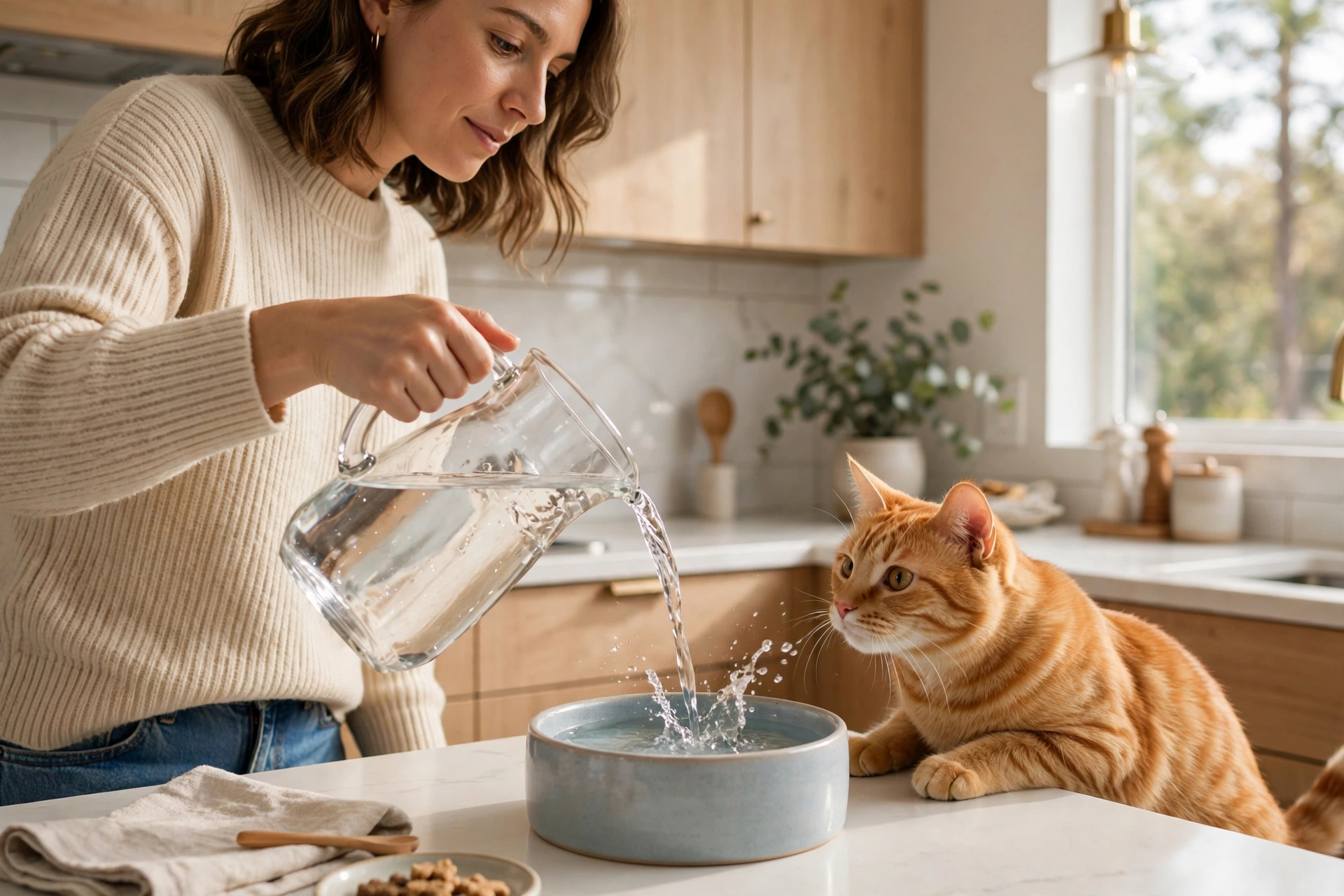
The trend matters more than one warm day or one enthusiastic fountain session. Record normal behavior for a few days, then contact your veterinarian if the difference persists or if thirst comes with more urine, weight change, or illness signs. Measure what goes in and what comes out for a few days before the visit so the vet has real numbers. Good hydration supports urinary tract health, and catching a genuine increase early gives your vet the best chance to find the cause.
FAQ: Cat water intake
Should my cat drink from a bowl every day?
Not necessarily; food moisture counts. A sudden change in drinking or urine is more informative.
Is a fountain always better?
No. It is one option, and it must be cleaned. Let the cat choose.
Can I make my cat drink by withholding wet food?
Do not use deprivation. Ask your veterinarian for a safe hydration plan.
Can my cat drink milk instead of water?
Water is the best drink for cats. Many adult cats do not digest milk well, and it can cause stomach upset, so it is not a hydration strategy.
Should I flavor the water or add ice cubes?
Plain fresh water comes first. If your cat ignores it, ask your vet before adding broths or flavorings, since some contain onion, garlic, or too much salt.
Sources consulted
- AAHA/AAFP Feline Life Stage Guidelines (PDF)
- AAHA Resources: 2021 AAHA/AAFP Feline Life Stage Guidelines
Educational information only; this guide does not diagnose or replace veterinary care.
Related cat guides
Related guides in this cat-health cluster: Cat Constipation When To Worry, Cat Not Eating When To Worry, Cat UTI Symptoms FIC. For broader care, visit the cats hub.
Veterinary Review & Editorial Standard
This clinical guide was prepared using peer-reviewed veterinary literature and guidelines from leading veterinary associations. If your pet exhibits acute symptoms or distress, please seek immediate in-person veterinary emergency care.
💬 1 Community Response
Comments are closed for this article.