
Kitten Not Using the Litter Box? A Calm, Medical-First Fix
 The Pets Passion Medical Team
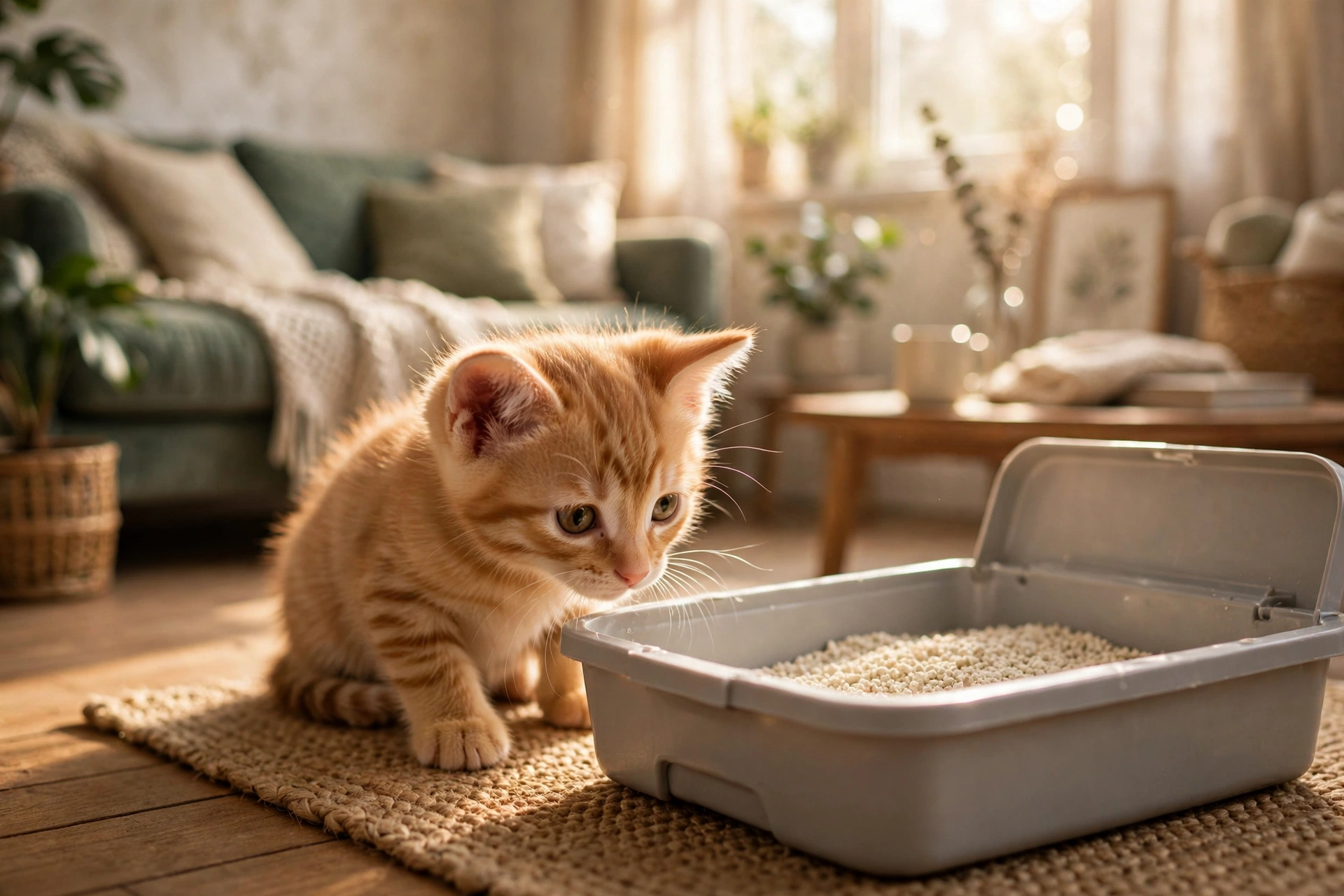
A kitten not using the litter box is usually telling you something needs fixing, not being naughty. The most common causes are a box that is hard to reach, a litter texture or location the kitten dislikes, a stressful change such as a new home, or a medical problem like a urinary issue or digestive upset. Start by watching the pattern: what the kitten produces, where it happens, and what changed recently. If the kitten strains, cries, vomits, seems weak, or produces little or no urine, skip training entirely and call a veterinarian, because a blocked bladder is an emergency at any age.
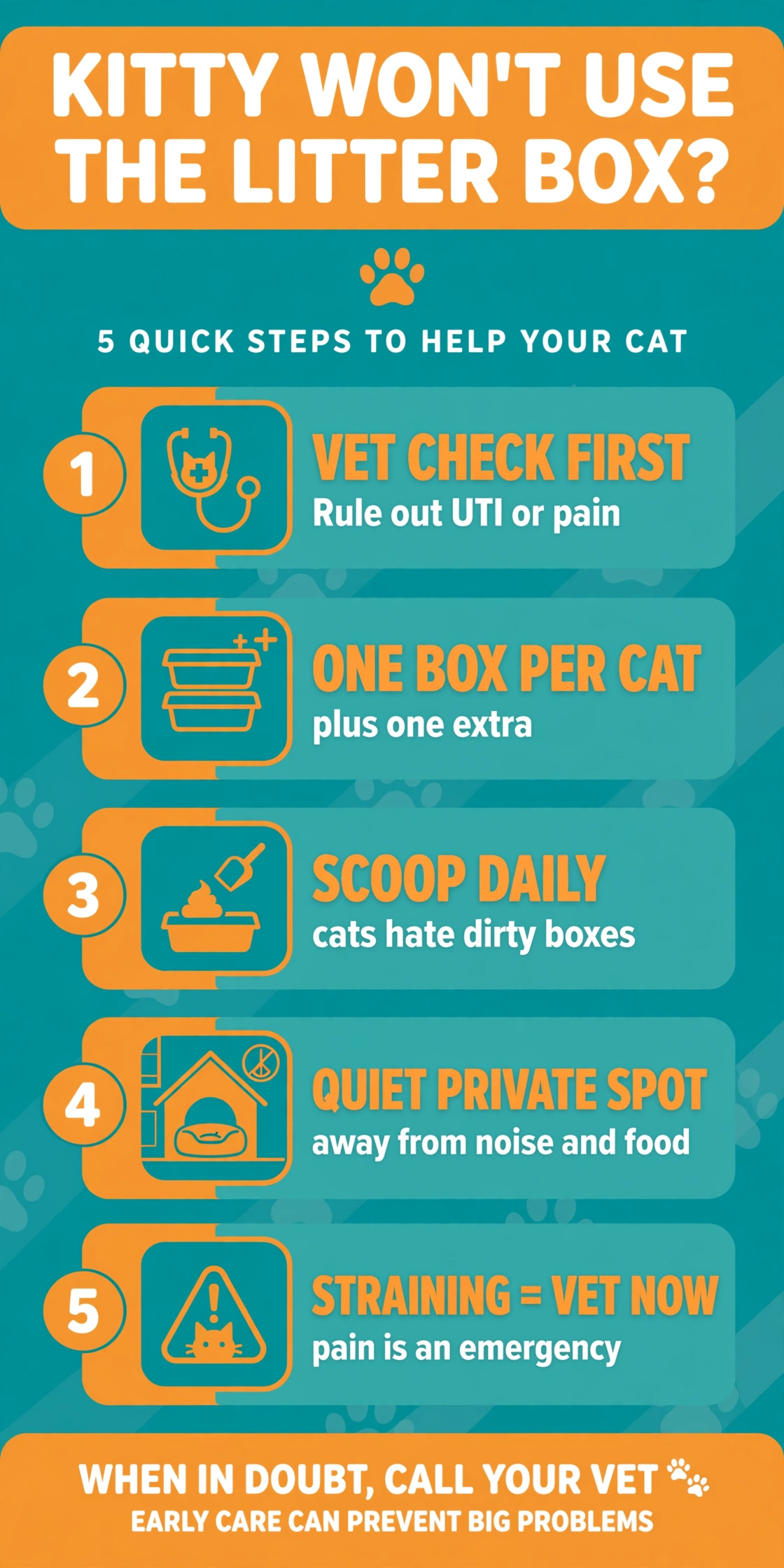
Why is my kitten not using the litter box?
Age and development explain a lot of kitten misses. Kittens younger than about eight to ten weeks are still learning, and in a normal litter the mother cat teaches them by example. Orphaned or hand-raised kittens miss that tutoring and need a human to show them the routine. Very young kittens also have tiny bladders and short attention spans, so they may simply not make it to a box in another room, or they get distracted mid-play and go where they stand. That is normal development, not defiance.
As kittens grow, the reasons shift toward setup problems. A box with high sides is a wall to a small kitten, and a covered box can feel like a trap. Strongly scented litter can overwhelm a sensitive nose, and a box placed next to a noisy washing machine or at the far end of a big house is easy to miss when urgency hits. Stress joins the list too: a new home, new people, or new pets can unsettle a kitten enough to break litter habits that were fine before.
What should I check first when a kitten misses the box?
Look at the pattern before changing everything. Is the kitten urinating beside the box, leaving stool elsewhere, or making repeated trips without producing anything? The answer points in different directions. Urine accidents can reflect bladder irritation, infection, stress, or obstruction. Stool accidents can reflect constipation, diarrhea, pain, or simple timing. A photo of the spot and a short note about food, water, energy, and recent changes can help your clinic sort it out quickly.
Check the urine question first, every time. Scoop the box clean, then watch the next few hours for a normal wet clump. A kitten that repeatedly squats but produces no urine needs emergency care, regardless of sex. Do not assume a tiny wet spot means the bladder is empty.
What should the first 48 hours at home look like?
The first two days set the tone. Start the kitten in one small, kitten-proofed room with a low-entry box, food, water, and a hiding spot, rather than giving them the run of the house. Show the kitten the box as soon as they arrive: gently place them in it, let them sniff and scratch, then lift them out. Repeat after the first meal and after the first nap.
Keep the room calm and predictable, and let the kitten explore at their own pace. Expand room by room over several days, adding a box on each new floor or area rather than expecting the kitten to trek back. Kittens that start small almost always learn faster than kittens started in a whole house.
What makes a good kitten litter station?
Think small, low, and easy. A kitten needs a box with low sides they can climb over without effort, and the box should be big enough to turn around in even if the kitten is tiny now. Keep food and water in the same room but well away from the box, because cats dislike eating next to their toilet.
- Litter: unscented and fine-textured is the safest default. Avoid strongly perfumed litter while training.
- Depth: shallow is better for beginners, roughly an inch to an inch and a half, so little legs do not sink and struggle.
- Location: quiet, easy to reach, and never behind a noisy appliance or a door that might close.
- Cleanliness: scoop at least once a day. Many kittens will hold it or go elsewhere rather than use a dirty box.
Avoid sudden litter changes during training. If you must switch, offer the old and new litter side by side in separate boxes and let the kitten choose.
How do timing and supervision help?
Kittens are creatures of timing. Offer the box after waking, after eating, after drinking, and after active play, because those are the moments elimination is most likely. If the kitten sniffs the floor, circles, or starts scratching, calmly place them near the box and let them investigate on their own.
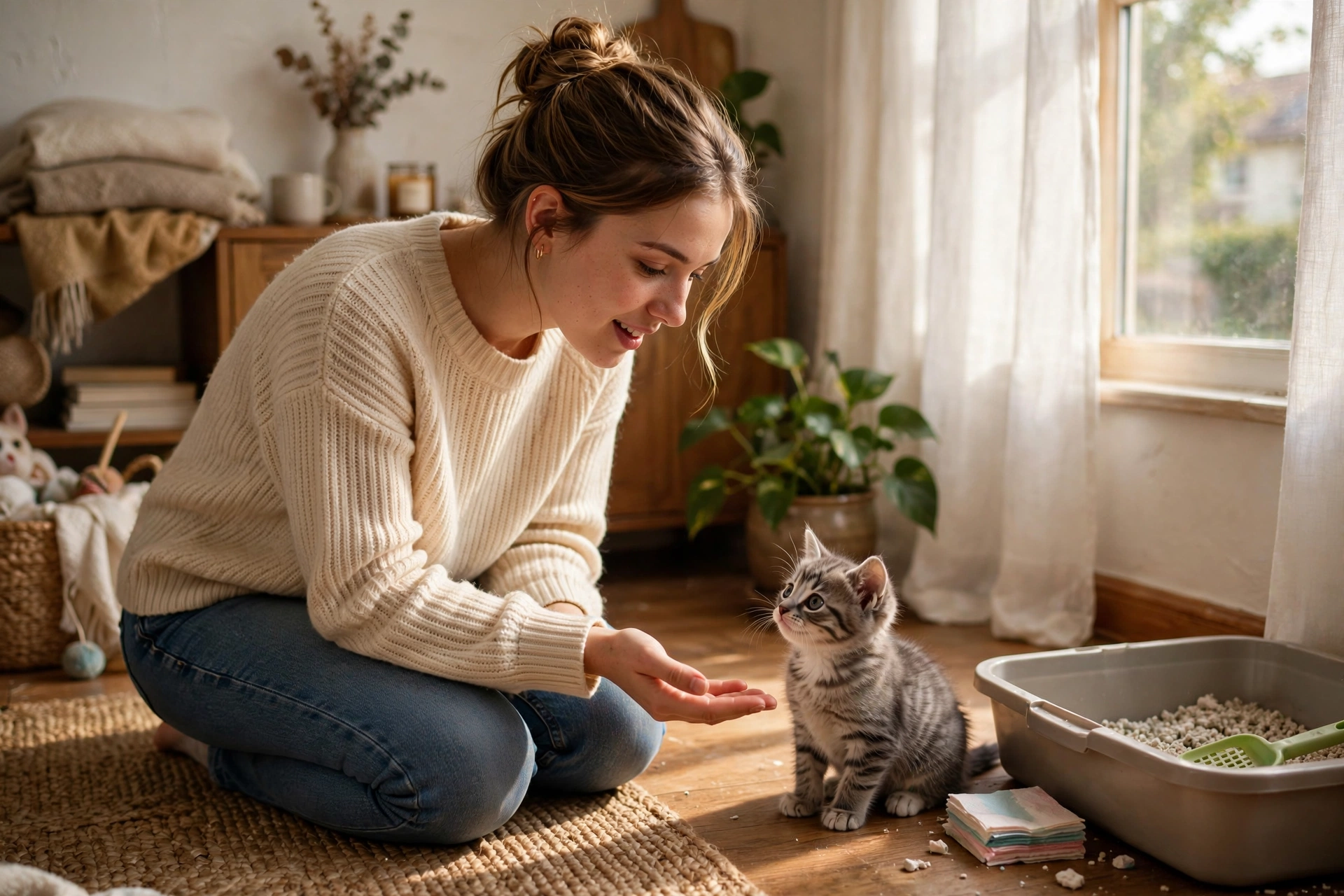
Praise quiet success with a calm word or a small treat, then leave the kitten alone. Never rub a nose in an accident, shout, or punish in any way. Punishment teaches the kitten to hide elimination and fear the area, which makes the problem worse and harder to fix. Clean accidents with an enzymatic cleaner so the smell does not keep advertising the same spot; ordinary soap leaves scent markers a cat can still detect.
What about nights and multi-level homes?
Young kittens cannot be expected to hold urine overnight, so keep a box accessible wherever the kitten sleeps. In a multi-level home, one box per floor is the minimum while training, because a kitten will not reliably run downstairs in time.
When is a kitten litter problem medical?
Contact a veterinarian promptly for repeated straining, crying in the box, blood in urine or stool, a painful or swollen belly, repeated vomiting, diarrhea, marked sleepiness, or a sudden change after previously good habits. A kitten that repeatedly squats but produces no urine is an emergency, regardless of sex.
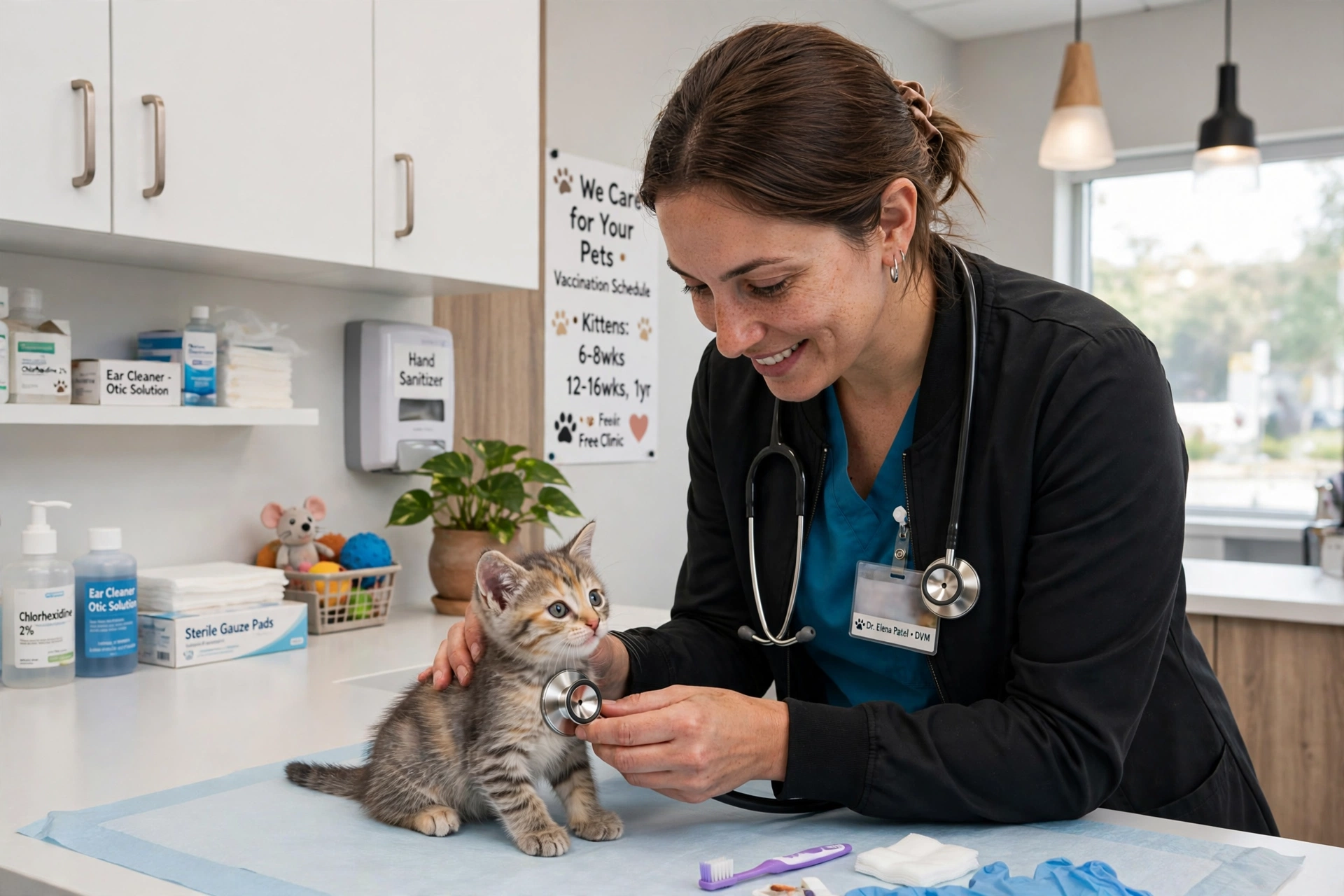
Do not assume a tiny wet spot means the bladder is empty, and do not wait overnight to see if a suspected blockage resolves on its own. Kittens dehydrate and deteriorate faster than adult cats, so the threshold for calling should be low. Scheduling your kitten’s first vet checkup early also rules out parasites and urinary issues that can masquerade as training failures.
How many boxes does a kitten need?
For one kitten, two low-sided boxes make the correct choice easy, especially in a multi-room home. The classic rule is one box per cat plus one spare, and it applies to kittens too. In a multi-cat household, offer at least one more box than the number of cats and place them in separate, accessible areas so no cat can guard all of them. More boxes in more places beats one perfect box in one place.
When will my kitten be reliable?
Many kittens are consistent within a week or two of a good setup, especially if they had a mother cat to learn from. Expect occasional misses during exciting play or after a move. If misses continue after a vet check, note the litter type, how many boxes are out, and when and where the misses happen. That pattern is what the vet needs to tell a setup problem from a medical one. Change one thing at a time, and give each change a few days before judging it.
Troubleshooting: what the pattern tells you
| What you see | Likely cause | First step |
|---|---|---|
| Peeing right beside the box | Box too small, dirty, or hard to enter | Scoop, try a larger low-entry box |
| Poop outside, pee inside | Wants separate spots; box too small | Add a second box nearby |
| Repeated squatting, nothing produced | Possible urinary blockage | Emergency vet visit now |
| Accidents after a move or new pet | Stress, territory change | Shrink territory, add a box, keep routine steady |
| Soft stool accidents | Urgency from digestive upset | Vet check; keep a stool sample if asked |
FAQ: Kitten litter-box training
How long does training take?
Many kittens learn quickly with a reachable, clean box and a small starting area, but persistent accidents deserve a medical and environmental review.
Should I move the box after an accident?
First place a temporary box at the accident site, then move it gradually once the kitten is reliable.
Can a kitten hold urine overnight?
No, not reliably. Young kittens have small bladders and cannot be expected to hold it all night, so keep a box accessible wherever the kitten sleeps and do not treat nighttime misses as misbehavior.
What if my kitten eats the litter?
Very young kittens often taste everything, including litter. Switch to a plain non-clumping or paper-based litter until the habit fades, and make sure the kitten is eating enough real food, since hunger can drive odd nibbling.
My kitten pees in the box but poops outside it. Why?
Some cats prefer separate spots for urine and stool. Adding a second box nearby usually solves it, and a box that is too small for comfortable turning can also push stool outside the edges.
Sources consulted
- VCA Hospitals: Kitten Behavior and Training, Litter Box Training
- Merck Veterinary Manual: Providing a Litter Box for a Cat
Educational information only; this guide does not diagnose or replace veterinary care.
Related cat guides
Related guides in this cat-health cluster: Cat Not Using Litter Box, Cat UTI Symptoms FIC. Note that adult cat litter box problems have different causes than kitten training issues. Pair health questions with the kitten growth tool rather than guessing from a litter-box accident.
Veterinary Review & Editorial Standard
This clinical guide was prepared using peer-reviewed veterinary literature and guidelines from leading veterinary associations. If your pet exhibits acute symptoms or distress, please seek immediate in-person veterinary emergency care.
💬 1 Community Response
Comments are closed for this article.