Covered vs Uncovered Litter Box: Which Is Better?
 The Pets Passion Medical Team
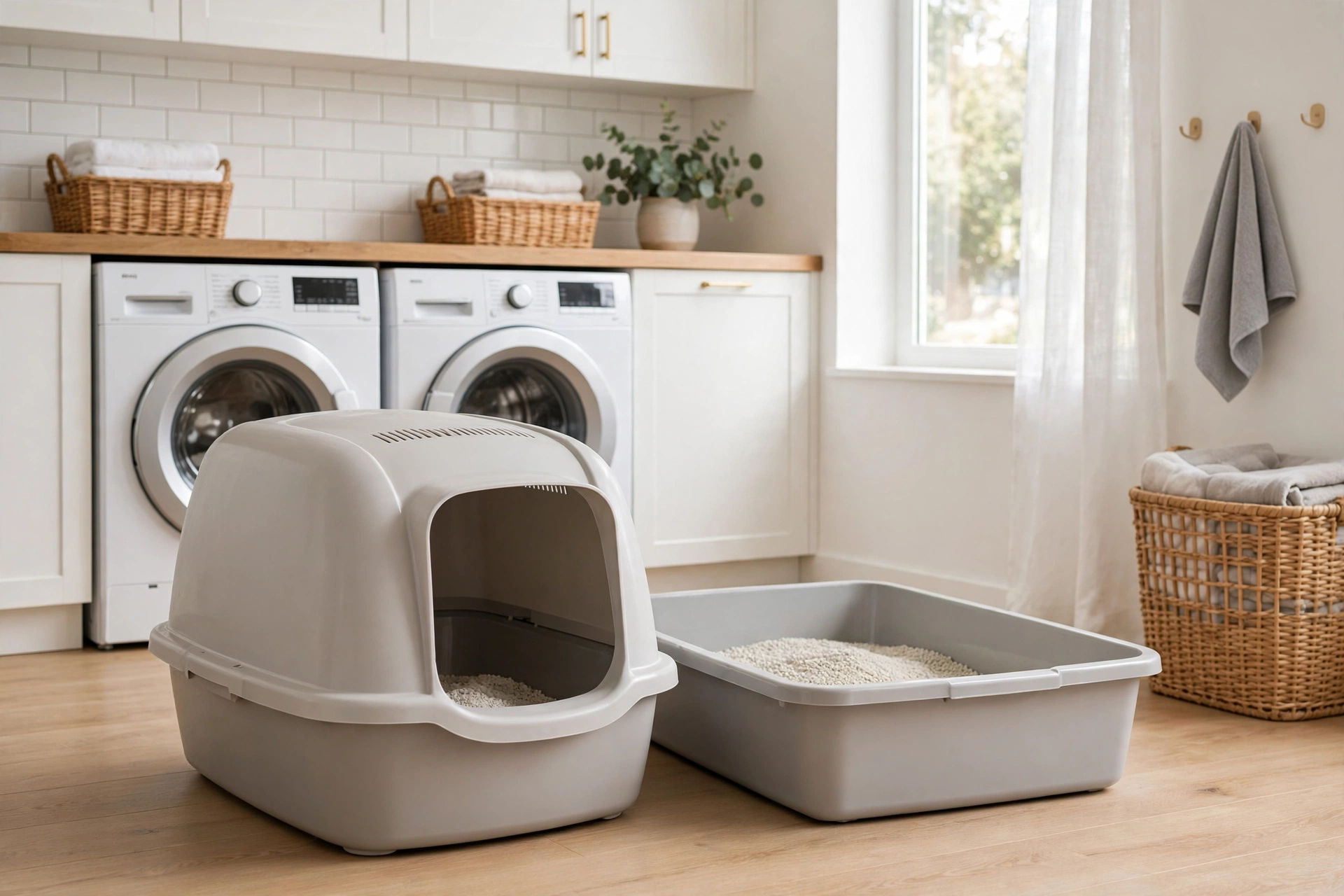
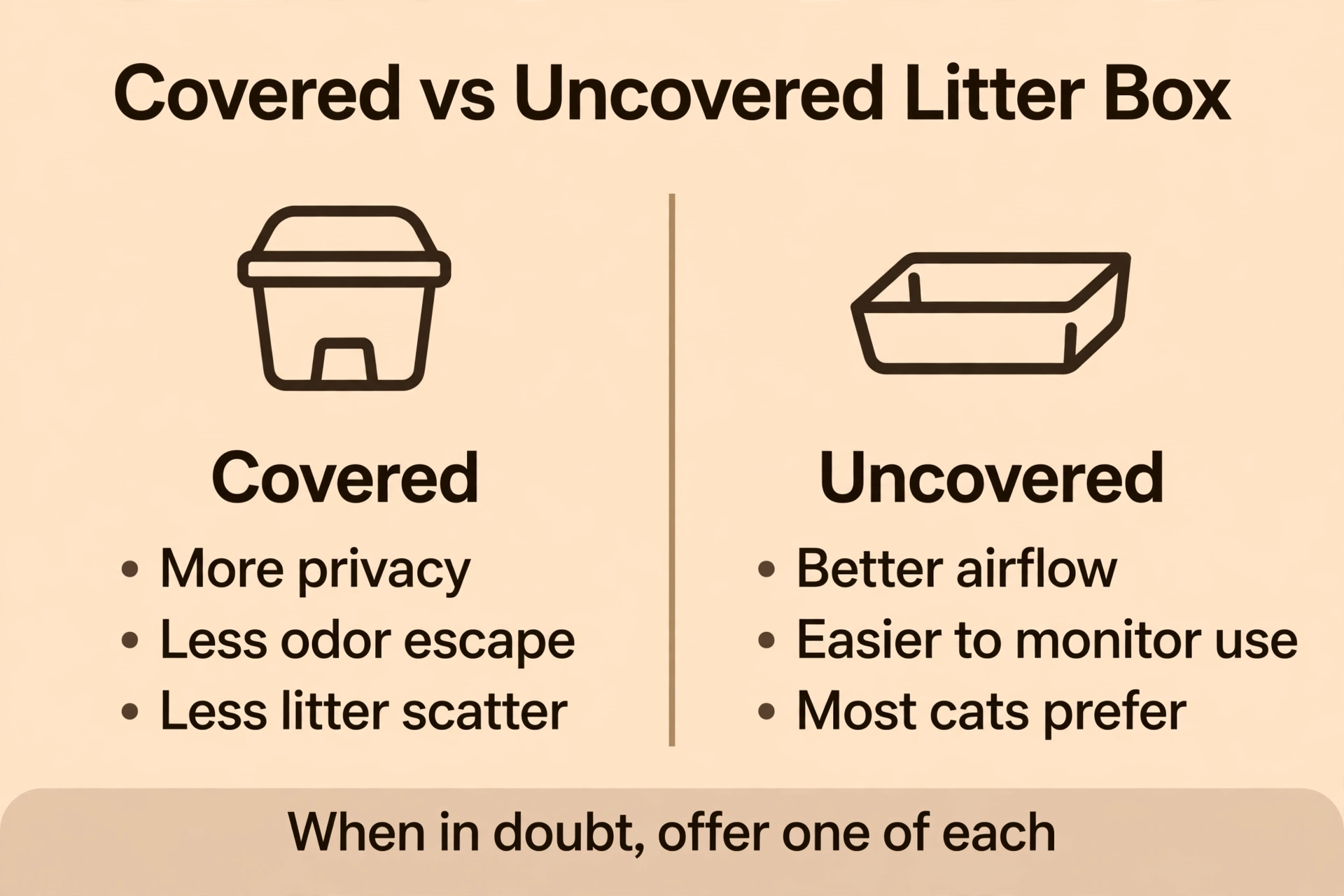
Short answer: Most cats prefer uncovered boxes — better airflow, more escape routes, easier for you to monitor. Covered boxes mostly serve humans: less odor in the room, less litter tracked across the floor. If your cat happily uses either type, either is fine. When in doubt, offer one of each and let the cat vote.
What do cats actually prefer?
Given the choice, cats choose open boxes more often. Behaviorists point to simple reasons: a cat’s nose is far more sensitive than ours, so odors concentrate more for them under a lid; an enclosed box has one exit, which feels less safe; and a dark interior makes some cats uneasy. That said, plenty of individual cats use covered boxes contentedly for years. Preference varies — which is why the cat’s vote counts more than any article’s (including this one).
Covered vs uncovered: honest pros and cons
| Covered | Uncovered | |
|---|---|---|
| Odor (for you) | Contained better in the room | Dissipates faster |
| Litter scatter | Less tracking | More sweeping |
| Health monitoring | Harder to notice changes in use | Easy to spot straining, frequency changes |
| Cat comfort | Can feel trapped; dark inside | Airy; multiple escape routes |
| Privacy | More | Less (most cats don’t care) |
| Footprint | Bulkier | Compact options available |
Can a covered box make my cat sick?
A covered box does not cause disease by itself. The realistic concern is subtler: because the lid hides what’s inside, owners tend to scoop less often, and concentrated ammonia in a poorly kept box is unpleasant enough to put a sensitive cat off using it. A cat that avoids the box may start holding urine or going elsewhere — and chronic holding is genuinely bad for urinary health. The fix is unglamorous: scoop daily, covered or not. If you want the full urinary-health picture, see the best cat litter for heavy urination.
How do I choose the right box?
- Size: big enough for your cat to turn around comfortably. When between sizes, go bigger.
- Count: the standard recommendation is one box per cat, plus one spare. Two cats? Three boxes.
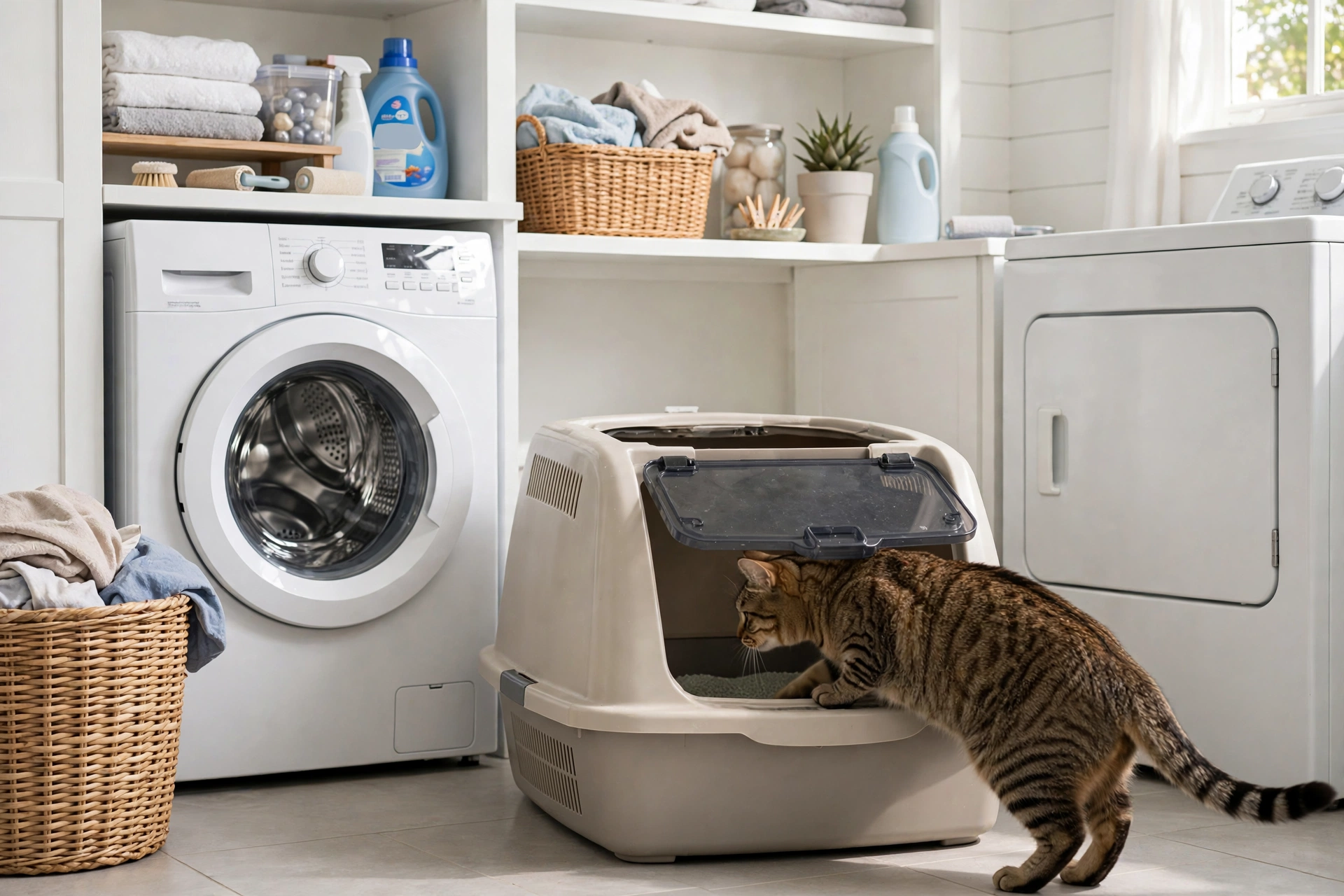
- Placement: quiet, accessible, and not next to food and water. Avoid laundry rooms with sudden loud appliances if your cat is skittish.
- Kittens, seniors, arthritic cats: low entry sides matter more than the lid question — a high wall keeps out the cats who need the box most.
- Flaps and doors: some cats hate pushing through a flap. If yours does, remove it — a lid without a flap is a fine compromise.
How do I switch types without a protest?
- Run both side by side for one to two weeks — old style and new style, same litter in both.
- Let the cat choose. Whichever box gets used is the answer.
- Remove the loser. Keep the winner where the cat chose it, if possible.
- Change one thing at a time. New box shape or new litter, never both at once.
Switching because of avoidance problems rather than preference? Start with why cats stop using the litter box or the kitten version at kitten not using the litter box — the box style is only one suspect.
Frequently asked questions
Will a covered box eliminate odor completely?
No. Scooping frequency and litter quality affect odor far more than the lid does.
My cat suddenly stopped using the covered box — why?
Common reasons: odor buildup you can’t smell yet (they can), the box got too small as they grew, or the flap started annoying them. Try it flapless, or go uncovered.
Are top-entry boxes a good compromise?
For agile adult cats, yes — they contain scatter well. For kittens, seniors, or arthritic cats, the climb is a dealbreaker.
How often should I scoop a covered box?
Daily minimum — same as any box. The lid hides the mess from you, not from the cat.
Do I really need one box per cat plus a spare?
It is the standard recommendation because it prevents guarding and gives options. In small homes, do the best you can — even one extra box helps.
Veterinary Review & Editorial Standard
This clinical guide was prepared using peer-reviewed veterinary literature and guidelines from leading veterinary associations. If your pet exhibits acute symptoms or distress, please seek immediate in-person veterinary emergency care.