Why Is My Cat Licking Its Belly Bald? (Overgrooming Causes)
 The Pets Passion Medical Team
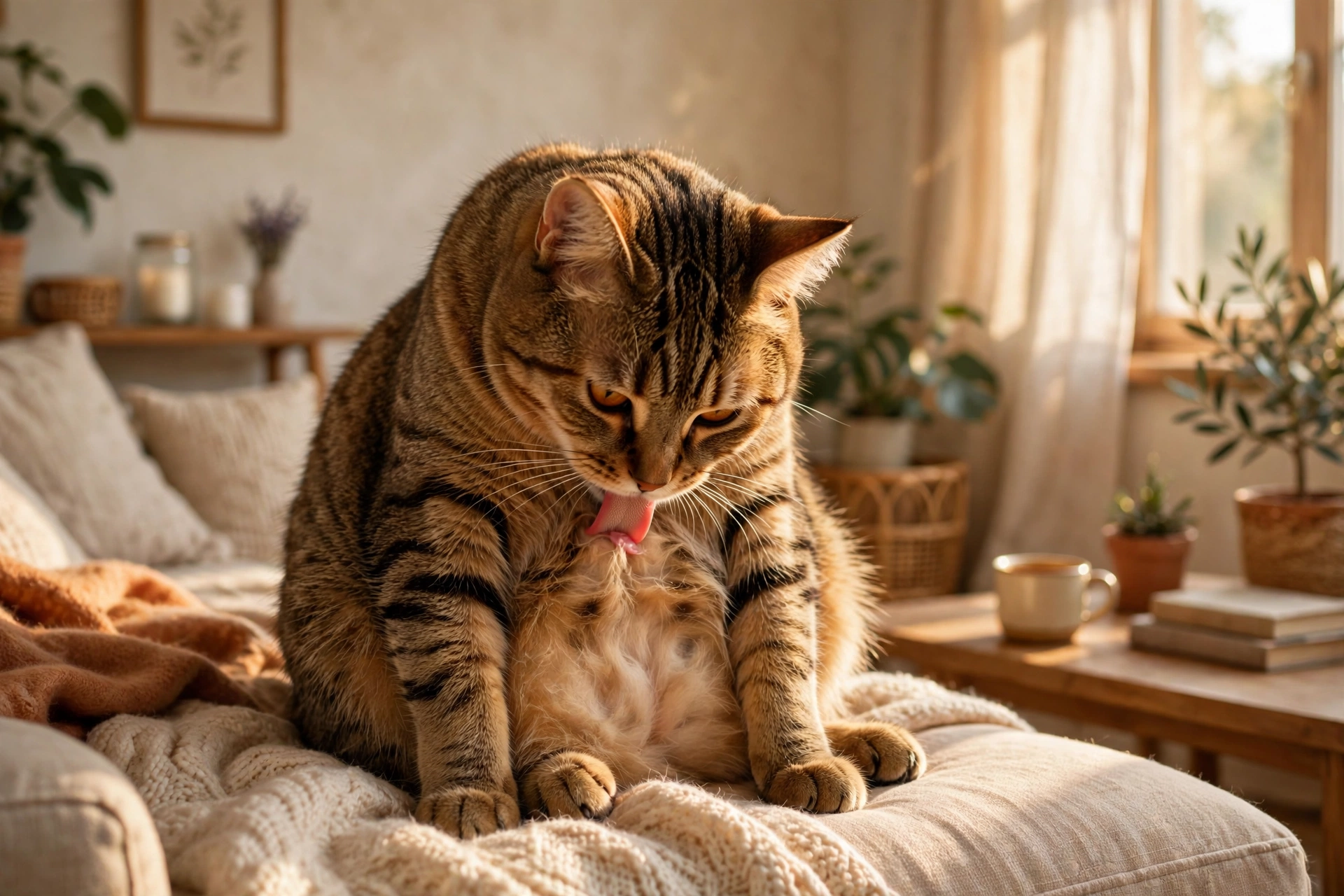
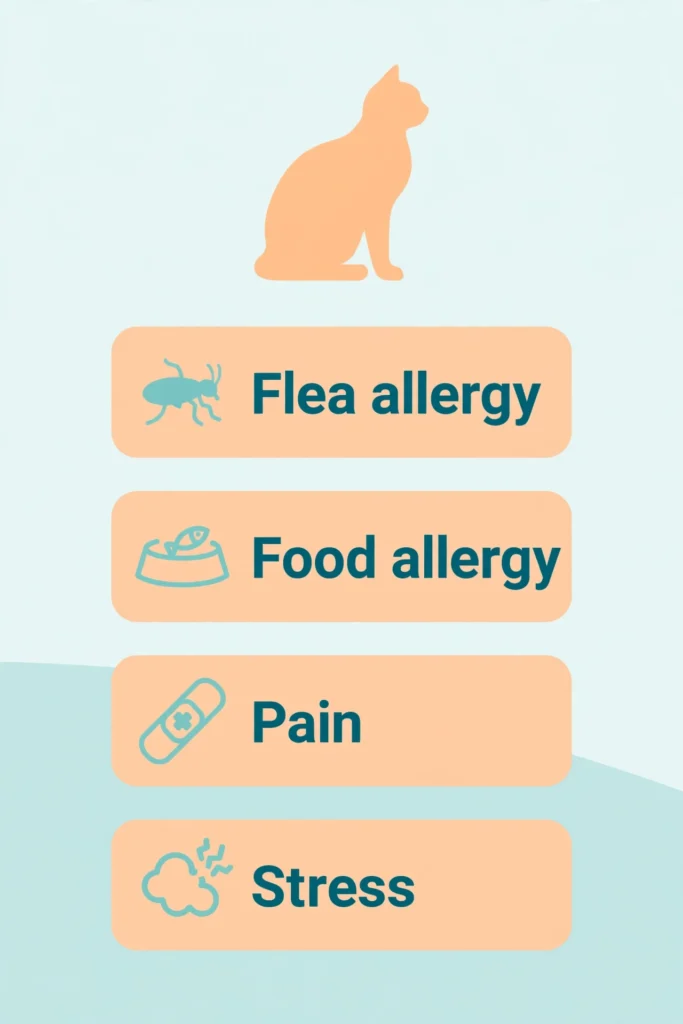
A smooth, symmetrical bald patch on your cat’s belly — sometimes spreading to the inner thighs — almost always means overgrooming: the cat is licking the fur away faster than it grows. Despite the popular belief that it’s “just stress,” veterinary research shows most cases are medical. Itch from allergies or fleas, skin infections, and even pain are far more common causes than anxiety.
What are the most common causes of a cat licking its belly bald?
| Rank | Cause | Typical clues |
|---|---|---|
| 1 | Flea allergy dermatitis | Itching around the tail base and back legs too; you may never see a flea |
| 2 | Food or environmental allergy | Itchy face/ears/paws alongside the belly; seasonal pattern possible |
| 3 | Skin infection or mites | Redness, scabs, dandruff, or crusty skin under the thinning fur |
| 4 | Pain (arthritis, cystitis, bladder stones) | Licking focused over the painful area; stiffness, litter-box changes |
| 5 | Stress or anxiety | Diagnosis of exclusion — only after medical causes are ruled out |
How can I tell if it’s medical or stress?
- Skin condition: redness, sores, scabs, or dandruff point to medical causes. Clean, smooth bald skin with no irritation leans (but doesn’t prove) stress.
- Pattern: symmetrical belly/inner-thigh baldness is classic overgrooming; patchy random bald spots suggest infection or mites.
- Other symptoms: sneezing, ear scratching, litter-box changes, stiffness, or appetite shifts all point medical.
- Recent changes: new food, new home, new pet — relevant for both allergy and stress, so note the timing for your vet.
What should I NOT do about overgrooming?
- Don’t bandage the belly or use a cone without vet guidance — you’ll mask the cause and stress the cat further.
- Don’t start steroids or antihistamines on your own — the wrong drug at the wrong dose can harm your cat, and steroids mask symptoms vets need to see.
- Don’t punish or shame the cat — it increases anxiety and changes nothing about the itch or pain.
- Don’t assume it’s “just stress” — that’s the most common and most harmful mistake, because it delays treatment of the real cause.
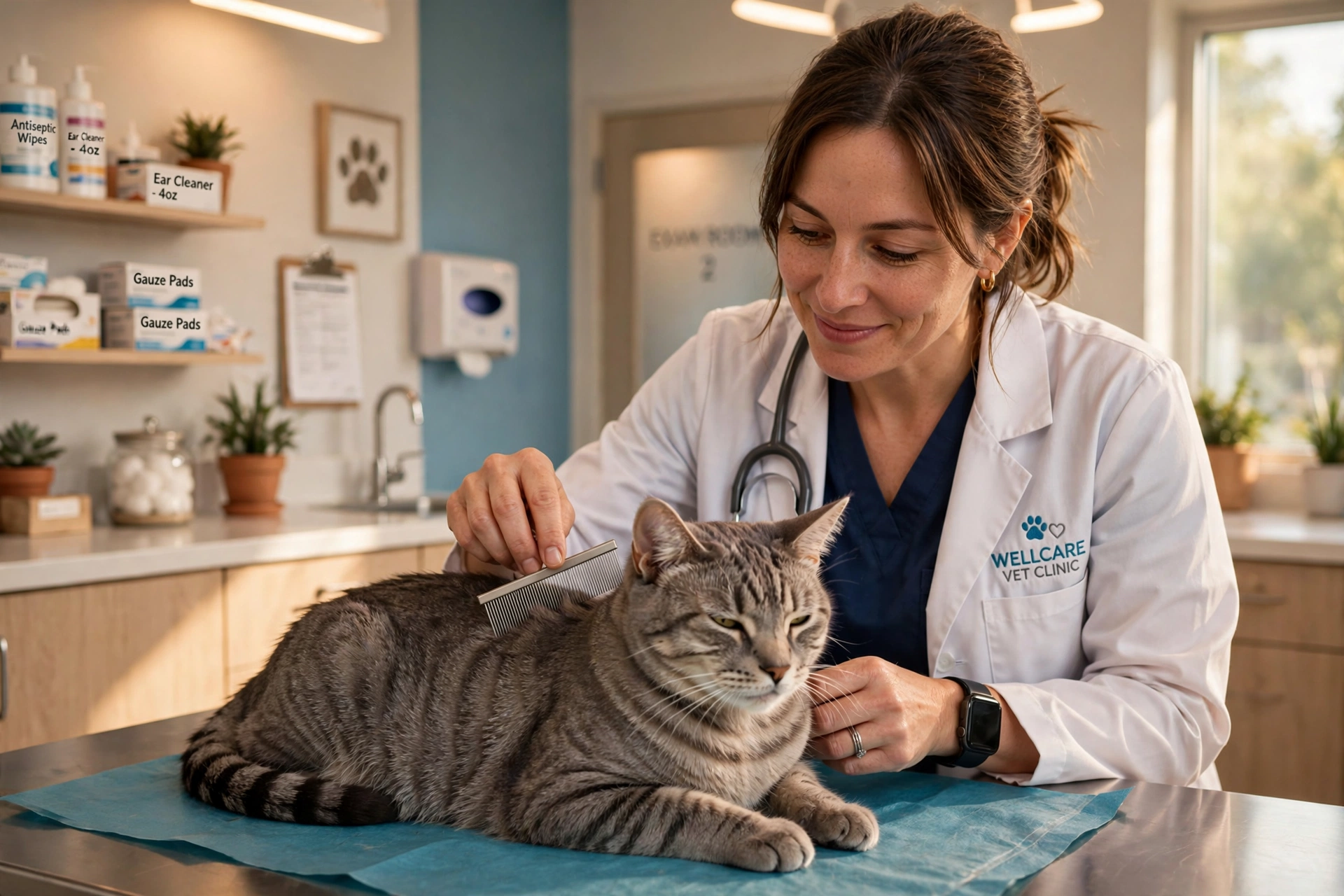
What will the vet do? (The workup, explained)
- Flea check first — a flea combing, even for indoor cats; flea allergy is the #1 cause
- Skin scrape or tape test — looking for mites, yeast, or bacteria under the microscope
- Allergy discussion — food trial or environmental allergy workup depending on the pattern
- Pain assessment — especially for older cats: joints, bladder, and spine
- Urine check — for cats whose licking centers on the lower belly near the bladder
What can I do at home while waiting for the vet visit?
- Keep flea prevention current on all pets in the home
- Keep routines stable — feeding times, play times, quiet rest areas
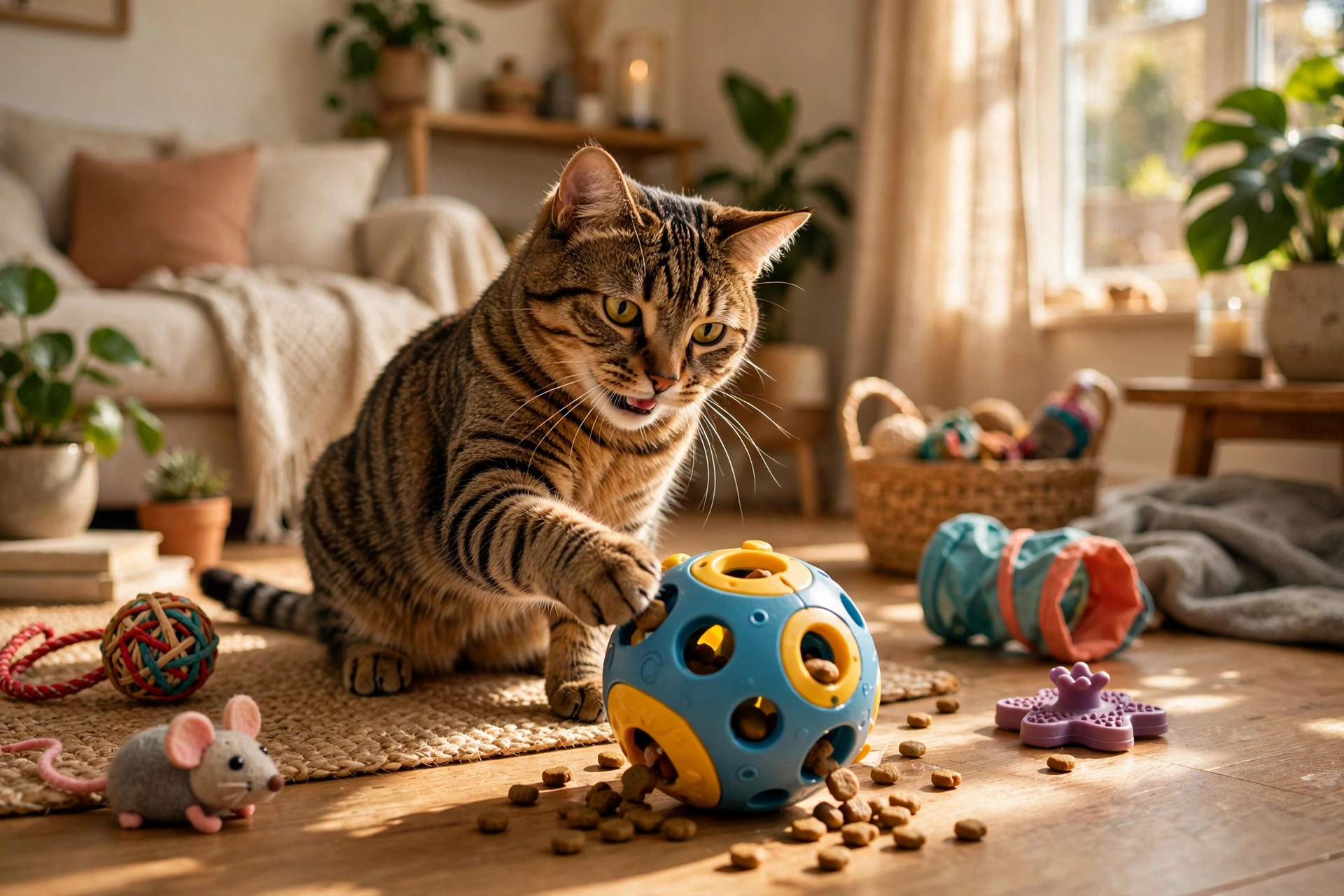
- Add enrichment: puzzle feeders, window perches, and interactive play redirect anxious energy
- Keep a symptom diary: when the licking happens, what the skin looks like, any diet or household changes — your vet will want this
Persistent overgrooming deserves a vet visit — most causes are treatable once identified.
Because flea allergy dermatitis tops the cause list, year-round prevention matters — ask your vet about the right product.
Why do I never actually see the flea?
This is the detail that convinces many owners it “can’t be fleas.” It is exactly what flea allergy dermatitis looks like. The allergy is not to the flea itself but to proteins in flea saliva, and in a sensitized cat a single bite can trigger days of ferocious itching. One bite is all it takes, and one flea is easy to miss.
Cats also destroy the evidence. A fastidious groomer ingests or removes most fleas during the very overgrooming that is balding the belly, so the absence of visible fleas means nothing. Your vet looks instead for flea dirt (tiny black specks that turn reddish on a damp paper towel) combed from the skin, which is far more reliable than spotting the insect.
Indoor cats are not exempt. Fleas hitchhike in on clothing, shoes, and other pets, and once inside, the flea life cycle continues year-round in a heated home, since there is no winter die-off indoors. That is the logic behind year-round prevention even for cats that “never go outside”: prevention breaks the cycle before the allergic cat ever meets the one bite that sets everything off. Ask your vet which preventive fits your cat; do not use dog products or guess at dosing, as several are toxic to cats.
How does an elimination food trial actually work?
When the vet suspects food allergy, the tool is not a blood test. It is a strict, vet-supervised elimination diet, and it works only if it is done with unusual discipline. Your vet prescribes a novel-protein or hydrolyzed diet: either a protein your cat has never eaten, or one broken down so finely the immune system cannot recognize it.
The hard part is the “nothing else” rule. For the full trial period (your vet sets the length, often around two to three months), the cat eats the trial diet and nothing else. No treats, no table scraps, no flavored medications or toothpastes, no sneaky bites of the other cat’s food. Every household member has to be on board, because a single contraband snack can reignite the reaction and invalidate weeks of work.
Improvement, if food is the culprit, usually appears gradually over the trial: first less itching, then fur starting to return. To confirm, the vet then “challenges” by reintroducing the old food; if signs flare, the diagnosis is made. It is slow and strict, which is exactly why it is trustworthy. Cheating does not just slow it down — it restarts the clock.
What does normal fur regrowth look like?
Once the cause is controlled, regrowth is a waiting game with a predictable shape. Fine stubble usually appears within a few weeks. Over the next one to three months the patch fills in, sometimes unevenly at first, as tufty islands of fur gradually merge. Full, normal-looking coverage can take several months, longer in longhaired cats.
Do not shave or trim the surrounding fur to “even it out.” That just resets the visible clock and irritates healing skin. And do not expect the new coat to match perfectly at first; texture and fullness even out with time.
The regrowth itself is diagnostic. Steady filling-in means the treatment is working, so keep going. But if months pass with no regrowth, or new bald areas appear while the old one fills, the underlying cause is not actually controlled yet. That is your signal to go back to the vet rather than waiting longer: persistent overgrooming always has a reason, and “stress” is the answer only after the medical list is genuinely exhausted.
Will the fur grow back?
Yes, once the underlying cause is treated and the licking stops, the fur almost always regrows — though it can take several weeks to months.
Is overgrooming contagious to my other cat?
The behavior isn’t contagious, but the cause can be — fleas and some mites spread between pets. If one cat is overgrooming, check them all.
Can food allergies really cause a bald belly?
Yes. Food allergies commonly cause itchy skin in cats, and the belly is a frequent target. A vet-supervised elimination diet is the way to confirm it.
Should I try an anti-itch diet from the pet store first?
Over-the-counter “sensitive skin” diets aren’t elimination diets and rarely resolve true food allergies. Talk to your vet before changing food — and change it gradually.
Veterinary Review & Editorial Standard
This clinical guide was prepared using peer-reviewed veterinary literature and guidelines from leading veterinary associations. If your pet exhibits acute symptoms or distress, please seek immediate in-person veterinary emergency care.