Why Does My Cat Lick Plastic? (And When to Stop Them)
 The Pets Passion Medical Team
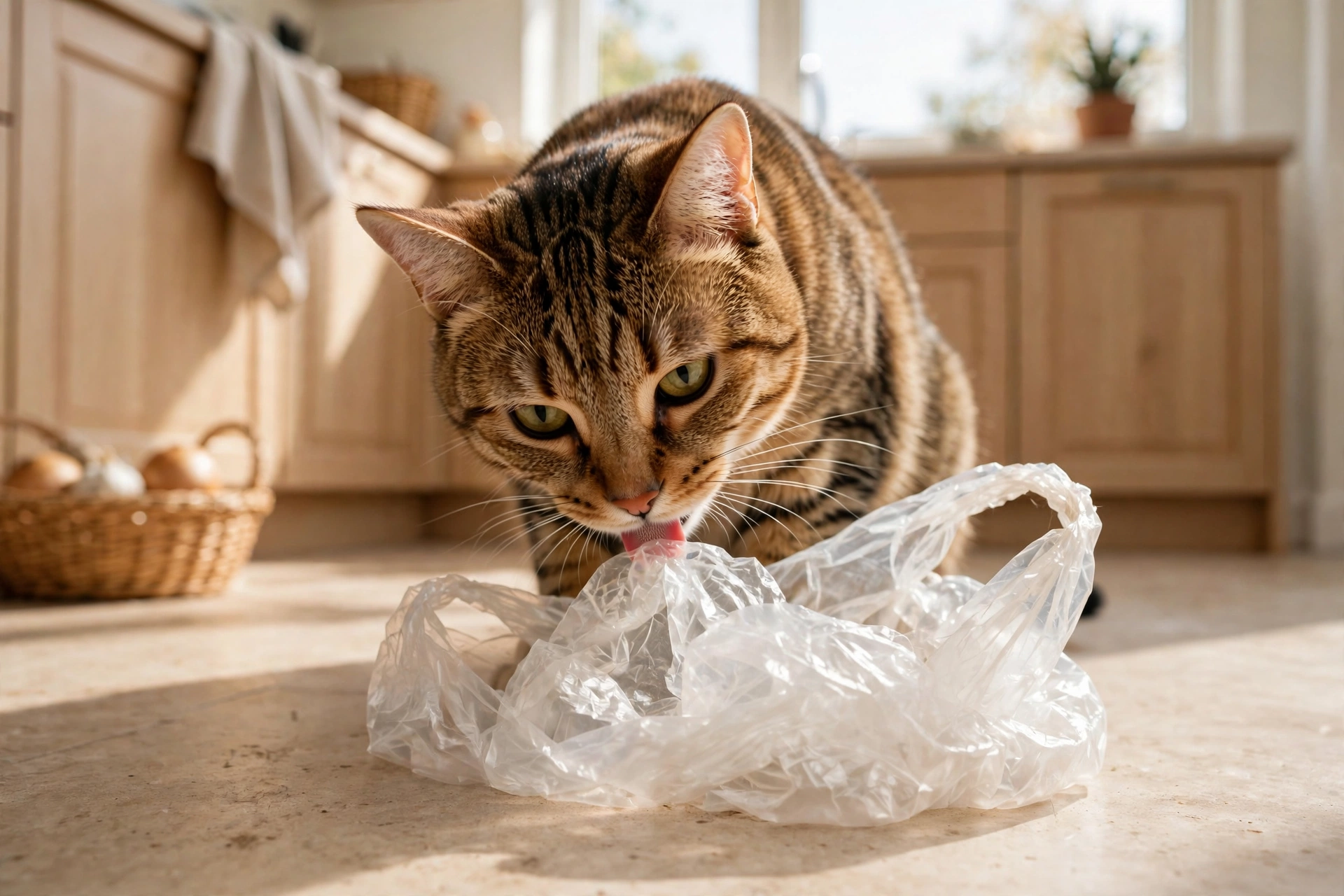
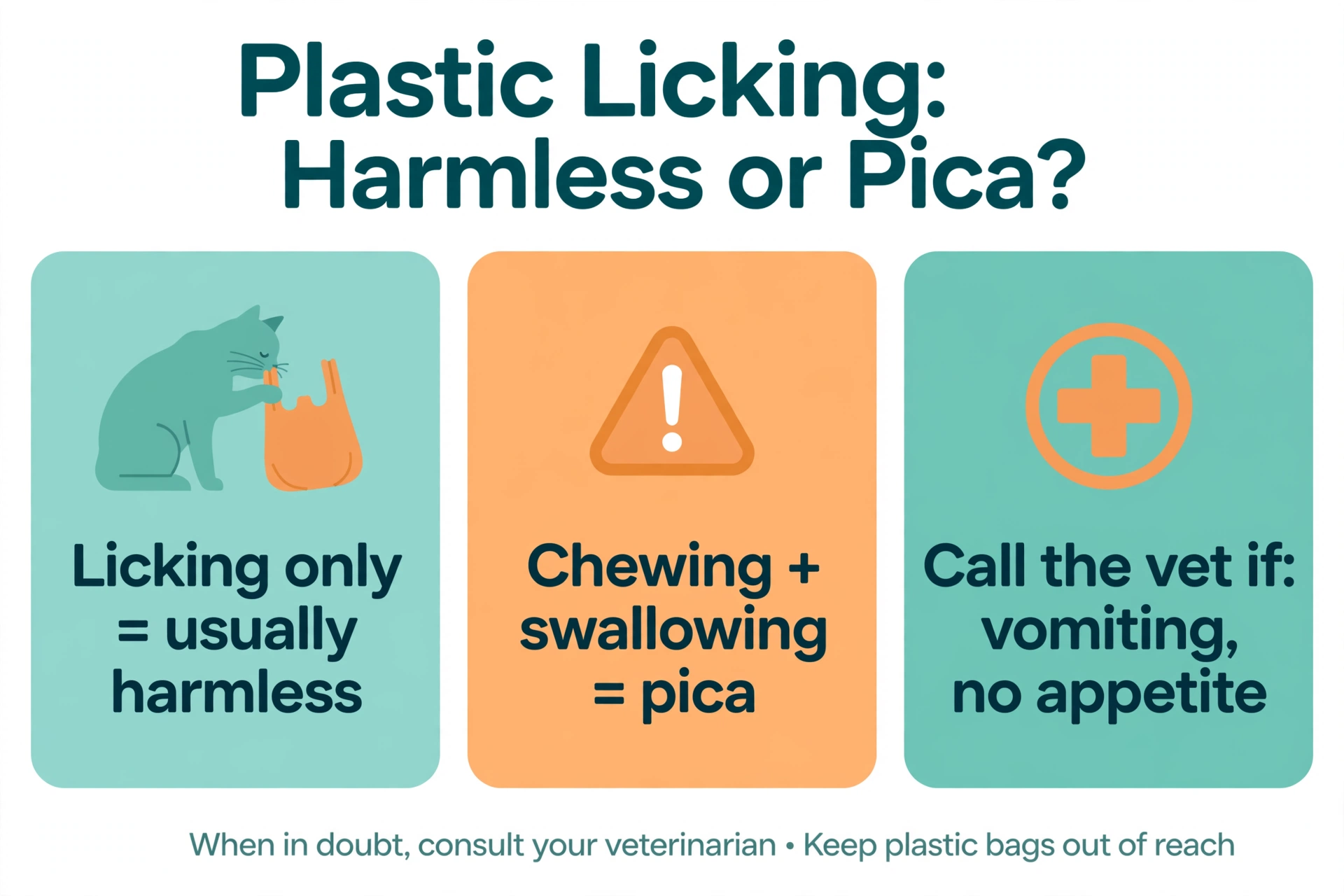
You set down the groceries, and within seconds your cat is licking the plastic bag like it’s the best thing in the house. For most cats, this is harmless sensory fun — they’re drawn to the crinkle, the cool smooth texture, and the faint food smells clinging to the bag. The line that actually matters is licking versus eating: a cat that licks plastic and walks away is being a cat, but a cat that chews off and swallows pieces may have pica — a compulsive eating behavior that can cause dangerous intestinal blockages.
Why are cats so obsessed with plastic?
Plastic hits several of a cat’s senses at once:
- The crinkle. That crackling sound is deeply interesting to a predator’s ears, and the texture under the tongue is unlike anything else in the house.
- Food smells. Plastic is made with animal-fat-derived stearates and other manufacturing residues — to a cat’s nose, a grocery bag can smell faintly of food.
- The cool, smooth texture. Some cats simply enjoy the sensation, the way humans enjoy popping bubble wrap.
- Cornstarch and gelatin coatings. Some biodegradable bags use plant-based coatings that taste interesting to cats.
What is pica, and does my cat have it?
Pica is the compulsive eating of non-food items. Licking alone isn’t pica — pica means chewing off and swallowing plastic, fabric, rubber bands, or other inedibles. Cats most prone to it include Siamese and Burmese lines and cats weaned too early, though any cat can develop it from boredom, anxiety, or nutritional gaps.
The key distinction: licking = usually harmless sensory play. Chewing and swallowing = pica, and a vet conversation.
Is licking plastic actually dangerous?
| Behavior | Risk level | Why |
|---|---|---|
| Licking only | Low | Minimal ingestion; usually just sensory enjoyment |
| Chewing without swallowing | Medium | Small pieces can break off unexpectedly |
| Chewing and swallowing pieces | High | Intestinal blockage risk — can require emergency surgery |
| Playing with bag handles | Medium | Handles can loop around the neck — suffocation/strangulation risk |
Beyond blockages, some plastics carry chemical coatings, and thin bags pose a suffocation risk if a cat gets tangled. The danger isn’t the lick — it’s what gets swallowed or wrapped around the neck.
When should I call the vet about plastic licking?
- Your cat is chewing off and swallowing pieces of plastic
- Vomiting, especially repeated or with retching but nothing coming up
- Loss of appetite or lethargy after plastic play
- Straining in the litter box or no stool for a day+
- You saw your cat swallow a large piece or get tangled in a bag
How to stop your cat licking plastic
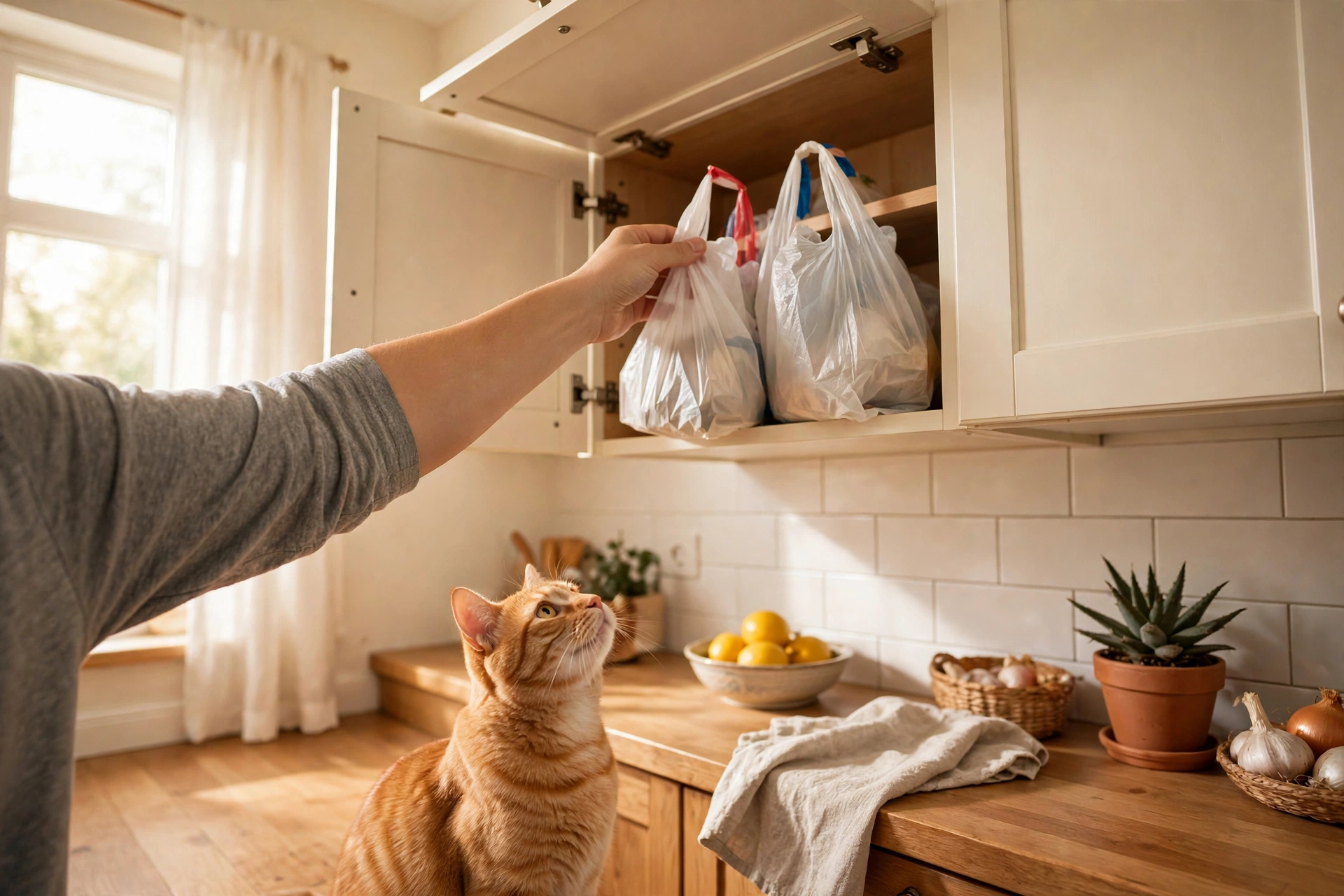
- Remove the temptation. Store bags in closed cupboards, cut the handles off bags before recycling, and keep the shower curtain out of reach if that’s the target.
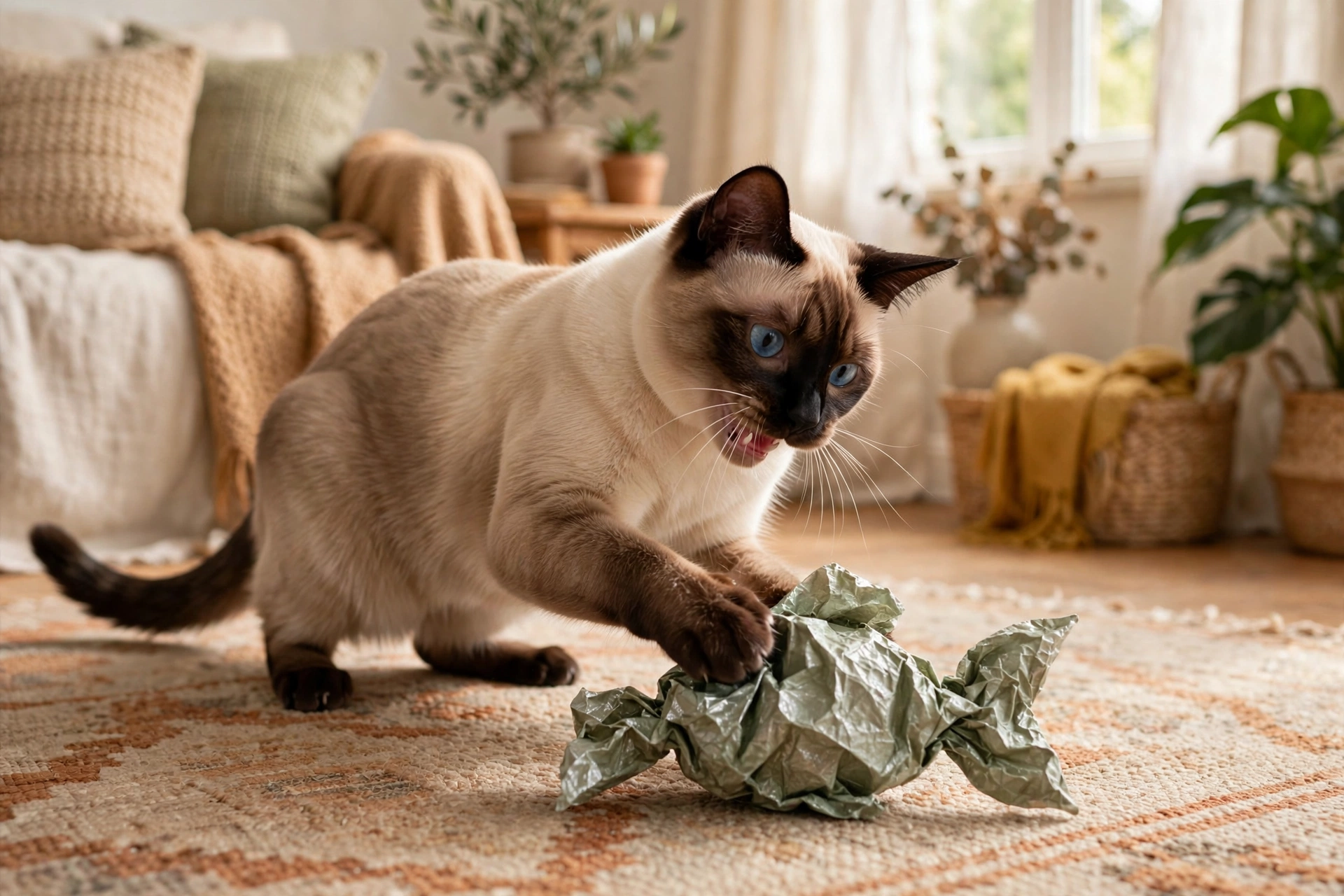
- Offer a legal crinkle. Crinkle toys made for cats deliver the same sensory payoff with zero blockage risk.
- Enrich the environment. Bored cats lick weird things. Puzzle feeders, window perches, and daily play sessions redirect the urge.
- Try a bitter deterrent on the specific item (not on the cat) — it works for some cats, not all.
- Talk to your vet if the behavior is compulsive, escalating, or paired with appetite/weight changes — pica can signal anemia or GI disease.
If your cat swallows plastic or shows vomiting, appetite loss, or lethargy afterward, call your veterinarian.
Plastic isn’t the only risk — swallowed string or ribbon can cause a dangerous linear foreign body. Keep all string-like objects out of reach.
Why do Siamese, Burmese, and early-weaned cats do this more?
Not all cats are equally tempted by plastic. Oriental breeds (Siamese, Burmese, Tonkinese and their relatives) show up disproportionately in pica cases. Vets and behaviorists suspect a genetic thread: these breeds were selected for traits that happen to travel with oral fixations, and the tendency appears heritable. It is a predisposition, not a destiny. Plenty of Siamese never touch a grocery bag.
Early weaning is the other known risk factor. Kittens separated from their mother too young sometimes develop persistent sucking and chewing behaviors, a kind of oral comfort-seeking that can fixate on soft, crinkly textures. Plastic bags hit an oddly perfect combination: interesting texture, faint food smells, and a satisfying crinkle.
Knowing the predisposition helps in one practical way: if you have an oriental breed or a rescued early-weaned kitten, treat plastic management as a permanent household system rather than a phase to outgrow. Some cats do outgrow it; predisposed cats often do not, and planning for that saves everyone stress.
What safe alternatives actually satisfy the urge?
Telling a plastic-obsessed cat “no” without offering a substitute rarely works. The urge needs somewhere to go: The best alternatives mimic what the cat likes about plastic: crinkle, texture, and mouth feel.
- Crinkle toys and tunnels made for cats give the same crackly feedback without the ingestion risk.
- Paper bags with the handles cut off (handles are a strangulation and chewing hazard) offer supervised crinkle-and-hide play — put them away after.
- Textured chew toys designed for cats (nubby rubber or woven fibers) give determined chewers something safe to gnaw.
- Food puzzles and scatter feeding redirect oral energy into work, which is especially effective for boredom-driven lickers.
Rotate the alternatives so they stay interesting, and pair the swap with management: bags in drawers, laundry secured, packaging broken down immediately. For most cats, the formula is simple: remove the real thing, provide a legal version, and the habit fades. If the behavior is intense, compulsive, or escalating despite all this, that is a vet or behaviorist conversation, not a toy problem.
What should I do in the hours after my cat swallows plastic?
First, stay calm and do not try to make your cat vomit. Inducing vomiting at home is dangerous and can cause more harm, especially with sharp or linear material. If you can see plastic hanging from the mouth or rear, do not pull it. String-like pieces can be anchored internally, and pulling can cut through tissue. Trim what hangs outside only if your vet advises it, and get to the vet.
For a small, smooth piece swallowed whole, watchful waiting is often what vets recommend. Many such pieces pass on their own within a day or two. During that window, monitor closely: appetite, energy, vomiting or retching, straining in the litter box, and whether stool is passing normally. Keep the cat’s routine calm and note anything unusual with times.
Call your vet promptly — same day — if you see repeated vomiting, loss of appetite, lethargy, a painful or bloated belly, straining without producing stool, or if the swallowed piece was long, stringy, or sharp. Linear foreign bodies (bag strips, ribbons, tinsel-like pieces) are the true emergency in this story: they can saw through the intestinal wall as the gut moves. When in doubt about what was swallowed, a call costs nothing and a wait can cost a lot.
Is licking plastic a sign of a nutritional deficiency?
Sometimes. Pica-type chewing can be linked to anemia or dietary gaps, but most plastic-licking is sensory, not nutritional. If your cat is actually eating plastic, ask your vet about bloodwork.
Why does my cat lick the shower curtain too?
Same reasons: texture, water droplets, and soap residue smells. It’s the same behavior on a vertical surface.
Should I worry about one lick?
No. A single lick of a grocery bag is harmless. Worry starts with repeated chewing, swallowing pieces, or any digestive symptoms afterward.
Can kittens grow out of plastic licking?
Many do — kitten curiosity fades with age and enrichment. But don’t count on it; manage the environment in the meantime.
Veterinary Review & Editorial Standard
This clinical guide was prepared using peer-reviewed veterinary literature and guidelines from leading veterinary associations. If your pet exhibits acute symptoms or distress, please seek immediate in-person veterinary emergency care.