Are Automatic Litter Boxes Safe for Kittens?
 The Pets Passion Medical Team
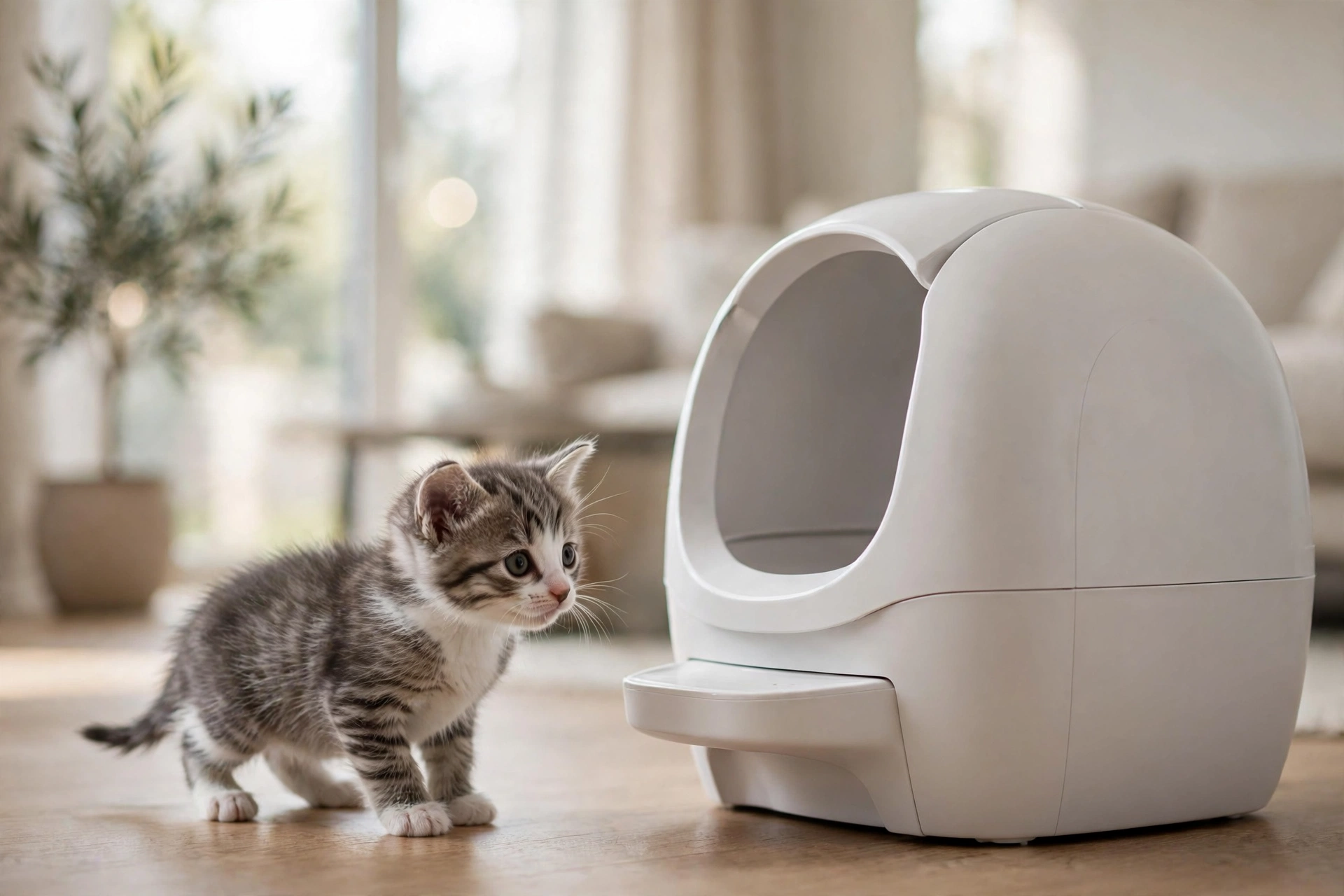
Short answer: Yes — once your kitten is old enough and big enough, and you introduce the box the right way. Most self-cleaning litter boxes are designed for adult cats, so kittens need a slower start and some supervision at first. If your kitten is very young or tiny, stick with a regular box until they grow a bit.
What makes automatic boxes risky for small kittens?
Self-cleaning boxes are convenient, but they were engineered around the size and weight of an adult cat. For a small kitten, three things deserve caution:
- Weight sensors may not register a tiny kitten. Many boxes pause the cleaning cycle when they detect a cat inside. A very light kitten might not trigger the sensor, so the cycle could start while the kitten is still in there — frightening at best.
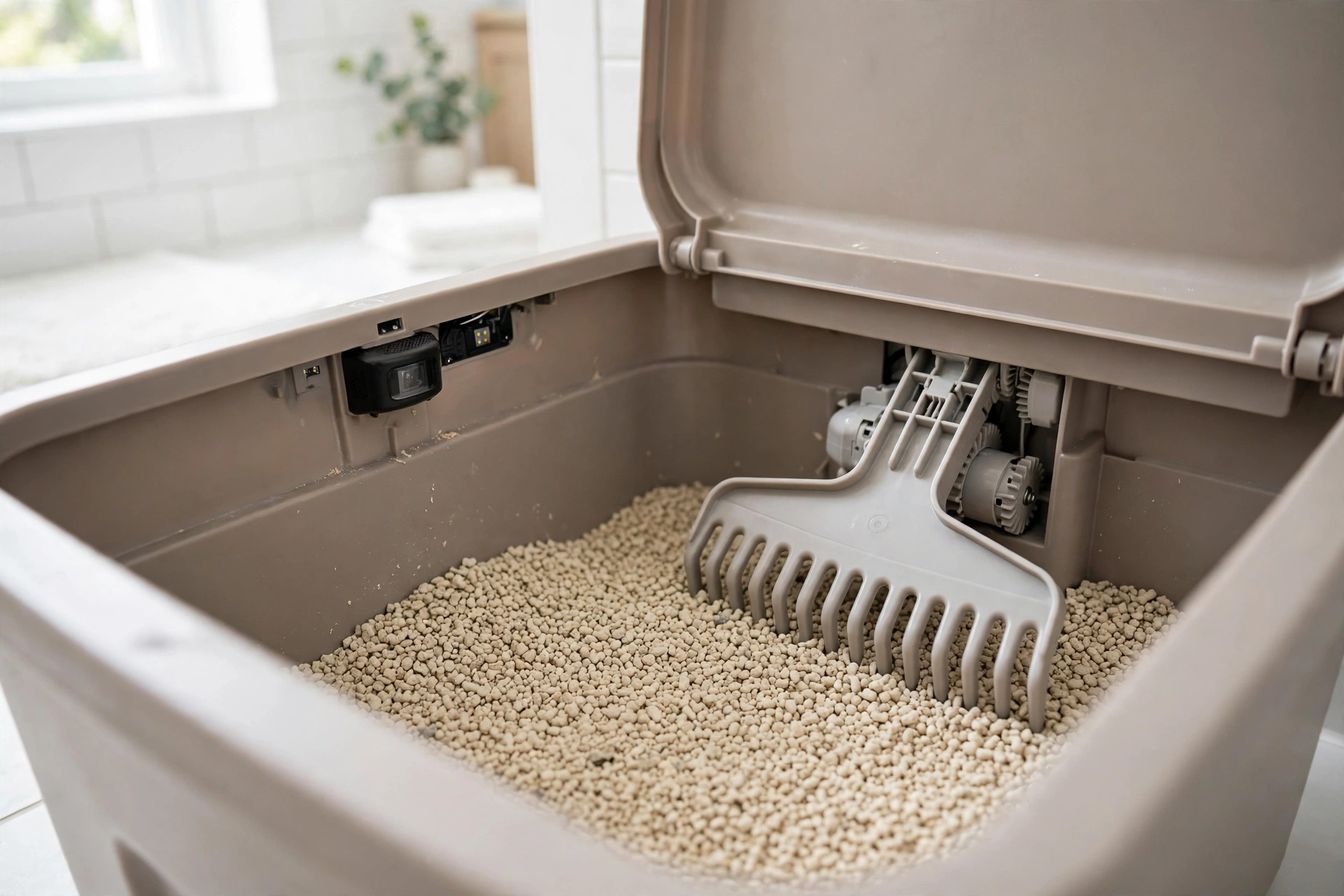
- Curiosity + moving parts. Kittens investigate everything. A rake or rotating mechanism that starts moving is exactly the kind of thing a kitten will try to bat at.
- Fear can cause litter-box aversion. One scary experience with a noisy, moving box can put a kitten off litter boxes in general — a much bigger problem than the convenience you were chasing.
- High walls. Some models have a tall entry that a small kitten physically struggles to climb.
At what age can a kitten use an automatic litter box?
There is no single universal age — check your model’s manual first, because most manufacturers set a minimum age or weight for kittens. As a practical rule of thumb, wait until your kitten:
- is confidently using a regular litter box every time,
- is big enough to climb in and out of the automatic box easily, and
- is heavy enough to reliably trigger the occupancy sensor.
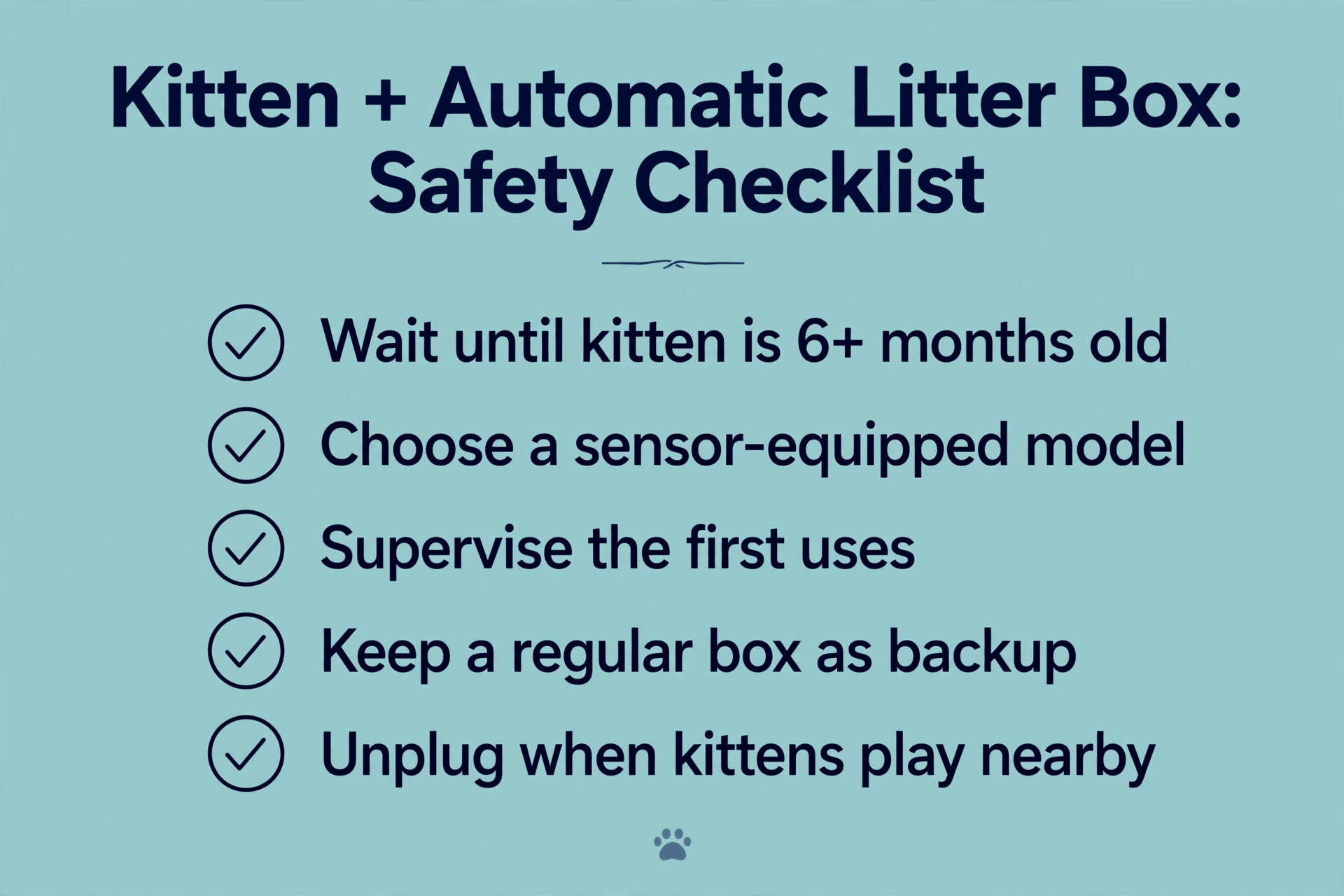
For many families that lands around five to six months of age, but size matters more than the calendar — a petite six-month-old may still need more time. When in doubt, wait. A regular box costs you a few minutes of scooping; a frightened kitten costs you weeks of retraining.
How do I introduce a kitten to an automatic box safely?
Slow and boring wins. Rushing this step is how aversion problems start.
- Start with the power off. Unplug the box or disable the cleaning cycle and let it serve as an ordinary litter box for several days.
- Use the same litter your kitten already likes. Change one variable at a time — new box or new litter, never both.
- Let the kitten explore on their own terms. Treats near the box (not inside it) build positive associations. Never place a kitten inside forcibly.
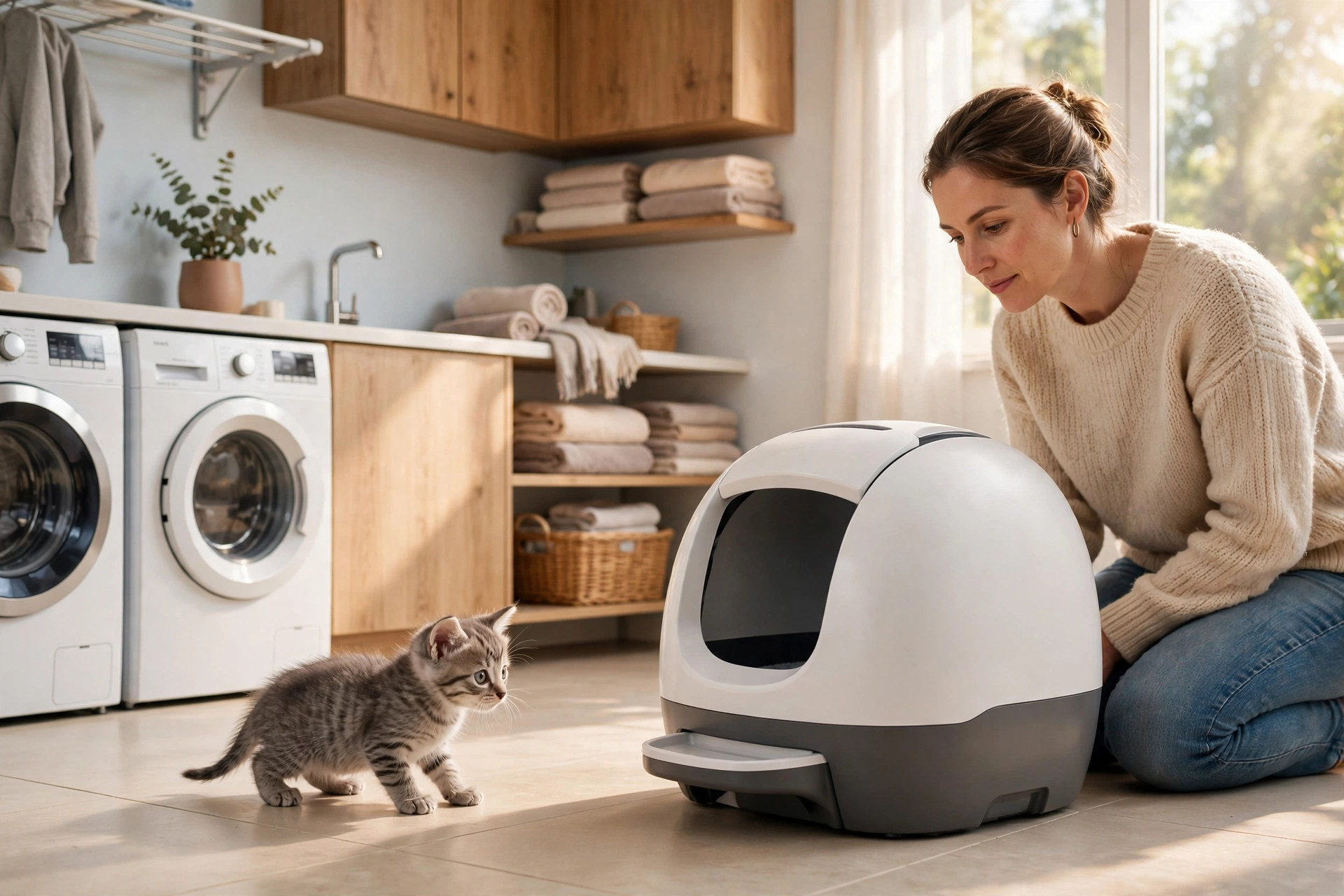
- Run a manual cycle while the kitten watches from a distance. Let them see and hear it while feeling safe.
- Switch to automatic only when the kitten is relaxed around it. Supervise the first few automatic cycles.
- Keep the old regular box available for a week or two. Choice prevents accidents.
Which safety features actually matter?
Not all self-cleaning boxes are equal. If you’re shopping with a kitten in the house, prioritize these:
| Feature | Why it matters for kittens |
|---|---|
| Occupancy / weight sensor | Pauses the cleaning cycle whenever a cat is inside |
| Open-top design | Easy escape route; nothing to feel trapped under |
| Manual or timer mode | Lets you run cycles only when you’re home to supervise |
| Low entry wall | Small kittens can get in and out without struggling |
| Guarded mechanism | Keeps paws away from rakes and rotating parts |
What if my kitten is scared of it?
Go back a step — power off, back to basics, more treats, more time. Most kittens come around within a couple of weeks. But some cats never accept an automatic box, and that’s completely fine. A regular box scooped daily is just as healthy. The “best” litter box is the one your cat actually uses.
For more on box habits, see our guides on kittens avoiding the litter box and adult cats skipping the box — the troubleshooting overlaps a lot.
Frequently asked questions
Can a two-month-old kitten use a self-cleaning litter box?
No — too small and too light for the sensors. Use a low-sided regular box until they’re bigger.
Can the cleaning mechanism hurt my cat?
On modern sensor-equipped models the cycle pauses when occupied, so injury is unlikely. The real risk is fright, which is why supervised introductions matter.
Do automatic boxes need special litter?
Most require clumping litter to work properly. Check your manual — the wrong litter type is the most common cause of malfunctions.
Do I still have to do anything?
Yes. You skip daily scooping, but you still empty the waste drawer regularly and deep-clean the box itself. Sensors and litter level need occasional checks too.
Will it scare my kitten off litter boxes entirely?
It can, if introduced badly — which is exactly why the slow, powered-off-first method above exists.
Veterinary Review & Editorial Standard
This clinical guide was prepared using peer-reviewed veterinary literature and guidelines from leading veterinary associations. If your pet exhibits acute symptoms or distress, please seek immediate in-person veterinary emergency care.