Cat Breathing Fast While Sleeping: When to Worry
 The Pets Passion Medical Team
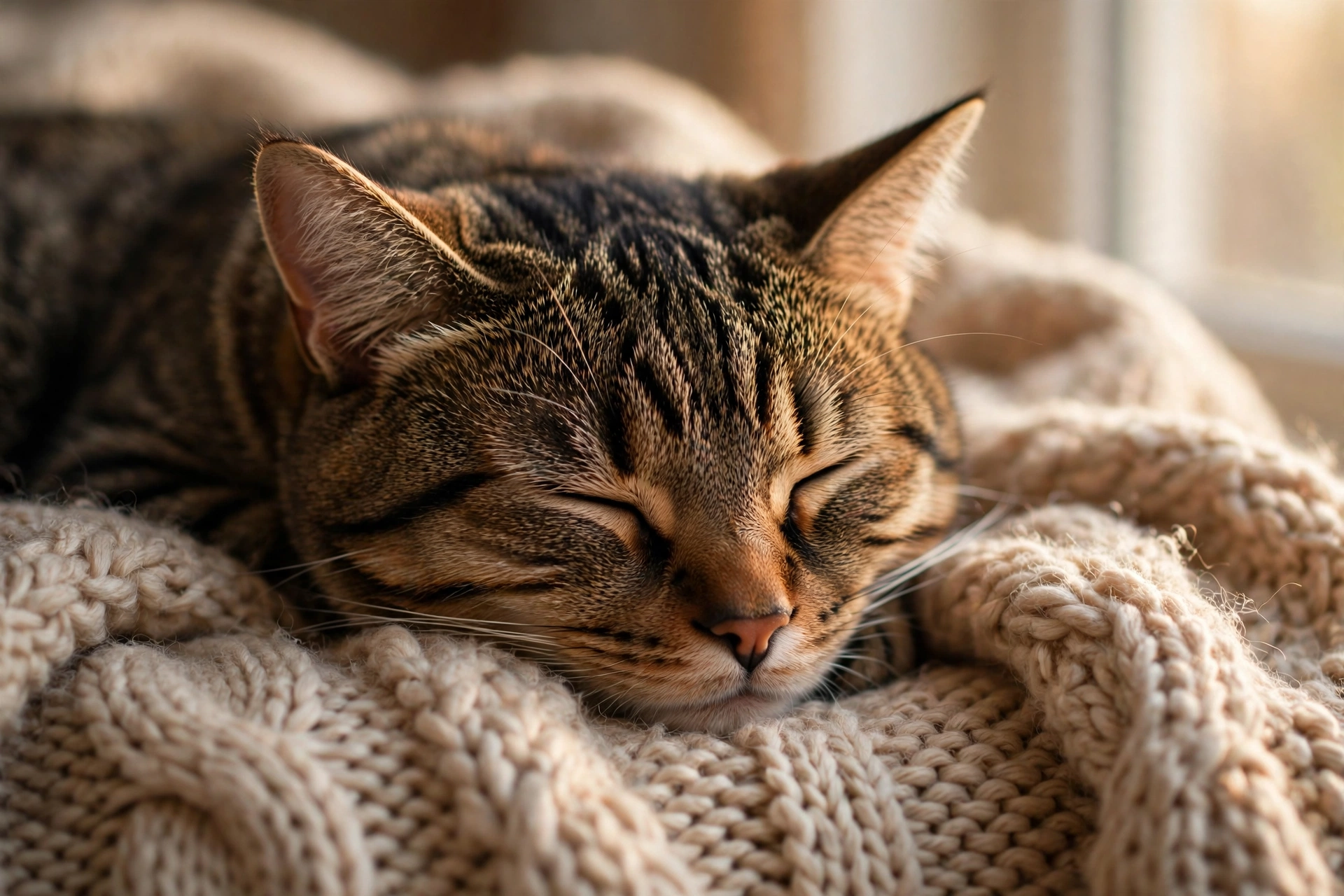
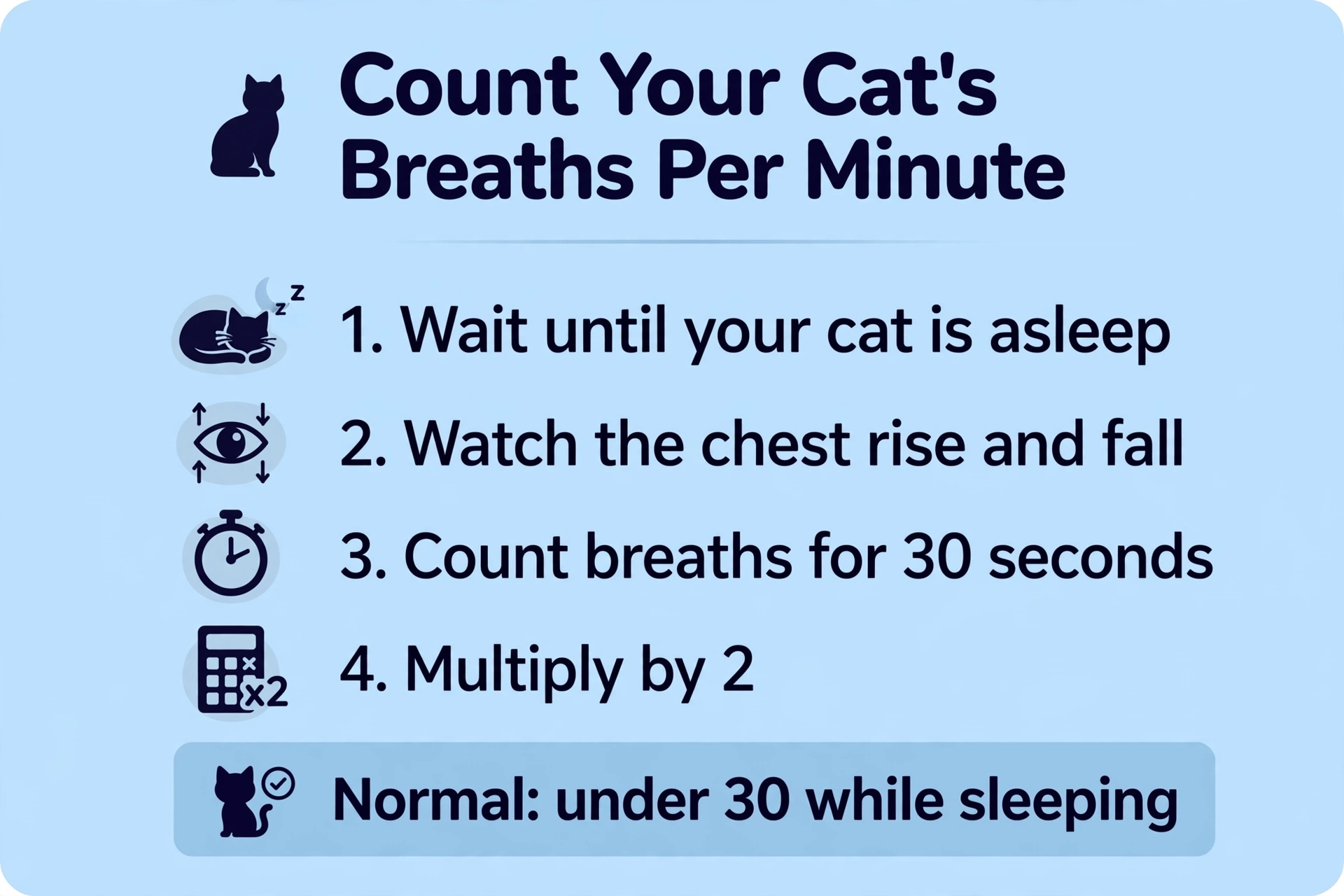
Short answer: Brief fast breathing during a dream is normal. But a sleeping cat who breathes fast for minutes at a time — or does it often — needs a vet’s attention. The check is simple: count breaths for 30 seconds and double it. Under 30 breaths per minute during sleep is normal. If it is 30 or above repeatedly, call your vet.
How do I count my cat’s breathing rate?
- Wait until your cat is deeply asleep — not just drowsy. Drowsy cats breathe faster.
- Watch the chest. One rise and fall equals one breath.
- Count for 30 seconds and multiply by two. That is breaths per minute.
- Repeat on another day. One reading is a snapshot; a pattern is information. Jot the numbers down for your vet.
When is fast breathing during sleep normal?
- Dreaming. Cats dream too. Twitching whiskers or paws with a short burst of fast breathing usually means an exciting dream — it passes in a minute or two.
- A warm room. Cats breathe faster to cool down, just like a warm night makes us restless.
- Right after active play. Breathing should settle within a few minutes of lying down.
- Kittens. Young cats run at a faster idle speed than adults in almost everything, breathing included.
The key word in all of these is brief. Normal fast breathing comes and goes. Fast breathing that just keeps going is different.
Which signs mean “call the vet now”?
Contact your vet promptly — urgently if you see these together — when:
- breathing stays at 30 breaths per minute or above during true sleep, repeatedly;
- your cat breathes with an open mouth or pants while resting (cats rarely pant like dogs — in cats it is more often a warning sign);
- gums or tongue look blue, gray, or very pale instead of pink;
- the belly heaves with visible effort;
- fast breathing comes with lethargy, hiding, or not eating.
Blue or gray gums, open-mouth breathing at rest, or obvious labored effort warrant emergency care — do not wait to see if it improves.
What causes fast breathing in cats?
Only your vet can diagnose, but these are the common categories they will consider:
| Possible cause | Clues you might notice |
|---|---|
| Asthma / airway disease | Coughing or wheezing episodes, worse with dust or stress |
| Heart disease | Lethargy, reduced appetite, sometimes sudden onset |
| Fluid around the lungs | Labored breathing, restlessness, reluctance to lie down |
| Anemia | Pale gums, weakness |
| Pain or fever | Hiding, not eating, sensitivity to touch |
Do not try to match your cat to a row at home — the table is just so you know what the vet is ruling in or out.
What will the vet do?
Expect a history (when did it start, how often, any other changes), a careful listen to the heart and lungs, and usually chest X-rays. Bloodwork and sometimes an ultrasound follow depending on findings. Bring your counted breathing rates — vets genuinely use them.
If your cat shows any of the red flags above and you’re unsure whether it can wait, our guide on when to take a cat to the emergency vet can help you decide.
Frequently asked questions
Is 32 breaths per minute dangerous?
A single reading of 32 is not a diagnosis. But if you repeatedly count 30 or more during deep sleep, that is worth a vet visit — bring your log.
Do cats pant like dogs?
Rarely, and usually only with heat, extreme stress, or illness. Resting panting in a cat deserves a vet call.
Can stress cause fast breathing?
Yes — a vet visit or a loud thunderstorm can spike the rate. It should settle once the cat is calm and resting.
Should I wake my cat to check their breathing?
No. Waking changes the rate and ruins the measurement. Observe quietly and count while they sleep.
My kitten breathes fast while sleeping — is that normal?
Kittens breathe faster than adults, so a higher number alone is less alarming. Still count over several days and mention it at your next vet visit if it seems excessive.
Veterinary Review & Editorial Standard
This clinical guide was prepared using peer-reviewed veterinary literature and guidelines from leading veterinary associations. If your pet exhibits acute symptoms or distress, please seek immediate in-person veterinary emergency care.