Kitten Vaccination Schedule: What to Expect by Age
 The Pets Passion Medical Team
A kitten vaccination schedule is a series of visits, not a single appointment. The starting age, the vaccine product used, leftover maternal antibodies, the kitten’s health, exposure risk, and local rabies rules all shape the plan. The safest schedule comes from a veterinarian who examines the kitten and records every product given. Use any calendar or table below as a prompt for questions at the clinic, not as a prescription you follow on your own.
What does each core vaccine protect against?
AAHA/AAFP guidance treats protection against three diseases as core for cats, with rabies governed by law and product labeling. In plain language:
- Feline panleukopenia: a severe, highly contagious virus that attacks the gut and immune system. Kittens are the most vulnerable, and it spreads through contaminated environments as well as direct contact.
- Feline herpesvirus-1: a major cause of upper respiratory infections in cats, with sneezing, eye discharge, and sometimes lasting eye problems. Very common wherever cats gather.
- Feline calicivirus: another respiratory virus that can also cause mouth ulcers and limping in kittens. It mutates readily, which is one reason boosters matter.
- Rabies: fatal once symptoms appear and required by law in many places. Timing follows local rules and the product label, so your vet sets the date.
Feline leukemia virus (FeLV) sits in its own category. It spreads through close contact such as grooming and shared bowls, and it is especially worth discussing for kittens because their exposure risk can change as they grow and explore. Your veterinarian will tailor the plan to indoor access, household cats, rescue history, travel, and regional disease risk.
Why do kittens need a series of shots?
Young kittens carry maternal antibodies from their mother’s milk, and those antibodies can block a vaccine from working while they are still present. The problem is that nobody can tell from the outside exactly when they fade, and the kitten’s own immune protection is still developing in the meantime. Repeated visits solve this: each appointment is another chance to vaccinate once the kitten can respond, and each visit doubles as a health check for growth, parasites, teeth, nutrition, and general development. A sick or underweight kitten may need different timing, so do not delay a needed appointment without asking the clinic.
What does the kitten vaccination schedule look like?
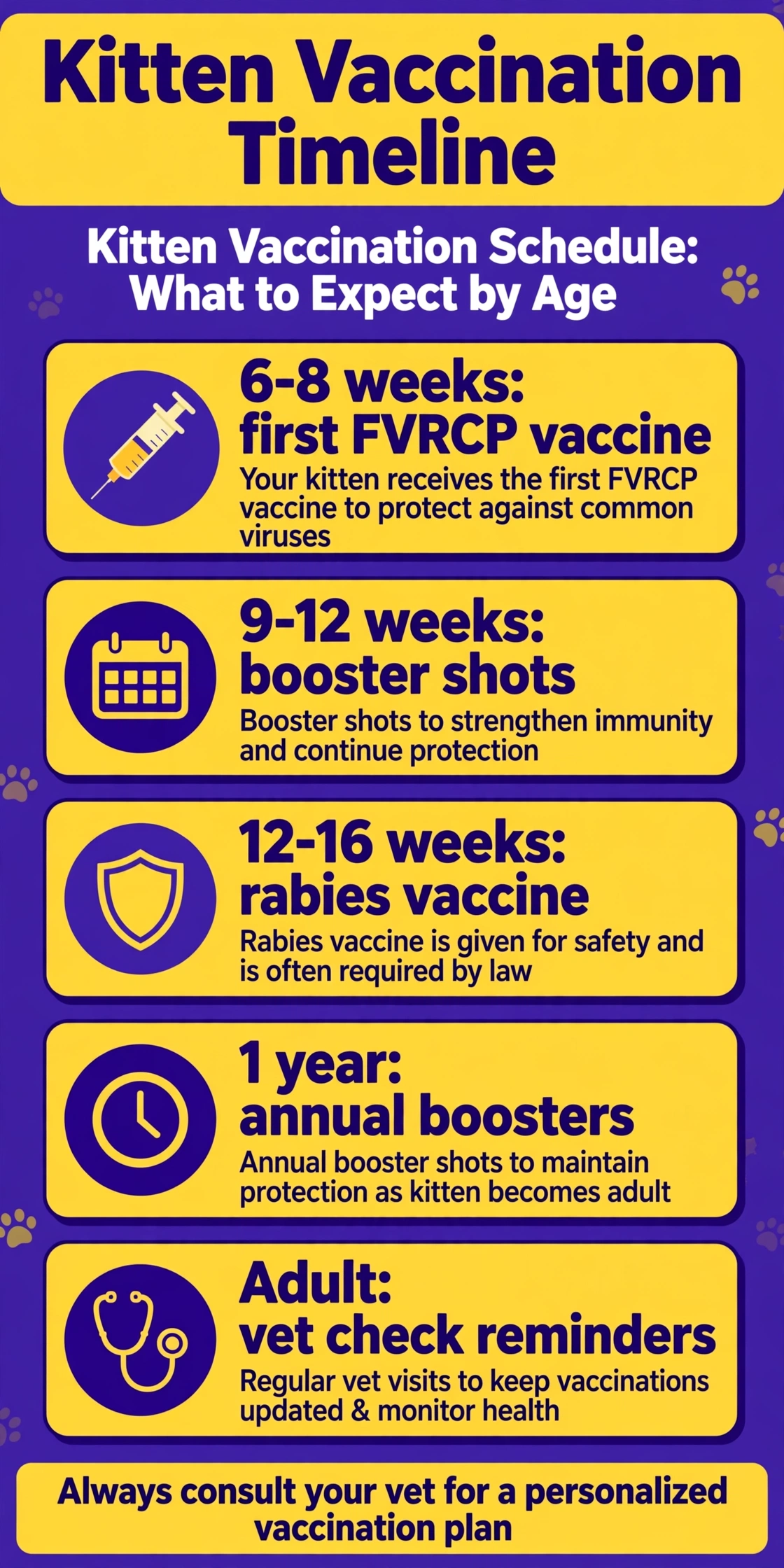
AAHA/AAFP guidelines give this framework, which your vet adapts to the actual products and your kitten’s record:
| Vaccine | First dose | Boosters |
|---|---|---|
| FVRCP (panleukopenia, herpesvirus, calicivirus) | No earlier than 6 weeks of age | Every 3 to 4 weeks until 16 to 20 weeks |
| Rabies | Per local law and product label | Per label and local law |
| FeLV | Risk-based; discuss with your vet | Per your vet’s plan |
Kittens first vaccinated after 16 weeks follow a different initial series, which is another reason the vet’s record matters more than a generic chart. After the kitten series, adult boosters continue on a schedule your vet sets, usually with longer intervals for low-risk indoor cats.
What about non-core vaccines?
Beyond the core list, other vaccines exist for specific risks, such as FeLV for at-risk kittens and others your vet may mention for boarding, travel, or regional diseases. These are genuinely optional in the sense that the decision depends on lifestyle: an indoor-only kitten in a quiet household faces different risks than a kitten that will roam or meet many cats. Ask your vet to explain which non-core options fit your kitten’s life and which do not. More vaccines are not automatically better; the right set is.
What happens at the first vet visit?
Knowing the routine takes the nerves out of it. A typical first vaccination appointment goes like this:
- History: the vet asks where the kitten came from, what it eats, and about any sneezing, diarrhea, or lethargy.
- Hands-on exam: weight, temperature, eyes, ears, mouth, heart, lungs, belly, skin, and coat.
- Parasite check: often a stool sample and a discussion of deworming and flea prevention.
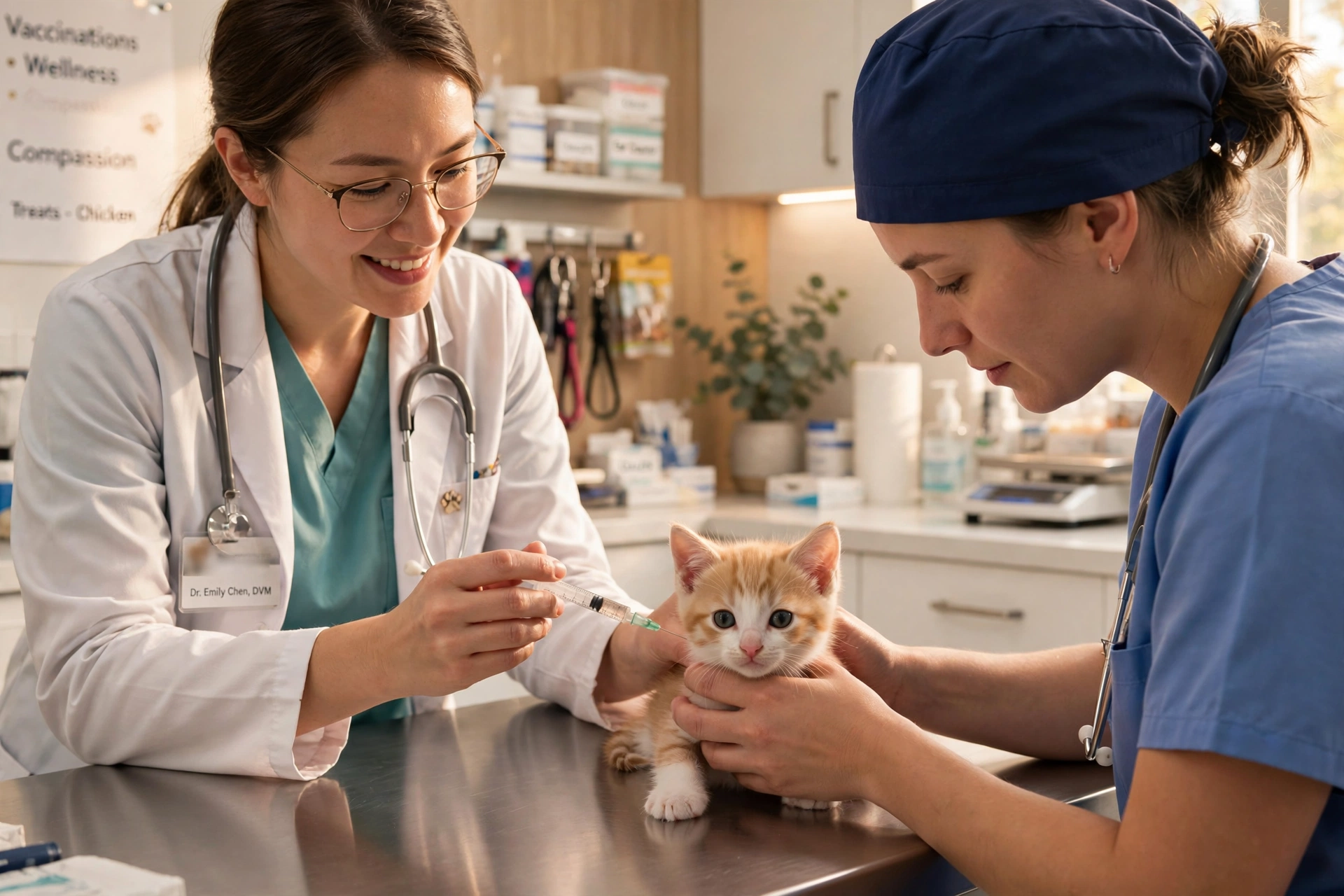
- Vaccines: the injections your vet has chosen for this visit, given where the kitten feels them least.
- The plan: dates for the next visits, what to watch for afterward, and the vaccine card for your records.
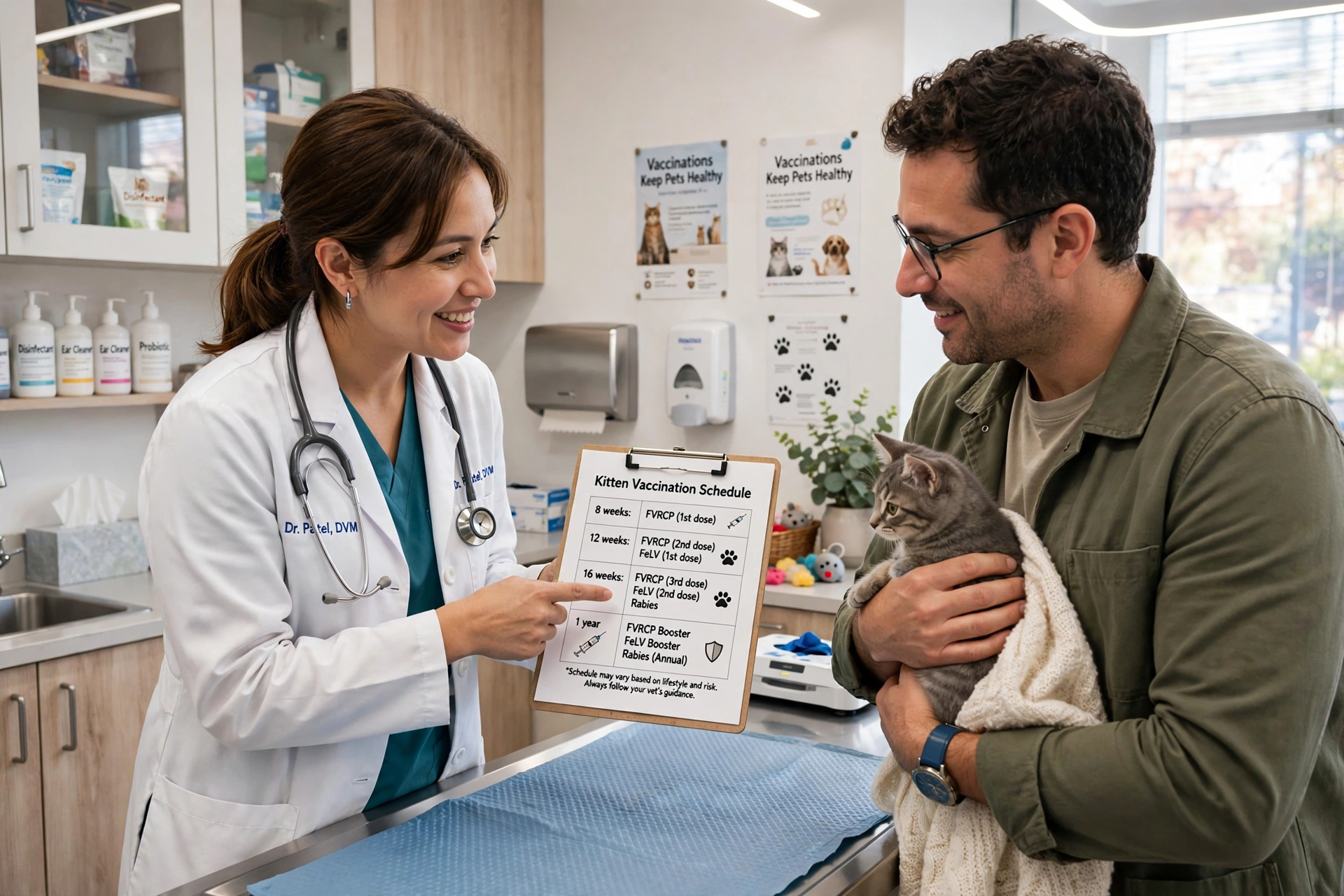
Bring any prior records, note any past reactions, and be ready to describe the kitten’s lifestyle: indoor only, supervised outdoor time, or contact with other cats. The first vaccine visit goes smoothly when you bring prior records and can describe that lifestyle clearly, because your vet uses that picture to set the right schedule and booster timing.
My kitten came from a rescue. What if records are missing?
This is common and fixable. Shelters usually vaccinate on intake, but paperwork gets lost and dates get fuzzy. Do not guess and do not try to reconstruct the series yourself. Ask the veterinarian: they can make a safe plan from the kitten’s age, condition, and whatever fragments of history exist, and they would rather give a well-timed dose than leave a gap. Keep the new vaccine card somewhere you can find it, because the next visit depends on it.
What reactions are normal, and what is not?
Mild tiredness, a small appetite dip, or slight soreness at the injection spot can occur after vaccination and usually fades within a day or two. Ask the clinic what it expects for the specific product used, since products differ. Get urgent help for facial swelling, trouble breathing, collapse, repeated vomiting, or a rapidly worsening reaction. Keep the kitten indoors and calm after the visit, report any concern rather than giving a human medicine, and ask your vet about injection-site monitoring so you know what normal healing looks like.
How can I plan for the cost?
No honest article can quote your clinic’s prices, because they vary widely by region and practice. The practical move is to ask for a written estimate at the first visit covering the whole kitten series, not just that day, so there are no surprises at visit three. Ask what is bundled: exams, stool tests, and deworming are often part of kitten packages. If money is tight, say so early; clinics can prioritize the essentials and many areas have low-cost vaccination events. This is also a good moment to ask about pet insurance, ideally before any condition is diagnosed.
When can a kitten meet other cats?
Vaccines reduce risk but do not make a kitten instantly protected, and protection builds across the series. Follow your veterinarian’s advice for contact with unknown cats, shelters, boarding, and outdoor areas. Use clean carriers, avoid shared bowls or litter with sick cats, and keep early socialization to safe, known-healthy household cats while the series is underway. A careful socialization plan and a careful vaccine plan work together.
How can I use an online schedule safely?
Our pet vaccine schedule tool can help you see questions and reminders, while the kitten growth tool helps track weight and development. Enter actual dates and product names from the medical record, and use the output to prepare for the vet, not to override them. Do not use a tool to choose a vaccine for a kitten with fever, diarrhea, vomiting, or a known immune problem; call the veterinarian first.
A simple vaccination checklist
| When | Do this |
|---|---|
| Before the first visit | Gather any records; note diet, symptoms, and lifestyle; bring a stool sample if asked |
| At the visit | Ask which vaccines were given and why; confirm the next appointment date |
| After the visit | Watch for reactions for 24 to 48 hours; keep the vaccine card safe |
| Between visits | Limit contact with unknown cats; track weight and appetite |
| Series complete | Ask about the adult booster schedule and keep records with your other pet documents |
FAQ: Kitten vaccines
Does an indoor kitten need vaccines?
Indoor status lowers some exposures but does not remove all risk; discuss core protection and local rules.
Can I restart the schedule if records are missing?
Ask the veterinarian. They can make a safe plan rather than guessing.
Is a vaccine certificate enough?
Keep the certificate and product record, including date and clinic.
Can my kitten go outside between shots?
Supervised, low-risk outings are a vet-by-vet call. Unvaccinated or partially vaccinated kittens should avoid unknown cats, soil where many cats roam, and off-leash roaming until the series is further along.
What if I miss a booster date?
Call the clinic promptly and reschedule. Do not restart the series on your own or double up; your vet will tell you whether the timeline needs adjusting.
Sources consulted
Educational information only; this guide does not diagnose or replace veterinary care.
Related cat guides
Related guides in this cat-health cluster: Kitten Not Using Litter Box, Flea Treatment For Cats. Start with litter training basics alongside the vaccine series, and ask about flea prevention for kittens at the same visit. For more cat health guides, visit the cats hub.
Veterinary Review & Editorial Standard
This clinical guide was prepared using peer-reviewed veterinary literature and guidelines from leading veterinary associations. If your pet exhibits acute symptoms or distress, please seek immediate in-person veterinary emergency care.