My Dog Ate Chicken Bones — What to Do Now (Step by Step)
 The Pets Passion Medical Team
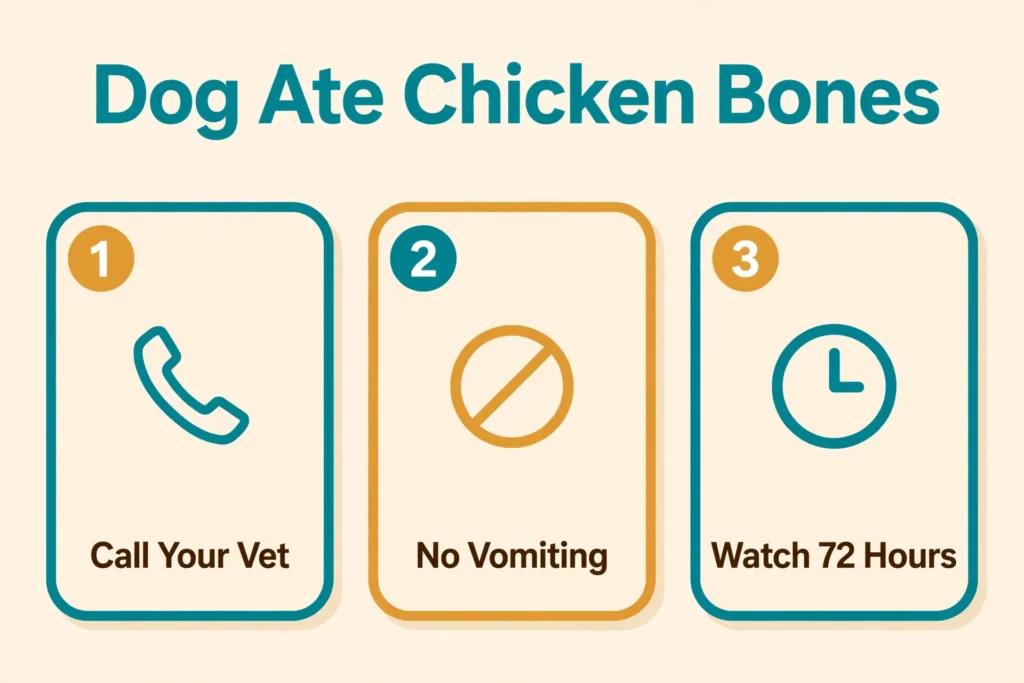
Your dog just ate chicken bones. First: take a breath. Many dogs swallow chicken bones without serious harm — but some develop choking, blockages, or internal injuries, and you can’t tell which group yours is in yet. So the correct response is call your vet right now for triage advice, then watch your dog closely for the next 72 hours. Do not try to make your dog vomit.
What should I do in the first 10 minutes?
- Stay calm and secure your dog. Panicking won’t help; a calm dog is easier to assess. Move any remaining bones out of reach so he can’t eat more.
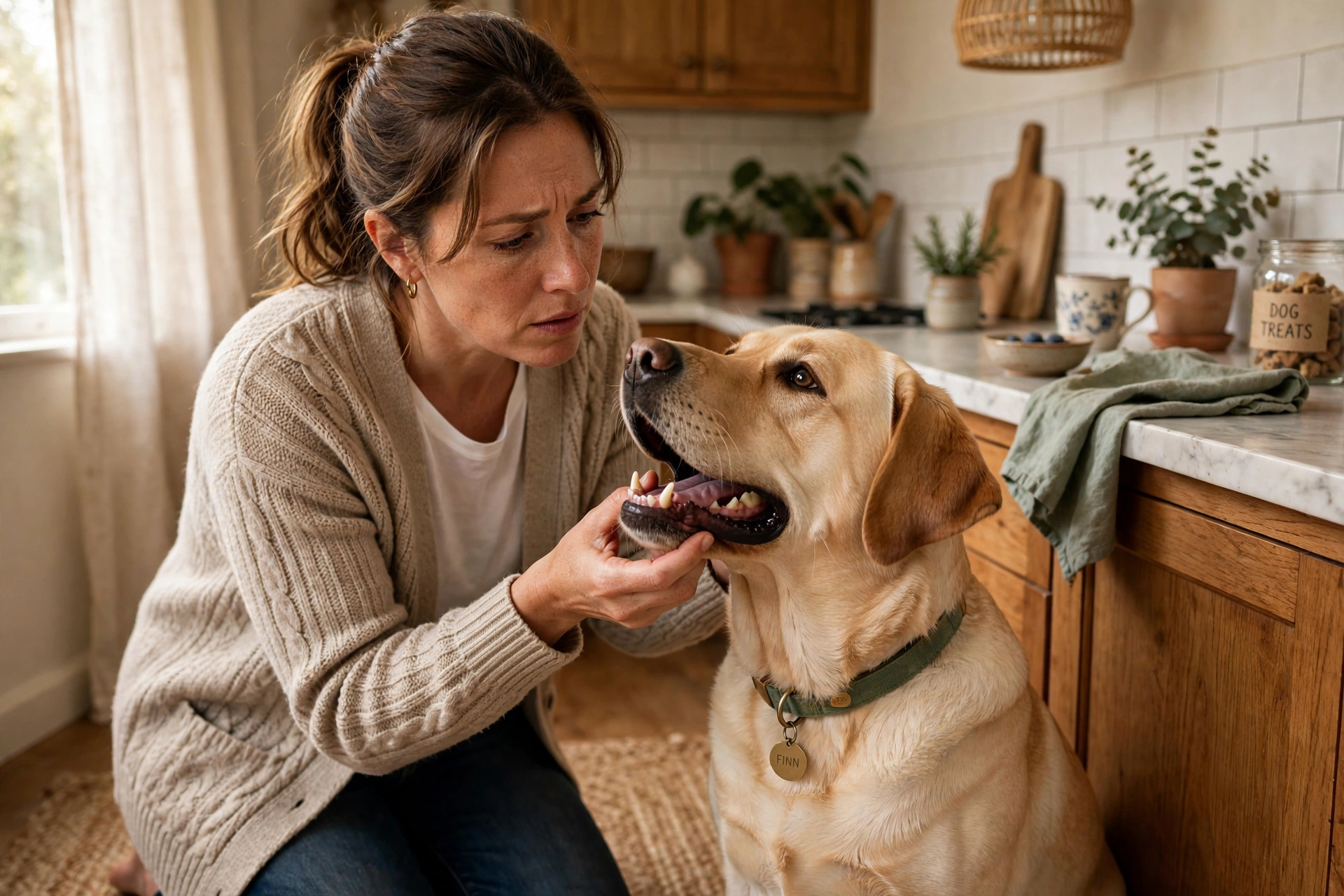
- Check his mouth and breathing. If a bone fragment is visible and easy to grab at the front of the mouth, remove it. If it’s lodged at the back of the throat, don’t reach in blindly — you risk pushing it deeper or getting bitten. Make sure he’s breathing normally.
- Call your vet (or an emergency clinic) immediately. This is the single most important step. Tell them: your dog’s size and breed, roughly how many bones he ate, whether they were cooked or raw, and when it happened. They’ll tell you whether to come in now or monitor at home.
- Do not induce vomiting. This is the mistake panicked owners make most. Vets consistently advise against it: sharp bone fragments can scrape and tear the esophagus and throat on the way back up, and a fragment can lodge in the throat during vomiting — turning a manageable situation into a choking emergency.
Why are cooked chicken bones so dangerous for dogs?
VCA Animal Hospitals calls it a myth that dogs need to chew bones, and their guidance — citing the U.S. Food and Drug Administration — lays out exactly what can go wrong:
- Broken teeth. Bones are hard and can be brittle; chewing them can crack a large chewing tooth, which is painful and needs a vet to treat.
- Mouth and tongue injuries. Broken bone edges can be razor sharp. Shards can pierce the tongue, cheek, or the soft palate, and bone pieces can get looped around the lower jaw or wedged across the roof of the mouth.
- Choking. Bone pieces can lodge in the esophagus. Sharp shards can pierce the soft tissues at the back of the throat or the esophagus itself, and a fragment can even enter the windpipe and block breathing. Choking is an emergency.
- Stomach and intestinal damage. Sharp fragments can injure the walls of the stomach and intestines — and in some cases penetrate them completely, letting intestinal contents leak into the abdomen. That leakage causes peritonitis, an abdominal infection VCA notes can be fatal even with aggressive treatment.
- Blockages. VCA notes that bone splinters can cause painful blockages in the esophagus, stomach, or intestine — and these often require emergency surgery.
Cooked bones are the worst offenders because cooking makes bone brittle and prone to splintering into sharp shards — VCA’s Thanksgiving guidance specifically warns that turkey and chicken bones can splinter, causing choking or digestive blockages. Raw bones aren’t safe either: VCA notes they carry bacterial contamination risks such as salmonella, and they can still cause choking, blockages, and broken teeth.
What are the emergency warning signs? (Go to the vet now)
Don’t wait out any of these — they need immediate veterinary care:
- Choking, gagging, or retching — pawing at the mouth, drooling heavily, coughing, or struggling to breathe
- Repeated vomiting, especially vomiting blood or material that looks like coffee grounds
- Bloody stool or black, tarry stool (black stool can mean digested blood from higher in the gut)
- Swollen, hard, or painful belly — your dog yelps, hunches, or won’t let you touch his abdomen
- Extreme lethargy, weakness, or collapse
- Refusing food and water entirely after the incident
VCA’s guidance on bowel obstructions adds that persistent vomiting, lack of appetite, lethargy, and abdominal pain (hunching, whining) are the classic signs of a blockage — and that blockages are life-threatening and typically require surgery to remove the stuck item.
The 72-hour watch: what to monitor at home
If your vet advised monitoring at home, your job for the next three days is simple: watch appetite, stool, and energy. Problems from swallowed bones usually declare themselves within hours to a couple of days, though you should stay alert for the full 72 hours.
What to watch:
- Appetite and water intake. A dog who eats and drinks normally is reassuring. A dog who refuses meals is not — call the vet.
- Stool. Check every bowel movement. You’re looking for straining or constipation, diarrhea, mucus, or any blood — bright red or black/tarry. Mild digestive upset for a day is common; blood is not.
- Vomiting. One episode of vomiting shortly after the incident may just be irritation. Repeated vomiting, or vomiting that starts a day or two later, needs a vet.
- Energy and belly. Lethargy, restlessness, panting, a hunched posture, or a tender belly are all warning signs. Remember that vomiting and diarrhea can also signal infections like giardia, so report the full picture to your vet.
- Keep him hydrated and active. Normal water intake and gentle exercise support normal gut movement. Feed his regular meals — food around the bone material can help it move through safely. Only add anything to his diet (like fiber) if your vet suggests it.
Write it down. Note the time of the incident, what he ate, and log appetite, stools, and any symptoms with times. If you end up at the clinic, this log is gold for the vet.
What will the vet do?
It depends on what they find — and this is why the phone call matters so much.
- Watchful waiting. If your dog is comfortable, eating, and passing stool normally, many vets simply monitor. Most swallowed bone material passes on its own, and surgery is only considered if the dog shows signs of distress.
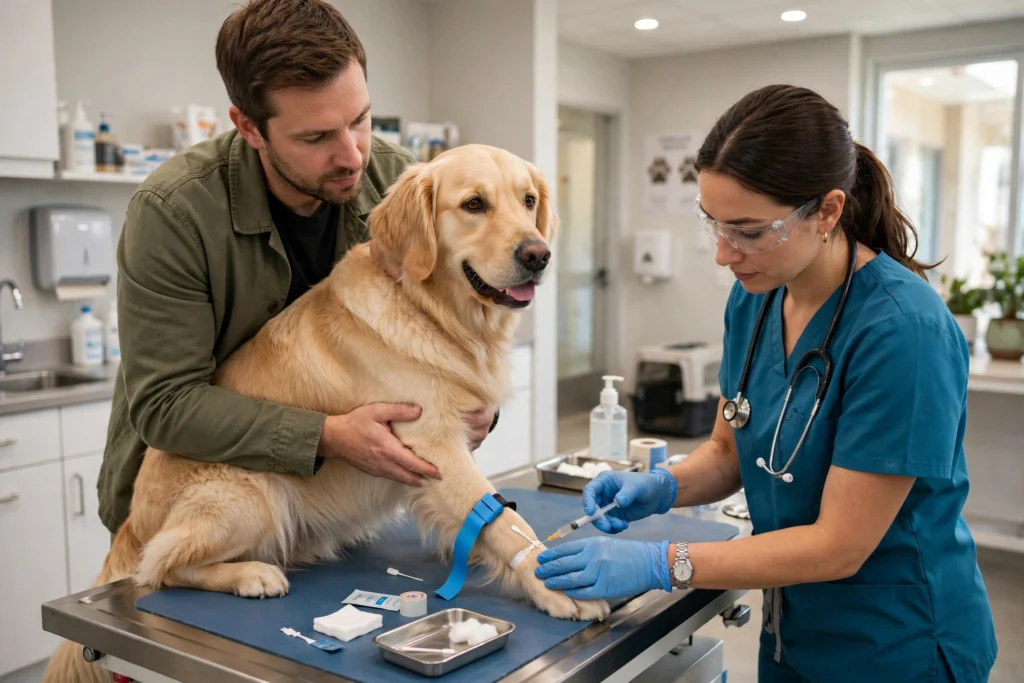
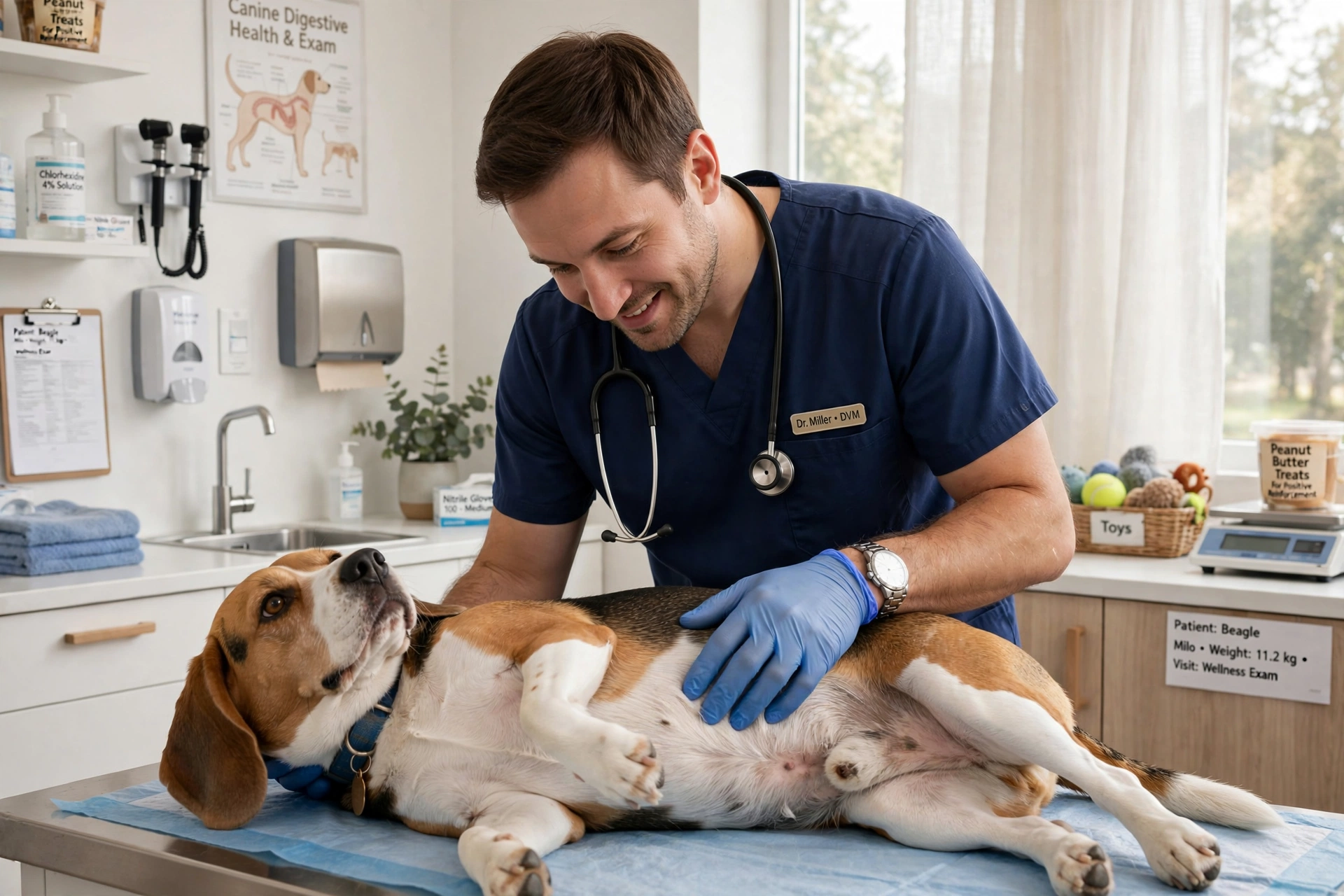
- Physical exam. The vet will feel the abdomen for pain, swelling, or unusual firmness, and check the mouth and throat.
- X-rays. VCA Canada’s guidance on swallowed foreign objects explains that abdominal X-rays are the standard next step when a foreign body is suspected — sometimes several views, or specialized X-rays using contrast dye, are needed to locate the object.
- Endoscopy. If a fragment is lodged in the esophagus or stomach, the vet may retrieve it with a camera-guided scope — no surgery required.
- Surgery. If there’s a blockage or a perforation, surgical removal is the treatment. VCA Canada notes that when an obstruction occurs, surgical removal of the blocked object is the only treatment — there is no medication that dissolves a stuck bone.
Never try home “cushioning” tricks — like feeding lots of bread or rice to wrap the bone — unless your vet specifically tells you to. And never give human laxatives or painkillers; some are dangerous for dogs.
How to stop it happening again
Most chicken-bone incidents are trash raids or counter-surfing, and both are fixable:
- Secure the trash. Use a bin with a locking lid, keep it inside a latched cabinet, or move it somewhere the dog can’t reach — especially on roast-chicken nights and holidays, when bone-filled trash is most tempting.
- Clear plates immediately. Don’t leave bones on low tables, coffee tables, or within snout reach of the counter edge. Teach everyone in the house the rule: plates go straight to the sink or bin.
- Train “leave it” and “drop it.” These two cues are the cheapest insurance against scavenging. Practice with low-value items first and build up.
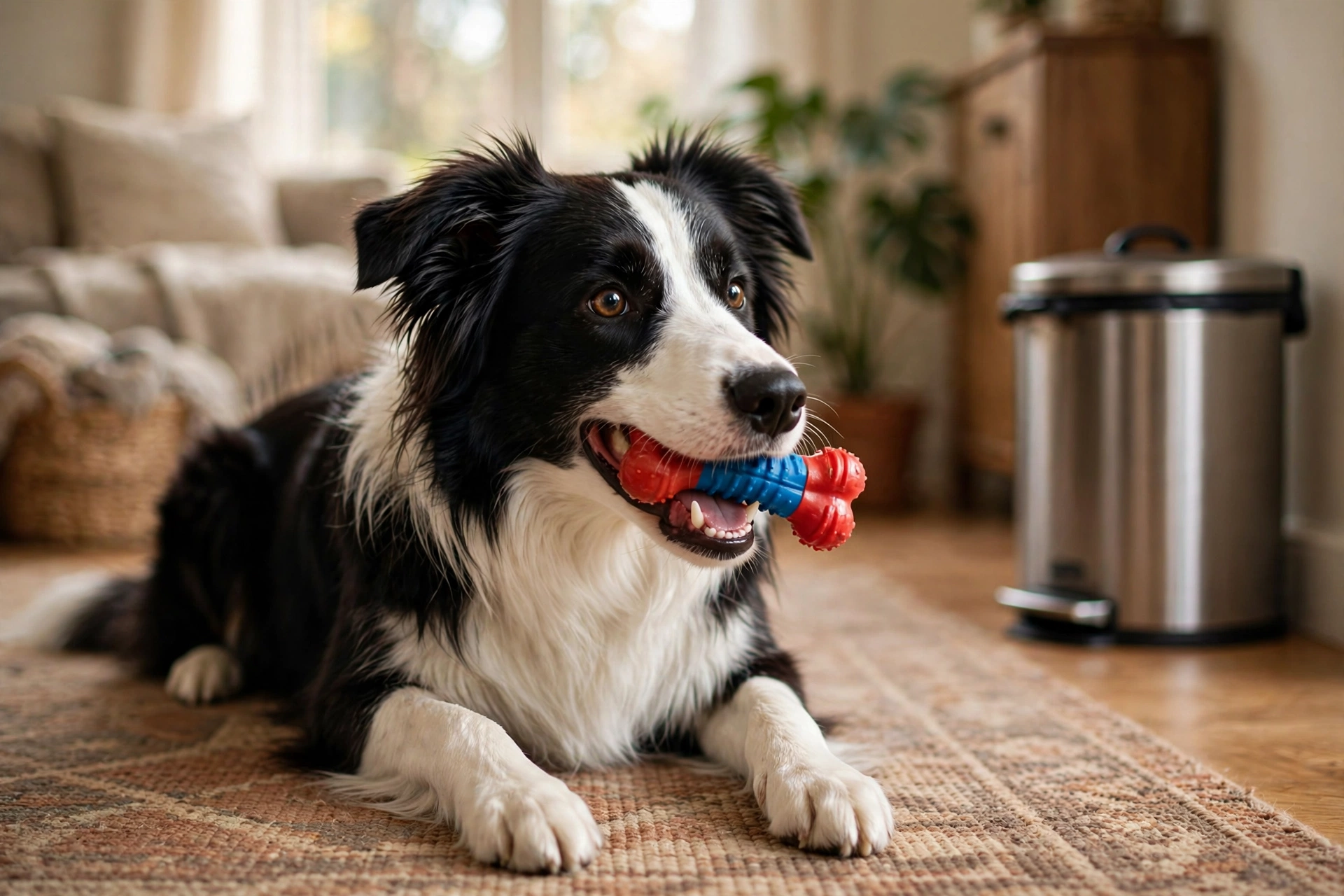
- Offer safe alternatives. A dog who has satisfying chew toys is less motivated to steal. Look for safe homemade treats and sturdy chew toys instead of real bones — and check which human foods are actually safe for dogs before sharing table scraps.
When to call your vet
Call your vet right away (before anything else): every time your dog eats chicken bones, even if he seems fine. Triage by phone is fast and free, and the vet’s advice depends on your specific dog.
Go to the emergency clinic now if: choking, gagging, or trouble breathing; repeated vomiting or vomiting blood; bloody or black tarry stool; swollen or painful belly; collapse, extreme lethargy, or refusal to eat and drink.
Monitor closely for 72 hours if: the vet advised watchful waiting. Log appetite, stools, vomiting, energy, and belly comfort — and call back the moment anything changes.
Veterinary sources for this article: VCA Animal Hospitals (“Why Bones Are Not Safe for Dogs,” citing the U.S. Food and Drug Administration; “Thanksgiving Foods Safe for Dogs”; “Top five B
BQ foods that cause bowel obstructions in dogs”); VCA Canada Animal Hospitals (“Ingestion of Foreign Bodies in Dogs”).
Will my dog’s stomach acid just dissolve the bones?
Stomach acid softens bone material, but it doesn’t reliably dissolve sharp fragments — and it does nothing for a piece lodged in the esophagus on the way down. Don’t count on digestion to solve this; monitor instead.
My dog seems totally fine. Is he out of danger?
Probably, but not certainly. Many dogs pass bones without any trouble. Still, keep up the full 72-hour watch — blockages and irritation can show up a day or two later. If appetite, stool, and energy stay normal throughout, you can relax.
Are raw chicken bones safer than cooked?
Not safe — just dangerous in slightly different ways. Cooked bones splinter into sharp shards; raw bones can still choke, block, or break teeth, and VCA warns they can carry bacteria like salmonella that endanger both your dog and your household. VCA veterinarians recommend against giving dogs raw or cooked bones at all, suggesting appropriate chew toys instead.
What about bones from KFC or other fast food?
Same rules, same danger — arguably worse, since they’re always cooked and often splintered already. Call your vet with the same information: dog’s size, how much was eaten, and when.
How many chicken bones are dangerous?
There’s no safe number. One splintered shard in the wrong place can perforate an intestine, while some dogs pass a whole plate of bones without incident. The risk depends on the dog’s size, how the bones were chewed (or gulped), and luck. Always call the vet regardless of the amount.
Veterinary Review & Editorial Standard
This clinical guide was prepared using peer-reviewed veterinary literature and guidelines from leading veterinary associations. If your pet exhibits acute symptoms or distress, please seek immediate in-person veterinary emergency care.