Why Won’t My Cat Drink Water From the Bowl? (And How to Get Them Drinking)
 The Pets Passion Medical Team
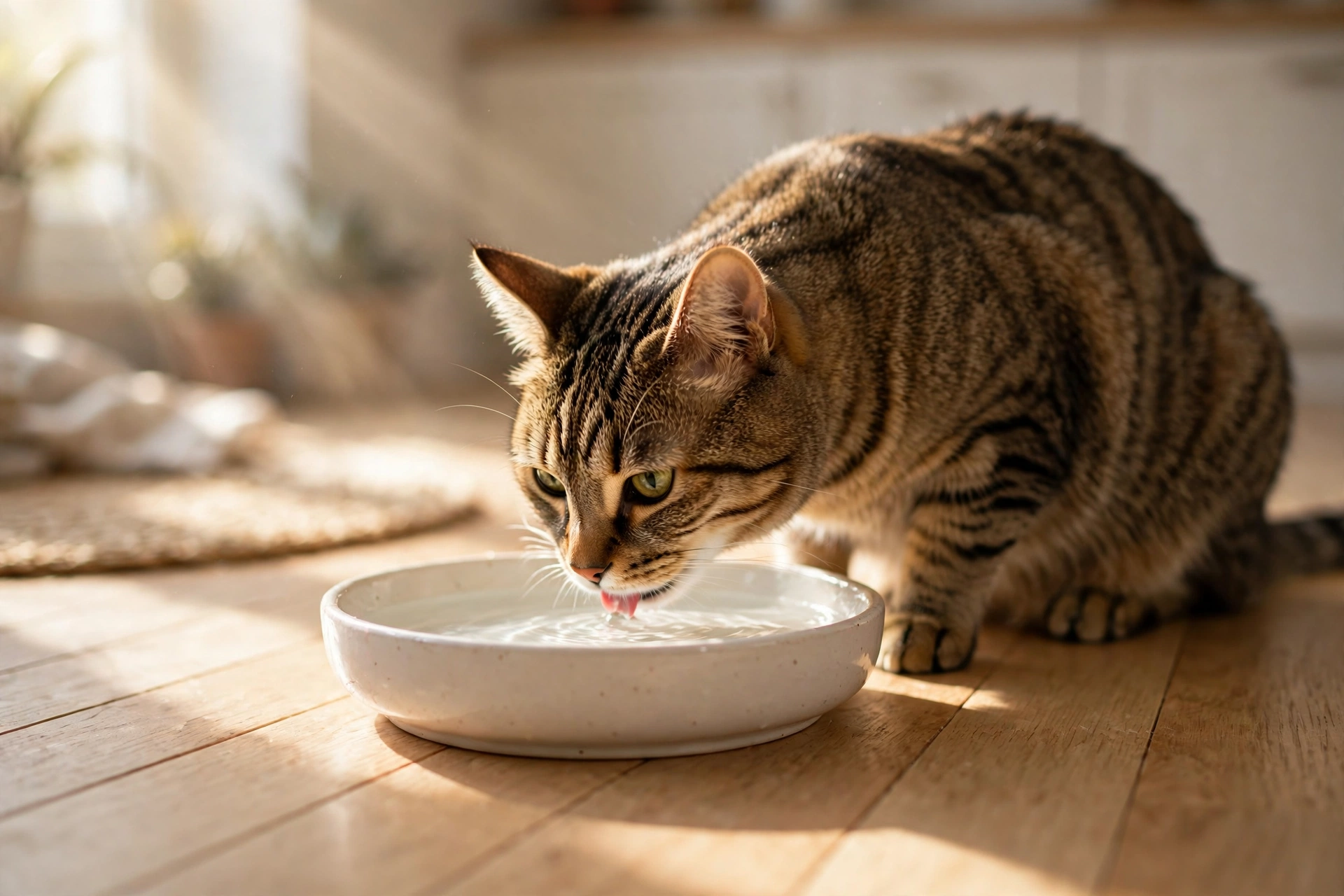
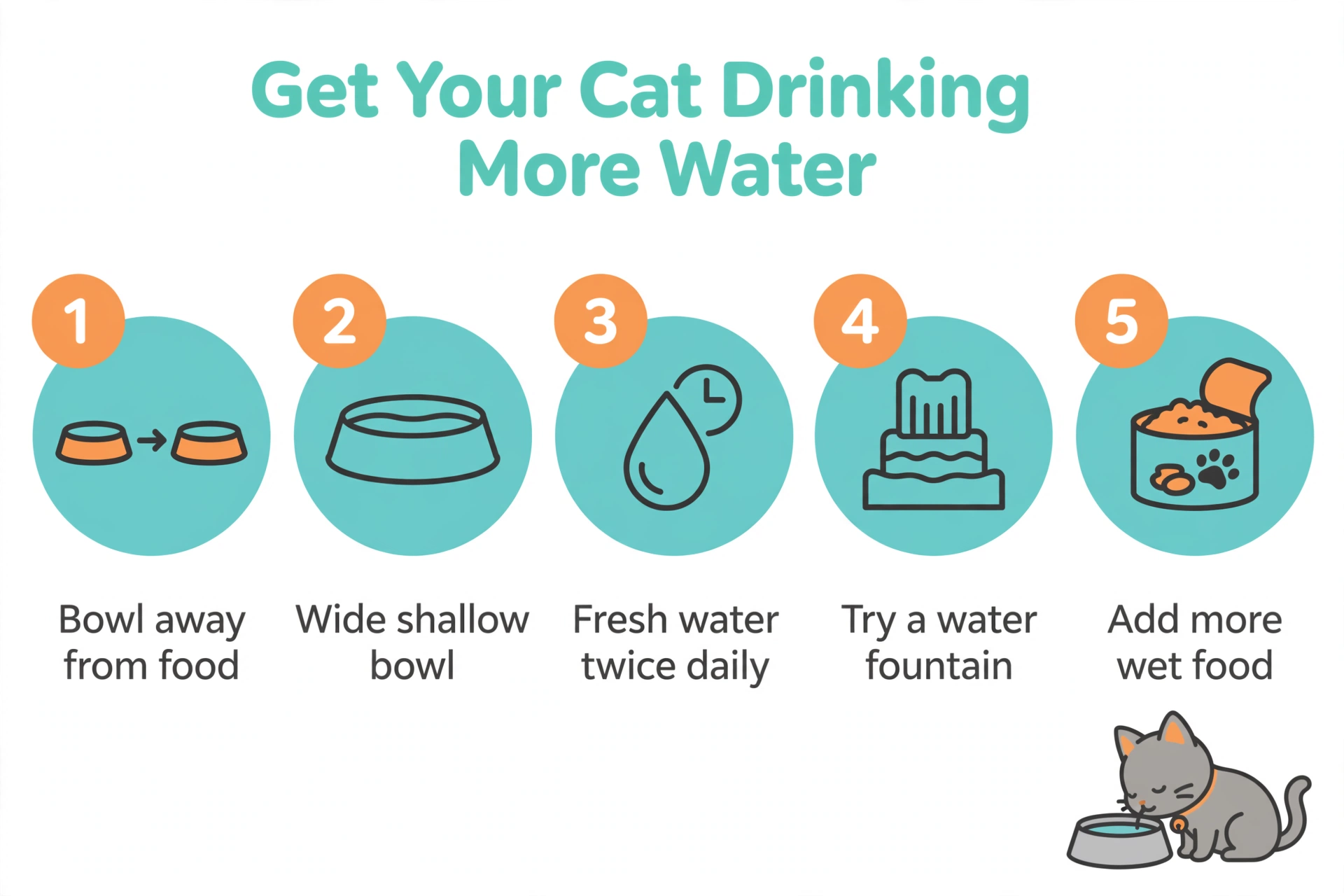
Cats are famously picky about water — and most of the time, the problem isn’t the water, it’s the bowl, its placement, or its freshness. The single most effective fix surprises most owners: move the water bowl away from the food bowl. Cats instinctively avoid drinking near their “kill site,” so a water bowl parked next to the food may as well be invisible.
Why won’t my cat drink water from the bowl?
The usual suspects, roughly in order:
- It’s next to the food. In the wild, water near a kill may be contaminated — cats still follow this instinct.
- The bowl is wrong. Deep, narrow bowls press on sensitive whiskers (“whisker fatigue”); plastic bowls can harbor odors and cause chin acne.
- The water is stale. Cats prefer fresh, oxygenated water. A bowl that’s sat all day tastes flat.
- It’s in a bad spot. High-traffic, noisy, or near the litter box — all no-go zones for a cautious drinker.
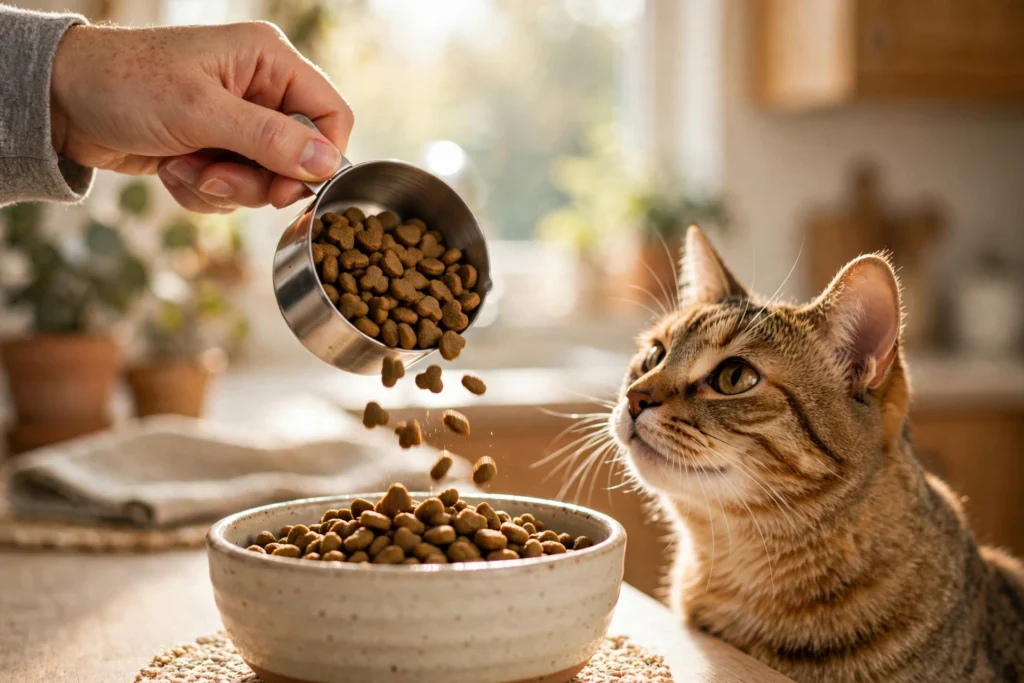
- Your cat gets water elsewhere. Wet food is 70–80% water; a cat on an all-wet diet may genuinely need less bowl water. (The tap, the shower, or the dog’s bowl count too.)
The 5-minute bowl checklist
- Wide and shallow — whiskers shouldn’t touch the sides; ceramic, glass, or stainless steel over plastic
- Fresh daily — dump, rinse, and refill at least once a day; twice is better
- Away from food — different room if possible, or at least several feet away
- Multiple stations — two or three bowls in different spots; cats drink more when water is convenient
- Quiet location — away from appliances, foot traffic, and the litter box
Would a cat water fountain help?
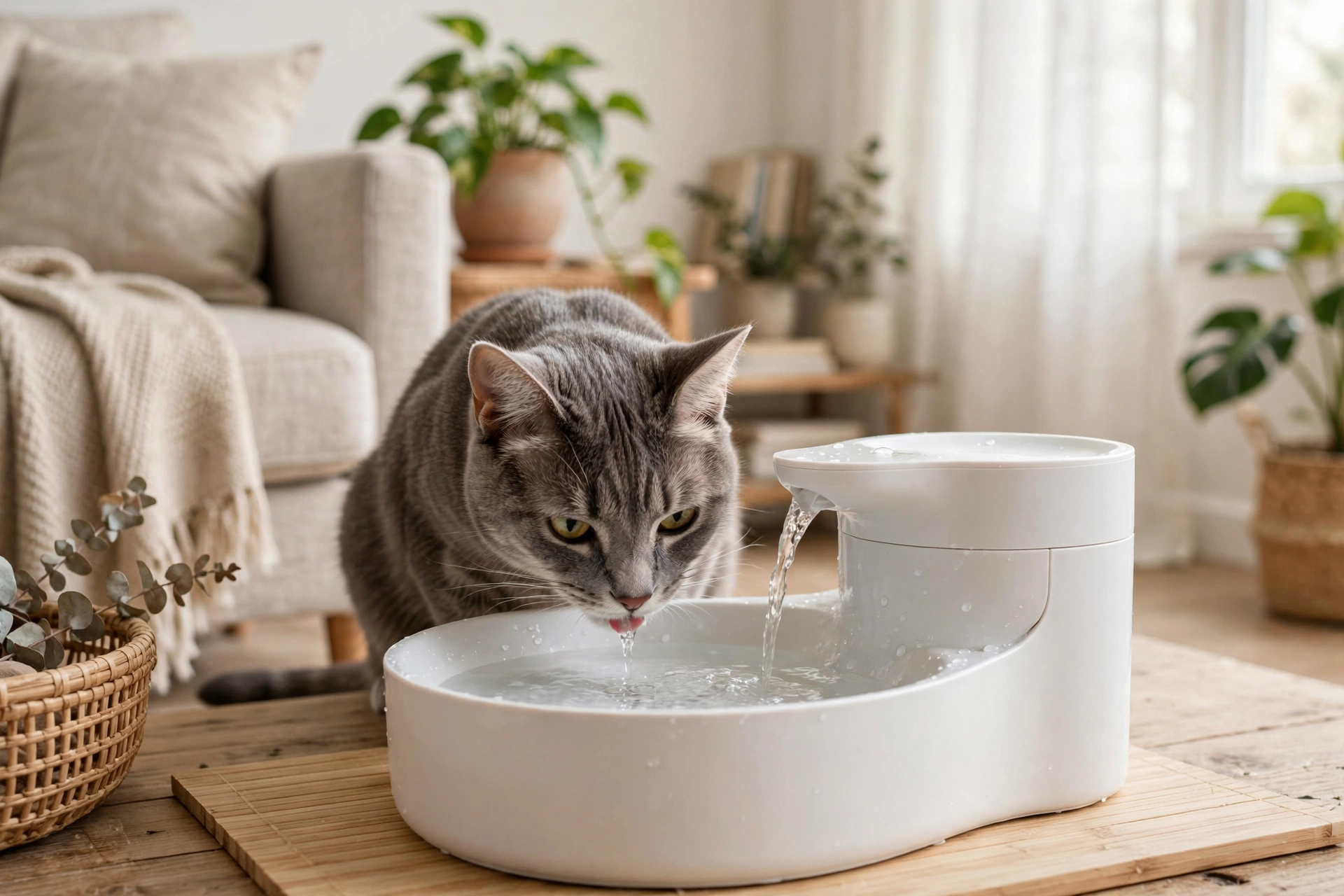
For many cats, yes — moving water reads as “fresh and safe” to feline instincts, and some cats who ignore bowls will drink happily from a fountain. But fountains come with caveats nobody mentions:
- They need cleaning. Slime builds up fast; most fountains need a full scrub weekly and a filter change monthly.
- Some cats fear them. The hum or splashing puts off nervous cats — introduce it next to the old bowl, not as a replacement.
- They’re not magic. A fountain next to the food bowl still loses to instinct. Placement rules apply.
How to get more water into your cat through food
- Feed more wet food. At 70–80% moisture, wet food is the biggest lever most owners have — even mixing some into a dry diet helps.
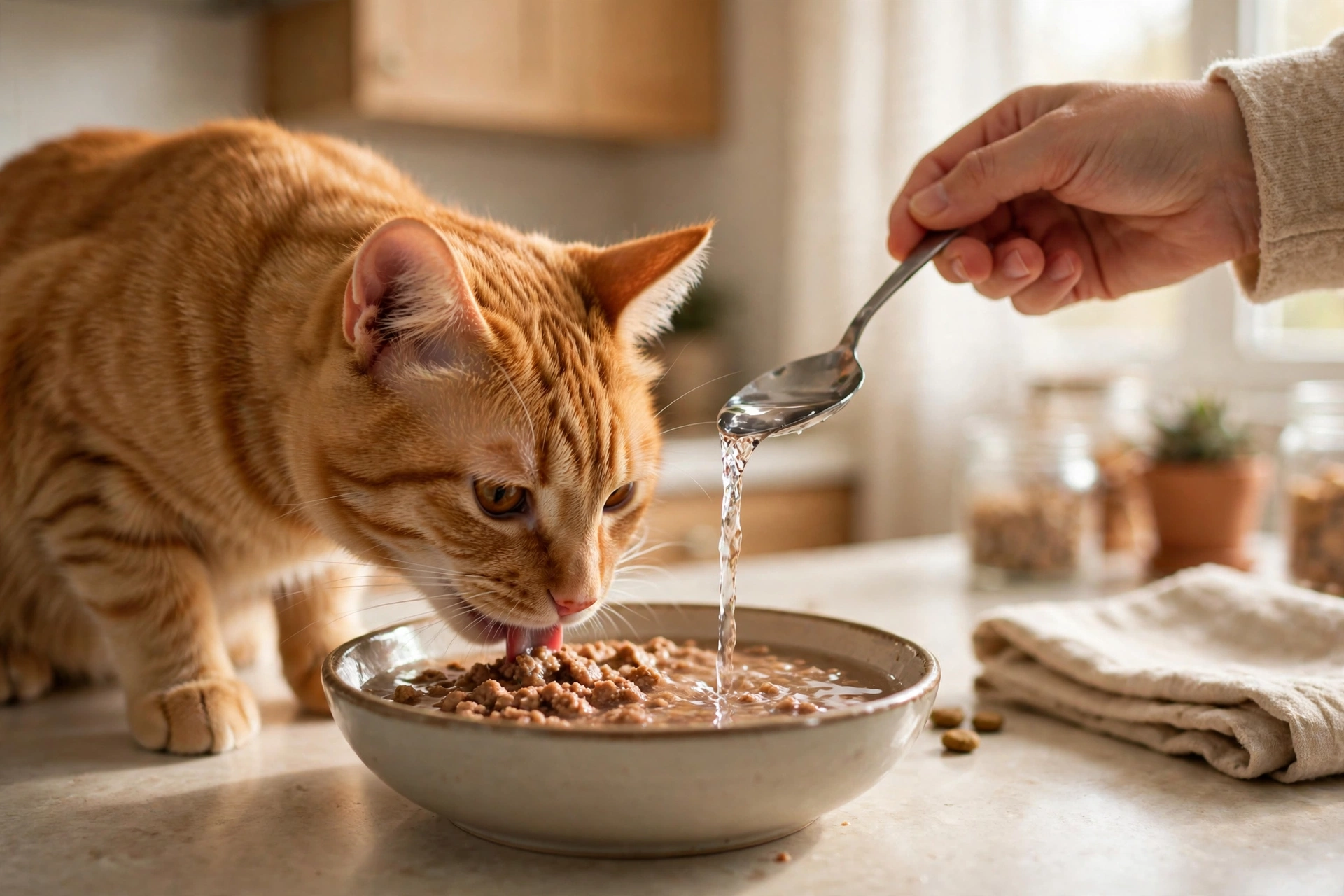
- Add water to wet food. A spoonful or two of warm water stirred in is accepted by most cats.
- Try flavor enticements: a splash of tuna water (from tuna packed in water, no added salt), or a little low-sodium chicken broth — as occasional toppers, not meal replacements.
- Skip the gimmicks: don’t add milk, juice, or anything sugary — cats are lactose intolerant and don’t need the extras.
When is “won’t drink” a symptom, not a bowl problem?
Call your vet if reduced drinking comes with:
- A sudden change in drinking habits (much less or much more)
- Lethargy, appetite loss, or weight change
- Vomiting or diarrhea
- Dry gums, sunken eyes, or skin that stays tented when pinched
A cat that stops drinking and stops eating can dehydrate dangerously fast — don’t wait it out.
When in doubt about your cat’s hydration, call your veterinarian.
Learn how much water cats should drink daily — most owners underestimate it. Chronic low intake raises the risk of urinary problems, so track both bowl and food moisture.
What’s the right way to clean a cat water fountain?
A dirty fountain is worse than no fountain — cats will abandon slimy water, and you are back to the original problem. The fix is a weekly routine, not an occasional deep clean. Take the fountain fully apart: pump, spout, reservoir, every crevice. Scrub everything with a bottle brush and a little mild dish soap, then rinse thoroughly. Soap residue has a smell cats hate, and a fountain that smells like detergent is a fountain the cat won’t touch.
The slimy film is biofilm, a normal bacterial layer that builds up in any standing water feature. It is not an emergency, but it needs the brush, not just a rinse. Running water alone will not remove it. For mineral scale, a soak in diluted white vinegar followed by a very thorough rinse works; again, rinse until no vinegar smell remains.
Filters need attention on their own schedule: rinse them weekly and replace them according to the manufacturer’s instructions, generally every few weeks. A clogged filter slows flow, and slow flow grows biofilm faster. If your cat suddenly stops using a previously loved fountain, the first suspect is always cleanliness. Take it apart and sniff the parts before assuming the cat changed its mind.
How do I figure out my cat’s total daily water intake?
Most of a cat’s water often comes from food, not the bowl, which is why “won’t drink” is sometimes less alarming than it looks. The math is simple once you know the moisture figures: canned food is roughly 75–80% water, while dry kibble is only about 8–10%.
Work an example: a cat eating 150 grams of wet food a day gets around 115 ml of water from food alone. A commonly cited rough guide for total daily water needs is about 50 ml per kilogram of body weight from all sources combined. A 4 kg cat lands near 200 ml total, with the bowl covering whatever food does not. Treat these as estimates, not prescriptions; your vet can set a target for your individual cat, especially if kidney or urinary issues are in play.
Why bother calculating? Because it turns vague worry into a number you can track. If you know your cat’s rough daily total, a real drop (the bowl staying full and food intake changing) becomes visible early, and changes in drinking are among the earliest signs of illness cats show.
How should I set up water for a multi-cat home?
One bowl in the kitchen does not serve three cats. It serves the boldest one. Cats can guard resources subtly: one cat simply sitting near the water station is enough to deter a timid housemate, and you may never see it happen. The solution is multiple stations in different locations, ideally on different floors, so no single cat can control access.
Mix the formats. Put a fountain in one spot and a wide ceramic bowl in another. Different cats have different preferences, and variety guarantees everyone finds something acceptable. Keep every station away from food bowls and litter boxes, in quiet low-traffic corners where a cat can drink without being ambushed.
With multiple cats, also watch individuals, not just the group. Learn who drinks where, and notice changes: the cat that suddenly starts draining the bowl may be telling you something medical, while the one that stops visiting any station may be getting bullied away from water. In a multi-cat home, “the bowl is still full” is not one data point — it is one per cat.
How much water should my cat drink per day?
A typical guideline is around 50–60 ml per kg of body weight daily from all sources (food + drinking) — but cats on wet-food diets get most of it from food. Watch the trend, not just the number.
Is it okay that my cat drinks from the tap?
Yes — if the tap is their preference, let them have it (or get a fountain). The goal is hydration, not bowl loyalty.
Can dehydration be an emergency?
Yes. Severe dehydration — especially paired with not eating, vomiting, or lethargy — needs urgent vet care. Don’t try to “fix” it with extra water at home.
My cat only drinks milk. What do I do?
Don’t offer milk — most adult cats are lactose intolerant and it causes digestive upset. Transition to water using the bowl checklist and food-based hydration above.
Veterinary Review & Editorial Standard
This clinical guide was prepared using peer-reviewed veterinary literature and guidelines from leading veterinary associations. If your pet exhibits acute symptoms or distress, please seek immediate in-person veterinary emergency care.