Why Is My Cat Shaking Her Head and Scratching Her Ears? (Ear Mites vs Infection)
 The Pets Passion Medical Team
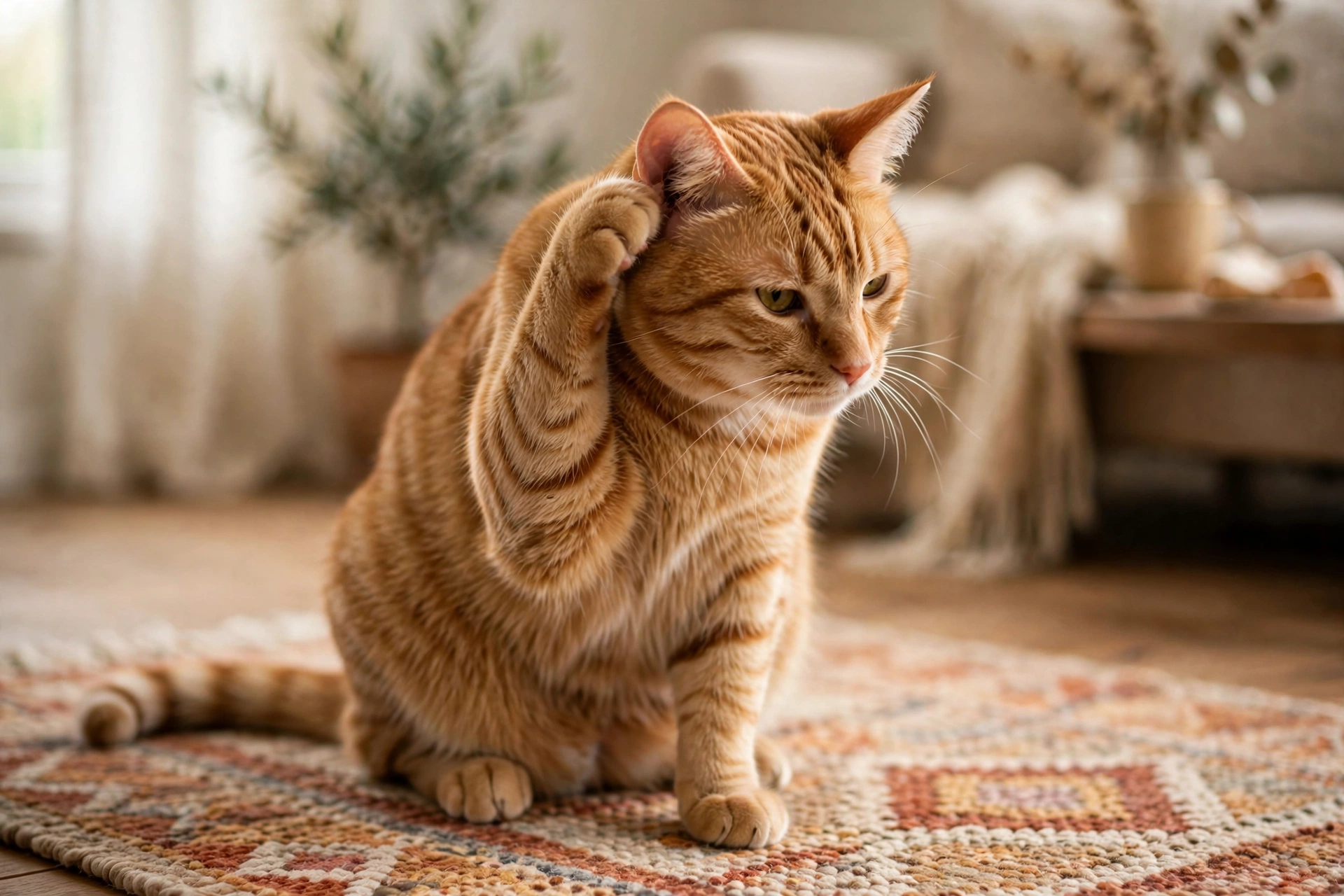
When a cat keeps shaking her head and scratching her ears, the cause is almost always one of three things: ear mites, a bacterial or yeast ear infection, or allergies — plus the occasional foreign body or wax buildup. You can’t reliably tell which one it is just by looking, because they all cause the same head-shaking and scratching. What you can do is learn the clues, avoid the common home-treatment mistakes, and know exactly what the vet visit will involve.
What are the most common causes of head shaking and ear scratching?
According to Dr. Leni K. Kaplan, a senior lecturer at Cornell University’s College of Veterinary Medicine, the most common causes of ear problems in cats are ear mites, allergies (to food or the environment), and polyps. Foreign bodies, wax buildup, and skin infections can also trigger the same head-shaking, ear-scratching pattern. Here is what each one actually is.
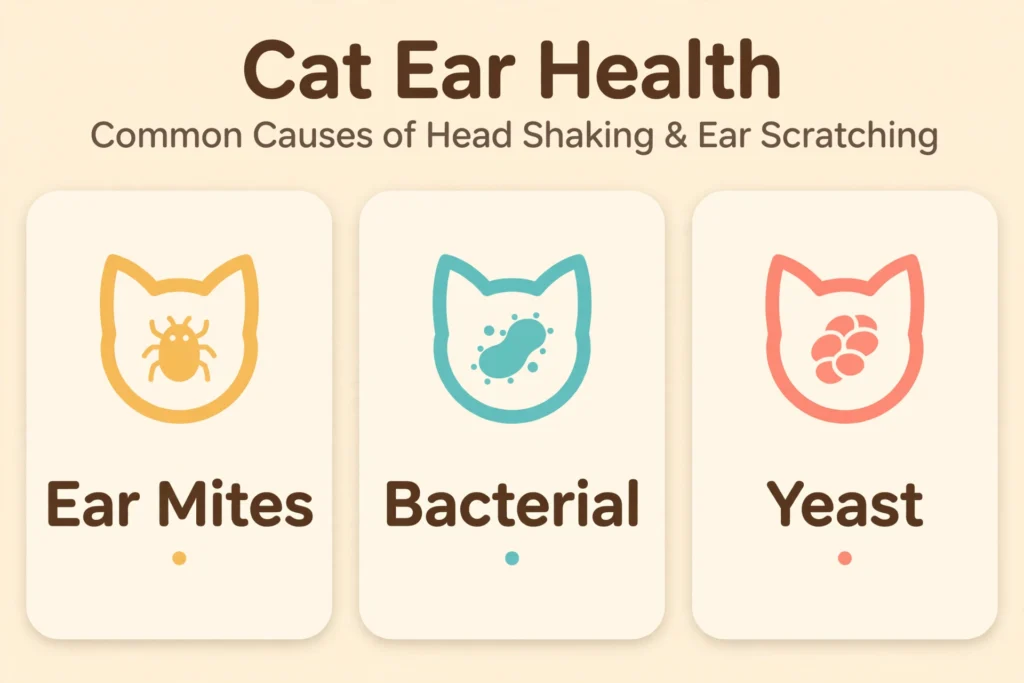
Ear mites are microscopic parasites that live in the ear canal and feed on skin oils and wax. They’re intensely itchy and extremely contagious between pets. The classic sign is dark, crumbly, coffee-ground-like discharge.
Bacterial or yeast infections often start when allergies, moisture, or mites inflame the canal, letting normal microbes overgrow. Discharge tends to be yellow, green, or brown and waxy, often with a noticeable odor.
Allergies (food or environmental) inflame the skin inside the ears just like elsewhere on the body — red, itchy ears, often both sides, sometimes with itching on the face and paws too.
| Clue | Ear mites | Infection | Allergy |
|---|---|---|---|
| Discharge | Dark brown/black, dry, coffee-ground-like | Yellow/green/brown, waxy or moist | Little to none; redness instead |
| Odor | Usually mild | Often strong, yeasty or foul | None |
| One ear or both? | Usually both | Often one to start | Usually both |
| Contagious to other pets? | Yes — highly | Not directly | No |
| Most common in | Kittens, outdoor cats, multi-pet homes | Cats with allergies or prior mite damage | Cats with itchy skin elsewhere too |
How can I safely check my cat’s ears at home?
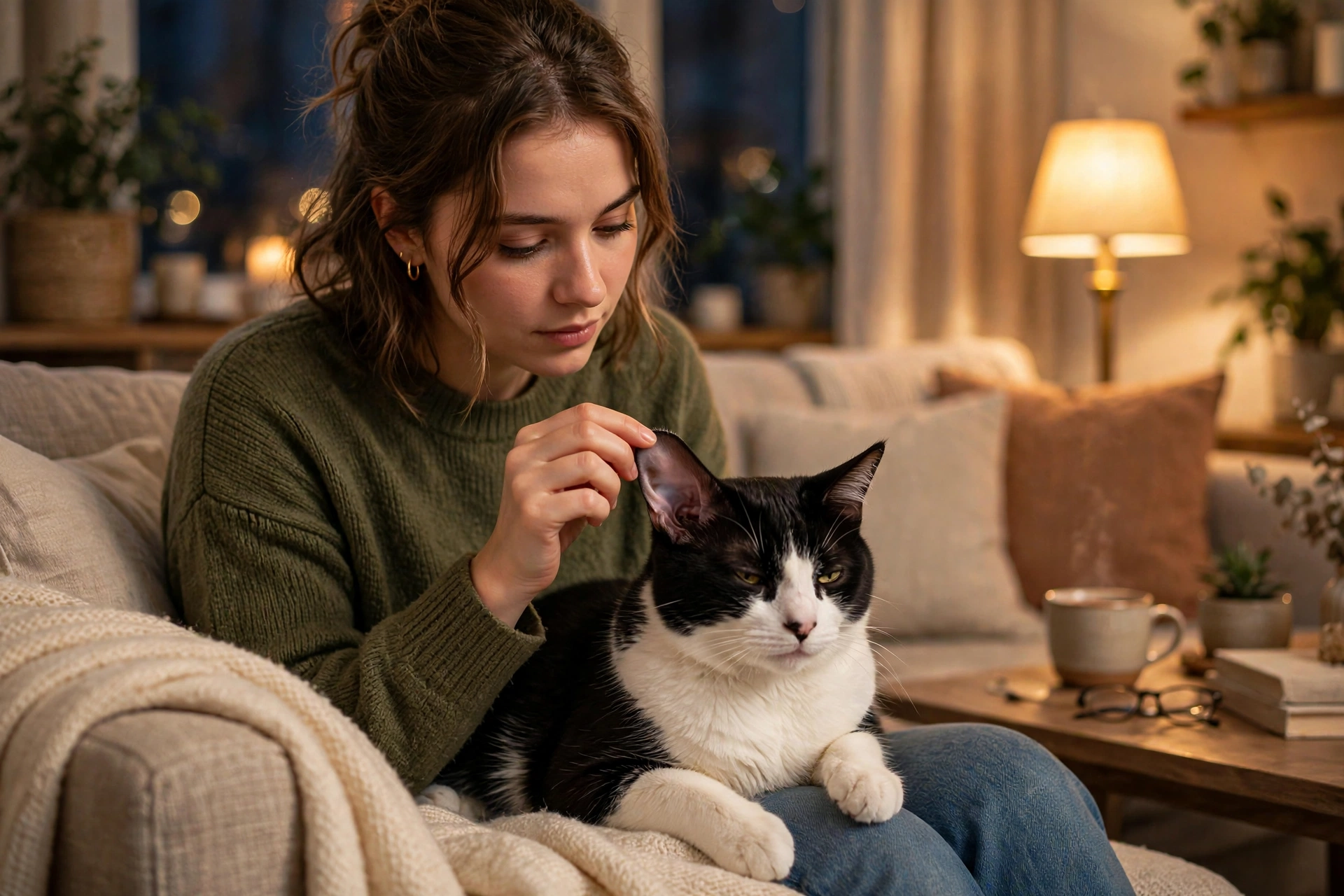
A healthy cat ear is pale pink, clean, and odor-free, with just a trace of light wax. Gently fold back the ear flap and look inside with a flashlight — never insert anything into the canal.
Red flags that need a vet visit:
- Dark coffee-ground debris, heavy wax, or discharge of any color
- Strong odor from the ear
- Redness, swelling, or scabs around the ear
- Head tilt, loss of balance, or walking in circles
- Swelling of the ear flap itself (a possible aural hematoma — a blood blister from violent head shaking)
What not to do during your check: never push cotton swabs or fingers deep into the canal — the canal is L-shaped and you can pack debris further down or damage the eardrum. Skip home rinses like hydrogen peroxide, alcohol, or vinegar. As Cornell dermatologist Dr. William Miller warns, cats’ ears are very sensitive and don’t tolerate aggressive cleaning — a vet’s instructions should be followed exactly.
Why are home remedies for ear problems risky?
It’s tempting to try olive oil, coconut oil, or an over-the-counter ear cleaner — but the treatment depends entirely on the cause, and the wrong one makes things worse. Oil can feed a yeast infection. Water-based rinses in an already infected ear can deepen the infection. And if the eardrum is damaged (which you can’t see from outside), many ear products are unsafe.
The only reliable path is a vet diagnosis: an otoscope exam to see down the canal and check the eardrum, plus a swab examined under the microscope to identify mites, bacteria, or yeast. That ten-minute workup decides the entire treatment plan.
What will the vet do at the appointment?
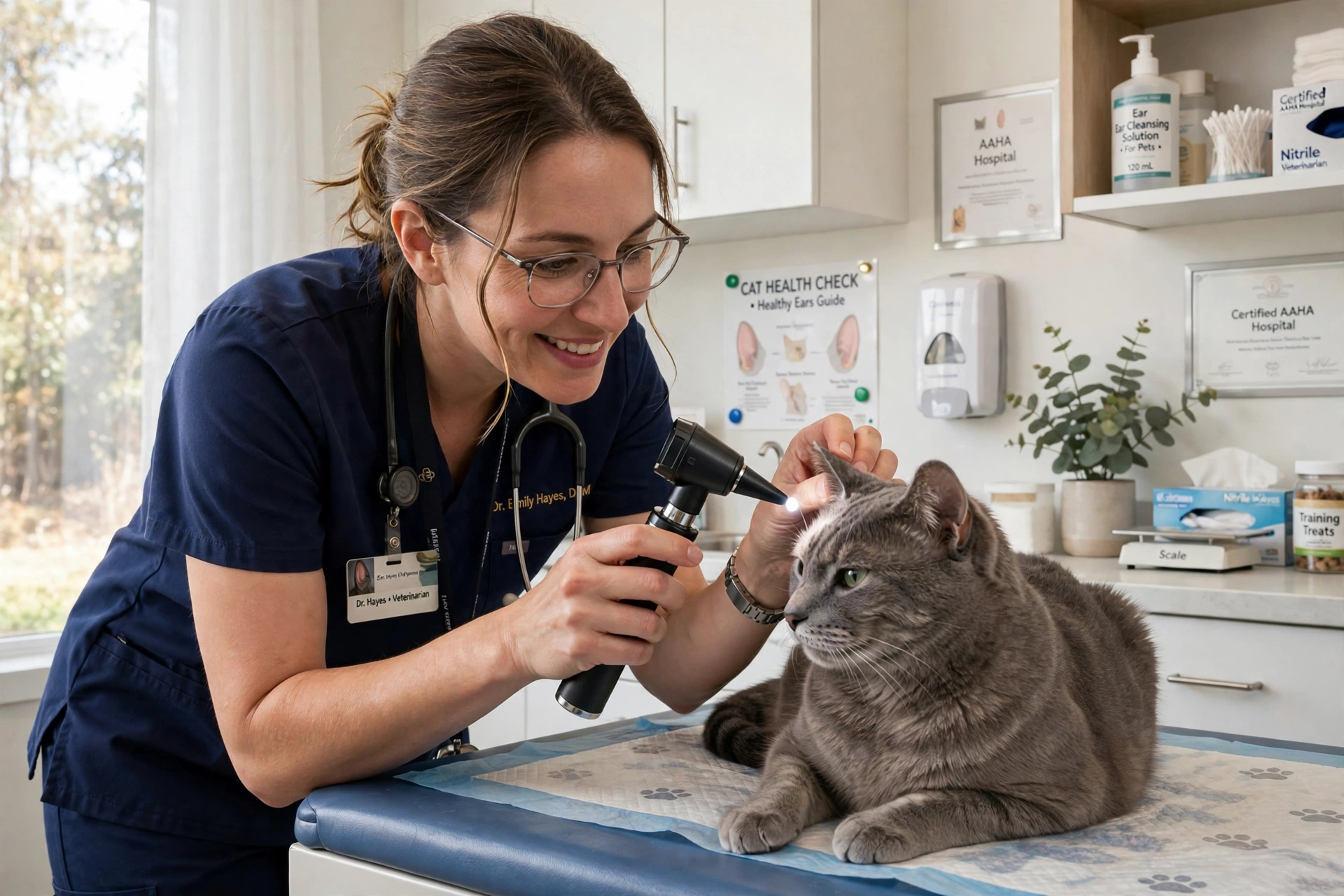
- Examine the canal with an otoscope and assess the eardrum
- Take a swab to identify mites, bacteria, or yeast under the microscope
- Deep-clean the ears under controlled conditions
- Prescribe targeted treatment: miticides for mites, antibiotic or antifungal ear medication for infections, and allergy management if that’s the driver — presented as what to expect, with the product and schedule chosen by your vet
- Recheck in 1–2 weeks to confirm the canal is clearing
How do I stop ear mites spreading to my other pets?
If mites are diagnosed, every in-contact pet (cats, dogs, rabbits, ferrets) needs checking and usually treatment — mites spread through direct contact and shared bedding. Wash bedding in hot water, and keep up the full course of medication even if the scratching stops early.
Yes. Kittens — especially those from shelters, rescues, or outdoor litters — are the classic ear-mite patients, and Cornell notes mites are most common among outdoor cats. Any new kitten with head shaking should be checked at one of your kitten’s first vet visits, since littermates and the mother cat usually need treatment too.
Veterinary sources for this article: Cornell University College of Veterinary Medicine (Feline Health Center: “Ear Mites: Tiny Critters that can Pose a Major Threat” and “Feline Ear Disorders”); Cornell CatWatch newsletter quoting Dr. Leni K. Kaplan and Dr. William Miller; VCA Animal Hospitals ear-exam guidance; Hewitt & Bajwa (2020), “Aural hematoma and its treatment: A review,” The Canadian Veterinary Journal.
Ask your vet about parasite treatments for cats that cover ear mites — prevention is easier than treating an infestation.
Can I use olive oil or coconut oil for ear mites?
Oil may smother some mites but won’t reliably clear an infestation — and if the real problem is a yeast or bacterial infection, oil makes it worse. See the vet for a diagnosis first.
Are ear mites contagious to humans or dogs?
Ear mites don’t infest humans. They are highly contagious to dogs, cats, rabbits, and ferrets through direct contact.
When is head shaking an emergency?
Go to the emergency vet if: your cat can’t stand or walk straight, is extremely lethargic, or the ear is bleeding heavily. For anything you’re unsure about, see when to take your cat to the emergency vet.
Can allergies really cause ear problems?
Yes — the ear canal is lined with skin, so anything that inflames skin (food or environmental allergies) inflames ears too. Recurring ear infections in an adult cat are often an allergy flag.
Veterinary Review & Editorial Standard
This clinical guide was prepared using peer-reviewed veterinary literature and guidelines from leading veterinary associations. If your pet exhibits acute symptoms or distress, please seek immediate in-person veterinary emergency care.